
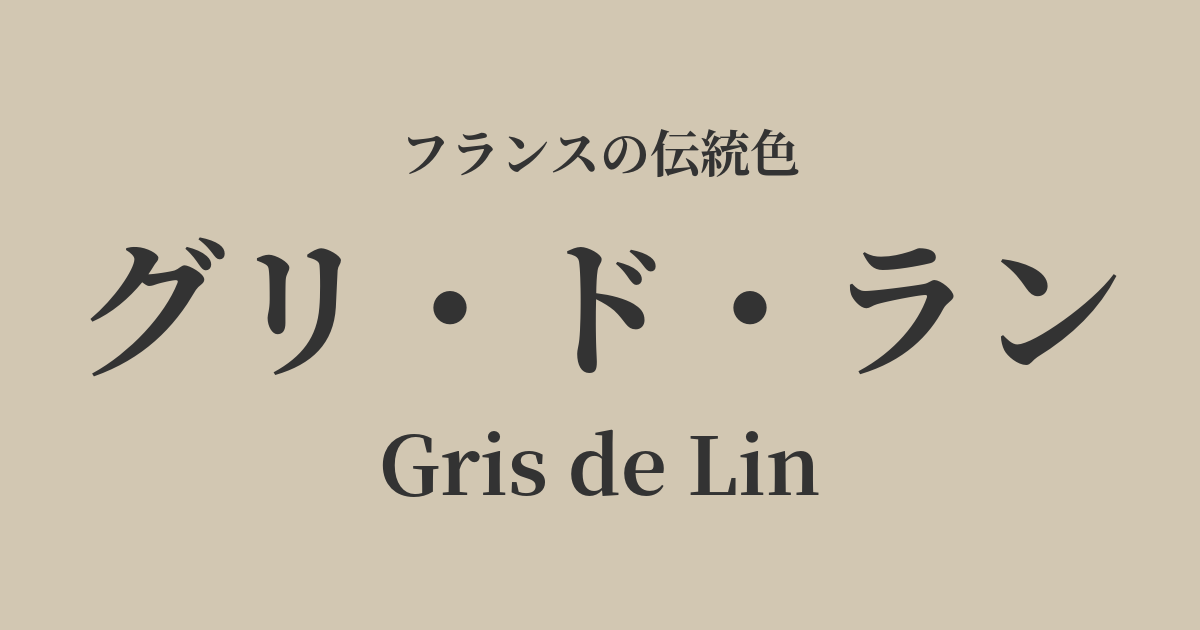
| French | Gris de Lin |
|---|---|
| Katakana | Gris de l'Ain |
| HEX | #d2c7b2 |
| RGB | 210, 199, 178 |
What is Gris de l'Ain? Origin and Etymology
Gris de Lin, meaning "flax gray" in French, is a very natural and gentle shade. As the name suggests, it derives from the natural, undyed color of linen fabric, which is made from flax fibers.
The warm, beige-tinged gray evokes both the rustic simplicity of natural materials and refined elegance. Deeply rooted in the French countryside and the meticulous way of life of its people, this color seems to symbolize the French spirit, which values comfort and essential beauty over flashiness.
Historical background of Gris de l'Ain
Flax is one of the oldest fibers cultivated by humankind, dating back to the time of ancient Egypt, and its cultivation has also been thriving in France since ancient times. Especially from the Middle Ages onward, linen was an indispensable material in the lives of people from all walks of life, from church vestments to the undergarments of royalty and nobility, and even to the everyday clothes and bedding of commoners.
The color Gris de l'Ain has always been intertwined with this linen culture. In times when dyeing techniques were underdeveloped, people wore clothing that made the most of the natural color of the material itself. This natural flax color is said to have been seen as a symbol of simplicity, as well as representing purity and sincerity.
In the 18th century, a return to nature became fashionable, as exemplified by Marie Antoinette's departure from the rigid dresses of the court and her yearning for a rural life, leading her to favor simple chemise dresses. The unpretentious beauty of the Gris de Rain resonated with this atmosphere of the times and became deeply ingrained in the French aesthetic.
Gris de Ran in the world of art and fashion
Gris de Rin's simple and honest color palette can be found in the rural landscapes painted by 19th-century Barbizon School artists. These earth tones are effectively used in works that depict people living in harmony with the land, such as the clothing of the women in Jean-François Millet's "The Gleaners," conveying the dignity of labor and the solemnity of nature.
In the world of fashion, Gris de Ran has been loved across generations, coinciding with the rise of linen. In particular, the idea of simple, comfortable jersey suits and relaxed resort wear—like those proposed by Coco Chanel, freeing women from restrictive corsets—resonates with the natural and liberating image of this color. Even today, it remains an indispensable color for linen shirts and jackets, representing French chic.
Color scheme preview
This is to check the readability of the text when this color is used as the background.
Color scheme proposal for Gris de Ran
Blue Lavande (#9495C9)
This refreshing and gentle combination evokes the lavender fields of Provence in southern France. It's the perfect color scheme for creating a comfortable and relaxing space that evokes a sense of natural tranquility.
Rose Pompadour (#ED82A4)
The simple Gris de l'Ain is enhanced by the elegant rose, beloved by Madame de Pompadour, creating a refined sweetness. It gives off a sophisticated and feminine impression, befitting a mature woman.
Blanc de Vosges (#F0F1E4)
Paired with the pure white of the Vosges Mountains, it creates a clean and minimalist impression. The texture of the material is highlighted, expressing a sophisticated, natural style for adults.
Practical Scenes
In interior design, using Gris de l'Ain on large areas such as walls, curtains, and sofas envelops the entire space in a calm and tranquil atmosphere. It pairs exceptionally well with natural materials such as wood, stone, and rattan, and works as a base color for various styles, including French country, shabby chic, and Japanese modern.
In fashion, incorporating linen into shirts, dresses, or sets creates an effortlessly elegant and relaxed look. Because it pairs well with any color, it also serves to highlight accent colors, making it a versatile color that expands your wardrobe possibilities.
In web and graphic design, using it as a background color gently enhances content and helps express the worldview of organic products and lifestyle brands. It can also be expected to give viewers a sense of security and trust.