
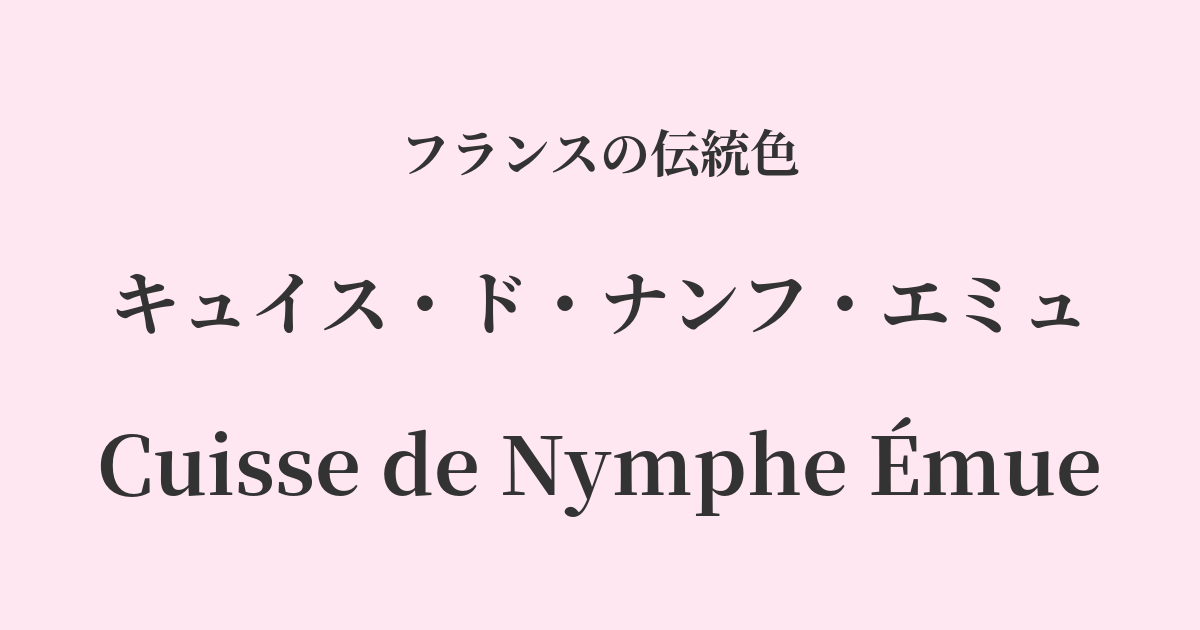
| French | Cuisse de Nymphe Émue |
|---|---|
| Katakana | Cuis de Namf Emu |
| HEX | #FEE7F0 |
| RGB | 254, 231, 240 |
What is Cuis de Namfe Ému? Origin and Etymology
"Cuisse de Nymphe Émue," spelled "Cuisse de Nymphe Émue" in French, is a color whose name, when translated literally, means "excited fairy's thigh," a very poetic and sensual meaning.
This unique name symbolizes the refined spirit and playfulness of 18th-century French Rococo culture. It is said to represent the flushed skin tone of a nymph, a spirit of beauty and nature in Greek and Roman mythology, whose emotions are heightened. It reflects the delicate aesthetic sensibility of the French, who sought to capture not only beauty but also the breath of life and the subtleties of emotion through color.
Historical background of Cuis de Namfe-Emu
This color reached its peak of popularity during the Rococo era of the 18th century, under the reign of Louis XV. Court culture flourished, and elegant and sweet styles were highly favored. In particular, Madame de Pompadour, the king's mistress and a leading figure in fashion and art trends of the time, is said to have deeply loved this color.
Furthermore, the future queen Marie Antoinette also favored this kind of elegant pink. This color was used lavishly in their dresses, interior decorations, and porcelain produced at the Royal Porcelain Manufactory of Sèvres, which was patronized by Madame de Pompadour, and it became a representative color that adorned the elegant atmosphere of the Rococo era. Although aristocratic culture temporarily declined with the French Revolution, the romantic charm of this color was passed down to later generations of fashion and art.
Cuis de Namfe ému in the world of art and fashion
Cuisse de Namphe Ému adorned the palettes of many of the leading painters of Rococo art. The elegant pink hues reminiscent of this color were effectively used to depict the soft skin and lustrous folds of the dresses of mythological goddesses and noblewomen portrayed by François Boucher and Jean-Honoré Fragonard. The light, playful brushstrokes of the pinks give the works a sweet and dreamy atmosphere.
In the world of fashion, fabrics produced in Lyon, a region renowned for its luxurious silk textiles, were dyed in this delicate shade and used to create opulent dresses such as the "robe à la française" for the ladies of the royal court. On the lustrous fabric, this pink shone with exceptional elegance, undoubtedly enhancing the beauty of the wearer.
Color scheme preview
This is to check the readability of the text when this color is used as the background.
Color scheme proposal for Cuis de Namfe Emu
Gris de Lignan (#DCD7D1)
The gentle, calming gray of the flaxen color perfectly balances the sweetness of the pink, creating a sophisticated and elegant color scheme for adults. It gives an elegant and classic impression.
Vert-O (#B8D8BA)
The combination of pale pink and refreshing mint green evokes a spring garden, creating a fresh and youthful impression. Its macaron-like cuteness is also a charming feature.
Blanc d'Argent (#F1F1F1)
When paired with a pure, silvery-white color, the delicate and transparent qualities of the Cuisse de Namfe Ému are brought out to their fullest potential. It gives a romantic, dreamy, and very feminine impression.
Practical Scenes
In interior design, it's perfect for Rococo, French chic, and shabby chic styles. Incorporating it into wallpaper, curtains, cushions, and other fabrics will envelop the entire room in a gentle and romantic atmosphere. It also pairs exceptionally well with gold picture frames and white furniture.
In fashion, it's a popular color for special occasions like wedding dresses and party dresses. In everyday outfits, incorporating it through blouses, skirts, or accessories like scarves can brighten the face and create a soft, feminine look.
In web and graphic design, this color can effectively express the brand's worldview when used on websites for cosmetic brands, wedding-related businesses, patisseries, and other similar establishments. It's a suitable color when you want to convey an elegant and luxurious impression.