
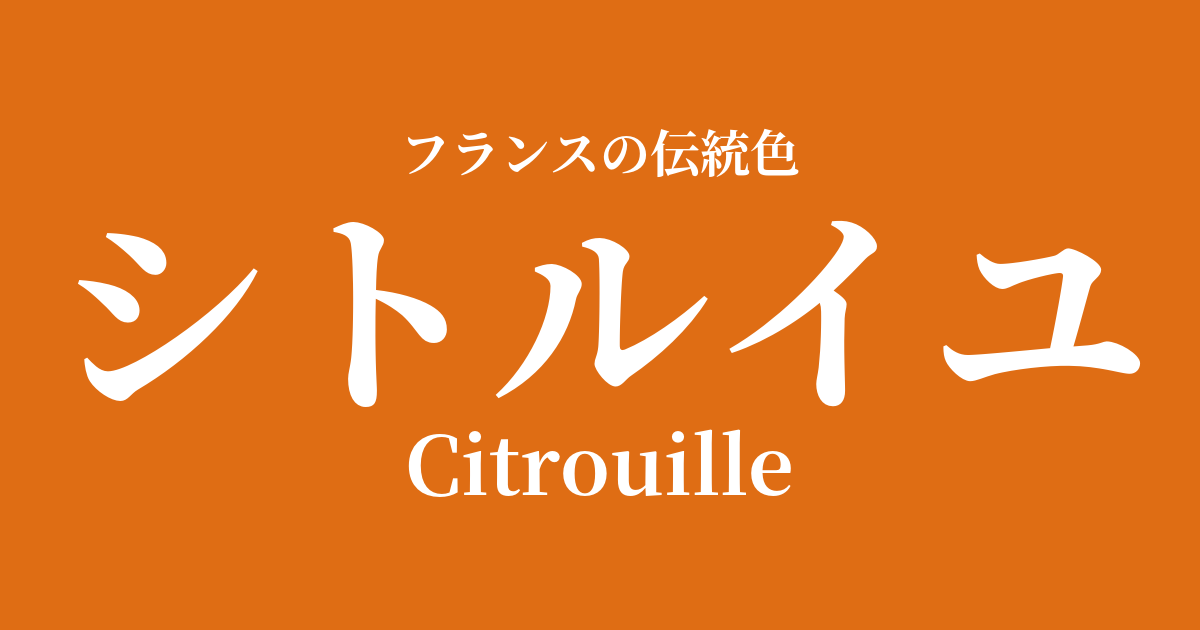
| French | Citrouille |
|---|---|
| Katakana | Citrouille |
| HEX | #DF6D14 |
| RGB | 223, 109, 20 |
What is Citrouille? Origin and Etymology
Citrouille is the French word for "pumpkin." It specifically refers to the round, bright orange pumpkins often used as decorations during autumn harvest festivals and Halloween. This color is deeply rooted in French culture as a familiar hue that symbolizes the bountiful harvest of autumn and the warmth of family gatherings around the dinner table.
Its etymology is said to originate from the Latin word "citreum," which refers to citron, a type of citrus fruit. When pumpkins were introduced to Europe from the New World in the 16th century, they were given this name because their shape and color resembled citrons.
Historical background of Citrouille
Pumpkins were introduced to Europe during the Age of Discovery in the 16th century. Initially, they were treated as rare ornamental plants or used as animal feed, but gradually, their high nutritional value led to their widespread use as food throughout France.
Especially during harsh winters and times of food shortages, pumpkins became a vital crop supporting the diets of ordinary people. Therefore, unlike the opulent colors favored by royalty and nobility, the color of Citrouille (pumpkin) became etched in people's hearts as a color that evoked simplicity, vitality, and humble richness rooted in everyday life. It became an indispensable color in the French countryside and on the tables of farmers.
Citrouille in the world of art and fashion
The warm orange hues of Citrouille have inspired many artists. Gustave Courbet and Jean-François Millet, leading realist painters of the 19th century, incorporated pumpkins, a gift from the earth, as a motif in their still-life paintings, depicting the daily lives of farmers and nature as it is.
Furthermore, Paul Cézanne, often called the father of modern painting, depicted pumpkins with his powerful brushstrokes, portraying them not merely as vegetables, but as objects with a definite presence. In these works, the color of citrouille gives the canvas a sense of vitality and simple beauty.
In the world of fashion, it's a color particularly beloved in autumn collections. When combined with warm materials like tweed and wool, it creates a rich and sophisticated style. Furthermore, traditional printed fabrics from the Provence region of southern France frequently feature orange hues reminiscent of sunlight, adding a bright touch to everyday life.
Color scheme preview
This is to check the readability of the text when this color is used as the background.
Citrouille's color scheme proposal
Marron Glacé (#A16E4B)
This rich and deep combination evokes the autumn harvest. The brightness of the citrulline is complemented by the calming presence of the chestnut, creating a warm yet sophisticated and cozy atmosphere.
Blue Roi (#002D62)
The vibrant orange and majestic deep blue, being near-complementary colors that enhance each other, create a striking contrast. It gives a modern, artistic, and bold impression.
Claim (#FFFDD0)
The gentle cream color softly envelops the vibrancy of the citrulline, creating a bright and approachable atmosphere. It gives a natural, comfortable, and warm impression, like sunshine.
Practical Scenes
In interior design, citrouille brings warmth and accent to a space. Simply incorporating it into living room cushions and blankets, or dining room tablecloths, will brighten the entire room and create a lively atmosphere conducive to conversation. It pairs particularly well with furniture made of natural woods such as oak and walnut.
In fashion, this color is a key element in autumn outfits. While you can boldly incorporate it into coats and knitwear, using it as an accent color in accessories like scarves, bags, and socks will instantly elevate your look and create a sophisticated impression. It pairs well with classic colors like navy, gray, and beige.
In web and graphic design, these elements can attract user attention and evoke positive emotions. When used in call-to-action buttons and banners for brands that want to convey friendliness and vitality, they can effectively communicate their message.