
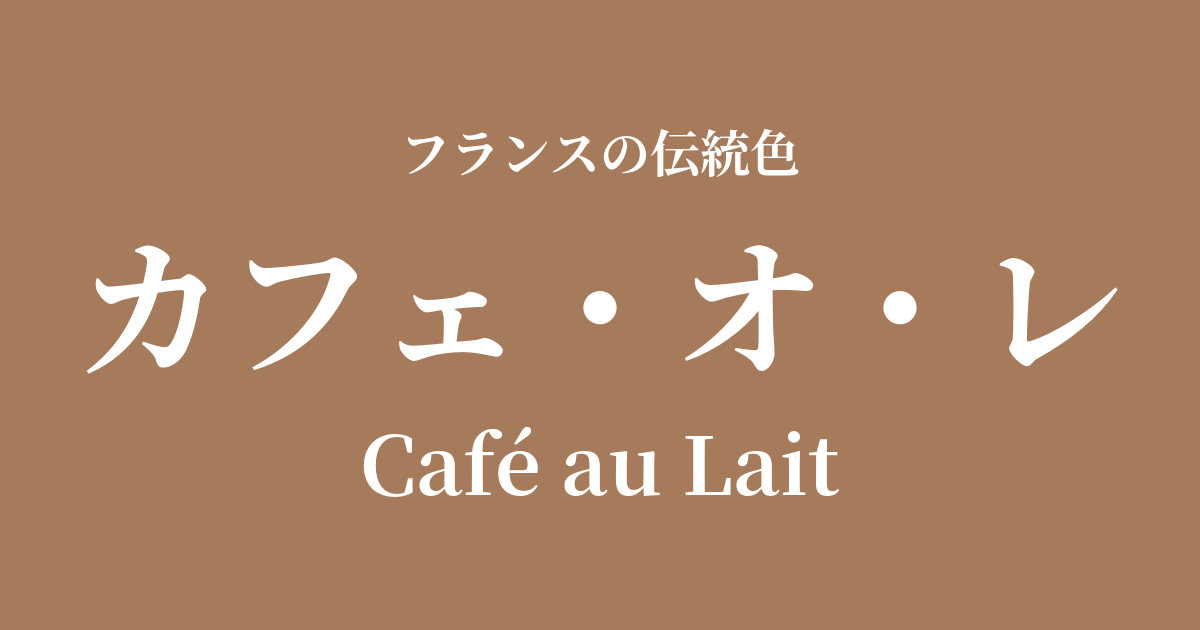
| French | Café au Lait |
|---|---|
| Katakana | Café au lait |
| HEX | #a67b5b |
| RGB | 166, 123, 91 |
What is café au lait? Origin and etymology
"Café au Lait" is named after the French phrase meaning "coffee with milk." It's a color name that expresses the mellow, warm brown color of coffee with plenty of milk.
The origin of this color lies in the flourishing café culture in 17th-century France. Initially consumed as medicine, coffee became a popular beverage when milk and sugar were added, eventually becoming an essential part of breakfast in French households.
The color of café au lait evokes comforting scenes rooted in everyday French life, such as an afternoon spent on a Parisian café terrace or a breakfast gathering with family. More than just a color name, it is cherished as a color that symbolizes the peace and warmth found in people's lives.
The historical background of café au lait
Coffee was introduced to France in the 17th century at the court of Louis XIV. Initially, it was prized as an exotic medicine, but its appeal gradually spread throughout aristocratic society.
In 1686, Le Procope, the oldest surviving café in Paris, opened and became an intellectual salon where Enlightenment thinkers such as Voltaire and Rousseau gathered. In this way, cafés became an important stage for the flourishing of civic culture.
It is said that the custom of drinking coffee with milk at home, or "café au lait," became widespread after the 18th century. In particular, the style of drinking it in a large café au lait bowl became a symbol of a typical French home breakfast.
This color can be said to reflect two aspects of French culture: the intellectual vibrancy of the Enlightenment and the domestic warmth nurtured by the bourgeoisie.
Café au lait in the world of art and fashion
Impressionist painters of the late 19th century favored depicting everyday scenes of modernizing Paris, particularly the people gathered in cafes. The works of Édouard Manet and Edgar Degas capture the bustling atmosphere and the people of the time, effectively using warm brown tones, reminiscent of café au lait, in the background.
In the world of fashion, Coco Chanel revolutionized women's attire in the early 20th century by making extensive use of natural colors such as beige and brown. Colors like café au lait were perfect for expressing relaxed yet sophisticated elegance, as exemplified by the jersey dresses she proposed.
In the field of interior design, it is a beloved key color in French country and shabby chic styles, providing warmth and tranquility. It harmonizes with well-worn wooden furniture and linen fabrics, creating a comfortable and relaxing space.
Color scheme preview
This is to check the readability of the text when this color is used as the background.
Color scheme suggestions for café au lait
Blue Roi (#002D62)
The warmth of the café au lait and the dignified blue of the Blue Roi complement each other, creating a classic and sophisticated impression. It is recommended for spaces and fashion where you want to balance intelligence and warmth.
Rose Pompadour (#ED87A3)
The addition of the elegant and sweet Rose Pompadour to the mellow brown creates a feminine and comforting harmony. This color scheme is perfect for creating a romantic and peaceful atmosphere.
Gris de Lignan (#D5C7BC)
Combining café au lait with a natural, linen-like gray creates a calm and minimalist space. It perfectly complements a natural modern style that emphasizes the texture of materials.
Practical Scenes
In interior design, café au lait is a very popular color for bringing warmth and tranquility to a space. When used over large areas such as walls, curtains, and sofas in living rooms and bedrooms, it creates a comforting and enveloping atmosphere. It pairs exceptionally well with white, ivory, and wooden furniture, creating a natural and cozy ambiance.
In fashion, it's a versatile color that gives off an elegant and sophisticated impression. Incorporating it into trench coats, wool sweaters, leather bags, and shoes adds depth and softness to your outfit. It's especially great as a base color for autumn and winter styling, as it gently complements other colors.
In web and graphic design, using it as a background color or accent can give the entire site a trustworthy and approachable feel. It's particularly well-suited for brands dealing with organic products, cafes, and lifestyle-related content.