
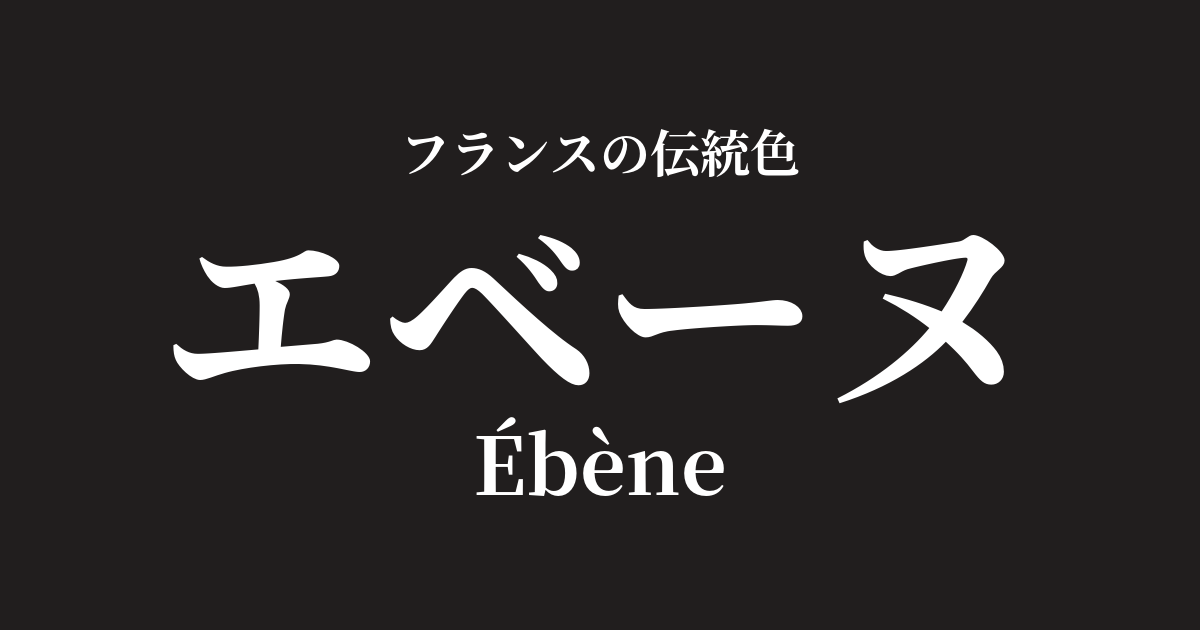
| French | Ébène |
|---|---|
| Katakana | Ebene |
| HEX | #211e1e |
| RGB | 33, 30, 30 |
What is Ebène? Origin and Etymology
"Ébène" is a French word meaning "ebony." Ebony is a tree belonging to the persimmon family and is known for its extremely hard and dense wood.
The heartwood, when polished, has a beautiful jet-black color that shines with a smooth, deep luster. This almost mystical color of the wood itself is the origin of the color name "Ebene."
It's not just plain black, but has a deep, rich hue that hints at warmth and brownness. Ebony furniture has been discovered in ancient Egyptian royal tombs, and it has long been prized as one of the finest woods around the world.
Historical background of Ebène
Ebène wood established its special status in France during the 17th century, in the reign of the Sun King, Louis XIV. André-Charles Bourg, the king's chief court furniture maker, perfected the intricate marquetry technique, known as "Bourg marquetry," which involved inlaying materials such as tortoiseshell, brass, and ivory onto an ebony base. This magnificent furniture adorned the Palace of Versailles and became a symbol of the king's authority and wealth.
Because of this achievement, high-end furniture makers specializing in ebony came to be called by the special title of "ébéniste," rather than simply "menuisier" (cabinetmaker). This is an anecdote that illustrates just how important ebony was as a material in French court culture.
From then on, through the Rococo period to the Empire style of the Napoleonic era, ébène was always used as the finest material for sophisticatedly designed furniture and furnishings, and it has been etched into history as a color that embodies French aesthetics.
Ebène in the world of art and fashion
The deep black of ébène has played an important role in the world of art. In the chiaroscuro technique used by Baroque masters such as Caravaggio and Rembrandt, a deep black like that of ébène was essential to create a dramatic contrast between light and shadow. It gives the depicted subject a sense of depth and drama, and strongly appeals to the viewer's emotions.
In the world of fashion, the perception of black was completely transformed in the 20th century by Coco Chanel's "little black dress." She elevated black, previously considered the color of mourning, to the forefront of fashion. For expressing the simple yet timeless elegance that Chanel pursued, a high-quality, deep black like ébéne was the ideal color.
Furthermore, when expressed in lustrous textiles such as velvet and silk satin, ébène maximizes the texture of the material, creating a luxurious and sophisticated impression. From haute couture dresses to contemporary interior fabrics, its appeal never fades.
Black has everything. The same goes for white. Their beauty is absolute. A perfect harmony.
Color scheme preview
This is to check the readability of the text when this color is used as the background.
Ebene's color scheme proposal
Jaune d'Or (#DDBE35)
This classic combination evokes the opulent decorations of the Palace of Versailles. The rich texture of the ébéne enhances the brilliance of the gold, creating a dignified and elegant impression.
Blanc d'Ivoire (#F5F5DC)
Like the combination of ebony and ivory, it creates a classic and sophisticated contrast. The color scheme evokes a modernity reminiscent of Art Deco, while also possessing a timeless and universal beauty.
Rouge Grenat (#93262A)
This dramatic and passionate color scheme evokes the auditorium of an opera house. The quiet strength of ébène and the sensual allure of crimson resonate with each other, creating a highly impressive and luxurious space.
Practical Scenes
In interior design, ébène wood brings a sense of weight and tranquility to a space. Incorporating it into flooring, fixtures, or large pieces of furniture like pianos tightens the overall space and creates a refined atmosphere. Using it as an accent wall or combining it with gold or brass hardware creates a more modern and sophisticated impression.
In the world of fashion, ébéne leather truly shines in formal settings. Choosing it for special occasions like tuxedos or evening gowns will highlight the material's superior quality and create an elegant look for the wearer. It's also recommended to incorporate it into accessories such as leather bags and shoes.
In web and graphic design, using white as a background color can make other colors and content stand out, creating a sense of sophistication and professionalism. However, it's important to ensure text readability by choosing white or light gray for the text color.