
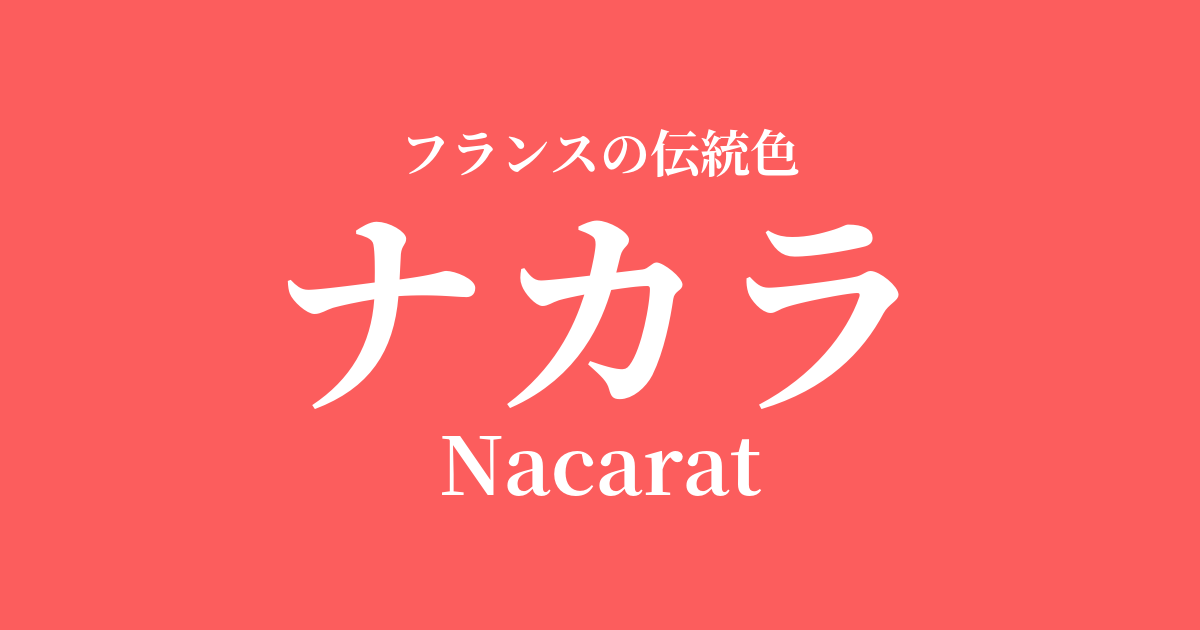
| French | Nacarat |
|---|---|
| Katakana | Nakara |
| HEX | #fc5d5d |
| RGB | 252, 93, 93 |
What is Nakara? Origin and etymology
"Nacarat" is a vibrant yet somehow warm, orange-tinged red color. There are several theories about its etymology, but the most widely accepted is that it is related to the lac insect, which is the raw material for the dye, and derives from a Sanskrit word meaning "red."
The source of this beautiful color was a tiny insect called the "cochineal scale insect," which mainly parasitizes cacti in Central and South America. In ancient times, it was treated as a sacred color in civilizations such as the Aztec civilization, and when it was brought to Europe during the Age of Discovery, its vivid color captivated people, and it came to be traded as an extremely expensive and valuable dye.
The historical background of Nakala
Nacarla was particularly beloved in France during the Bourbon era, from the 17th to the 18th centuries. At the Palace of Versailles, ruled by the Sun King Louis XIV, Nacarla became an important color, adorning the clothing and interior decorations of the nobility amidst the opulent court culture.
Its popularity reached its peak in the late 18th century, when Rococo culture flourished. Queen Marie Antoinette, in particular, is said to have been a great admirer of this color. Nacala frequently appears as the color of the elegant dresses depicted in her portraits. This color symbolized the refined aesthetic sense and opulent lifestyle of the noblewomen of that era.
When the French Revolution overthrew the monarchy, the aristocratic and luxurious image of Nacala was temporarily shunned. However, its beauty never faded, and throughout the subsequent imperial era and the 19th century, it became deeply rooted in French color culture as a color symbolizing authority, passion, and beauty.
Nakara in the world of art and fashion
The works of leading Rococo painters such as Jean-Honoré Fragonard and François Boucher depict noblewomen wearing garments that were likely dyed with Nacala. The elegant texture created by the combination of the luster of silk and the vibrant red of Nacala gives the paintings a sweet and sensual atmosphere.
Furthermore, nacala was an important color in Lyon's silk weaving industry, which France proudly boasts to the world. Fabrics dyed with the finest silk in this color were sought after by royalty and nobility throughout Europe, and symbolized the high level of French textile culture.
Even today, Nakala continues to inspire many fashion designers. Used in haute couture dresses and as an accent color in ready-to-wear, it exudes a new charm that fuses the elegance of its historical background with a modern sensibility.
Color scheme preview
This is to check the readability of the text when this color is used as the background.
Nakara's color scheme proposal
Ecru (#f5f5dc)
The vibrant color of Nakara is gently complemented by the soft, off-white color of Ecru, creating an elegant and sophisticated impression. This combination is perfect for creating a classic yet warm and inviting space.
Gris de Ran (#d2c9c0)
The calm, flaxen-like gray enhances the vibrancy of Nakara while creating a chic and modern overall feel. It's recommended for when you want to express sophisticated elegance without being overly sweet.
Blue Roi (#2c4399)
The combination with Blue Royal, the blue of the French royal family, creates a very dramatic and noble impression. It's a dignified color scheme that highlights each other, simultaneously conveying a sense of historical gravitas and splendor.
Practical Scenes
In interior design, Nakara is an extremely effective accent color that brings energy and warmth to a space. Simply incorporating it into small items like cushions, rugs, or a single chair can brighten up the entire room and create a sophisticated atmosphere. It pairs particularly well with metallic materials such as gold and brass.
In the world of fashion, nacala is a leading color that attracts attention. Using it in dresses for special occasions, or as an accent color in scarves and bags, creates a confident and elegant style. It's also a popular lipstick color, brightening the complexion.
In web and graphic design, using Nakara on call-to-action buttons or important headings can attract user attention and create a passionate and positive impression. However, overuse can be overwhelming, so it's best to use it strategically while maintaining overall balance.