
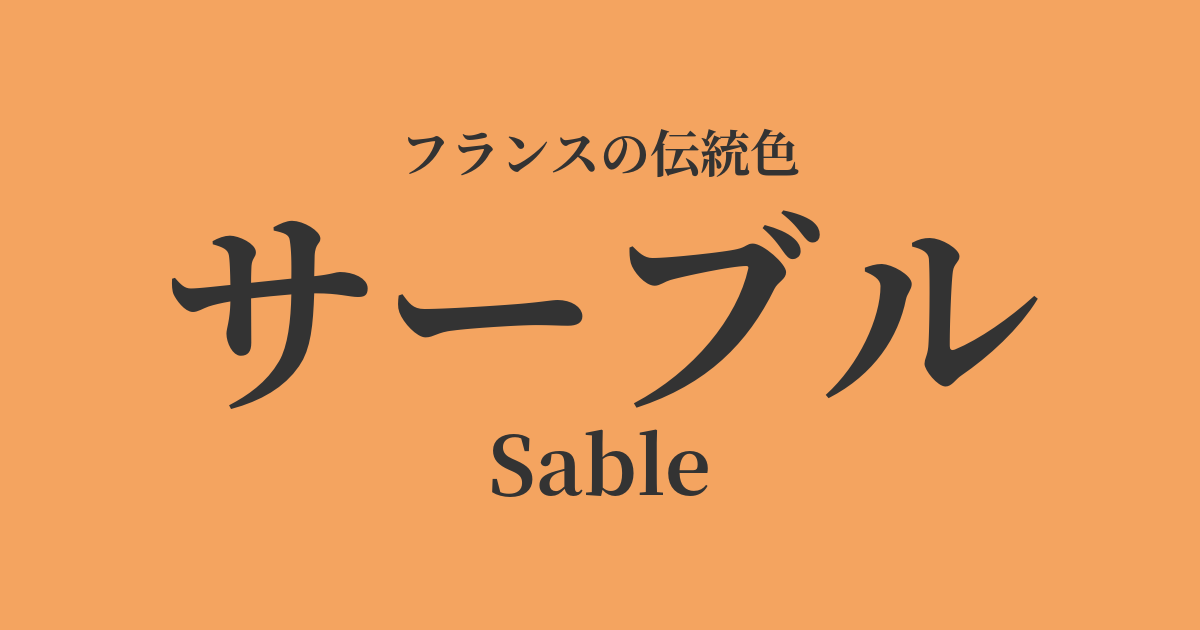
| French | Sable |
|---|---|
| Katakana | Sabre |
| HEX | #f4a460 |
| RGB | 244, 164, 96 |
What is a sabre? Origin and etymology
Sable is a French word meaning "sand." Its etymology traces back to the Latin word "sabulum," which referred to coarse sand or gravel.
This color evokes the beautiful coastline of France, such as the sandy beaches of Normandy or the river sand of the Seine River flowing through Paris. While it is an ordinary part of the natural landscape, its warm and gentle hue has brought comfort and familiarity to people's lives.
Historical background of sabres
Sable is a color that stands apart from the vibrant colors used by royalty and nobility; rather, it is a color that has been closely associated with the land, architecture, and the lives of ordinary people. Traces of this can be seen in the stonework of medieval French castles and churches, especially the shade of sandstone (grès).
During the Rococo period of the 18th century, earth tones, reflecting a longing for nature, gained prominence in the pastoral aesthetics beloved by Marie Antoinette. These gentle hues, such as sable, symbolized a simple and tranquil aesthetic, a stark contrast to the opulent court culture.
Furthermore, in modern times, it was also adopted as a color for military uniforms. In particular, it was used for the uniforms of units intended for operations in desert areas, where its functionality as a camouflage color was highly valued. It is a color that has remained present in French history, while its role has changed over time.
Sable in the world of art and fashion
In the art world, 19th-century Barbizon School painters frequently used sable tones when depicting the quintessential French countryside. It was used to symbolize a life rooted in the earth, as seen in the dry soil of Jean-François Millet's works and the sunlit walls of buildings painted by Camille Corot.
In fashion, sable is one of the essential colors for French chic. It is especially popular as a classic shade for trench coats and safari jackets. It also pairs exceptionally well with natural materials such as linen and cotton, and its unpretentious elegance has made it a timeless favorite.
The desert is beautiful because it hides a well somewhere...
Color scheme preview
This is to check the readability of the text when this color is used as the background.
Sable color scheme proposal
Blue Nuit (#0F2540)
The combination of the deep blue of the night sky and the gentle colors of the sandy beach creates a chic and urban impression. The beautiful contrast enhances each other's colors, creating a sophisticated and calming atmosphere.
Rose Pompadour (#ED82A2)
The warm sable color blends seamlessly with the sweet and elegant pink, evoking a Rococo-inspired refinement and softness. Its feminine and romantic feel adds a gentle touch of color to interiors and fashion.
Vert Veronnaise (#5A8F7B)
This color scheme evokes the harmony of nature, reminiscent of sandy landscapes and lush greenery. The earth tones blend together harmoniously, making it an ideal combination for creating a relaxing, organic space.
Practical Scenes
In interior design, incorporating sable into walls and fabrics brings warmth and brightness to a space. It pairs particularly well with natural materials such as wood, linen, and rattan, making it ideal for creating a relaxing, natural atmosphere or a seaside cottage-like style.
In fashion, it's a versatile color that represents French chic. Adding just one item in it—such as a trench coat, linen dress, or leather accessories—creates a sophisticated look. It also excels as a base color that enhances other colors, making it enjoyable in a wide range of outfits regardless of the season.
In web design, using it as a background color gives users a sense of security and familiarity. It is suitable for designs that want to convey warmth and trustworthiness, such as websites for organic products, lifestyle-related sites, and e-commerce sites selling handmade goods.