
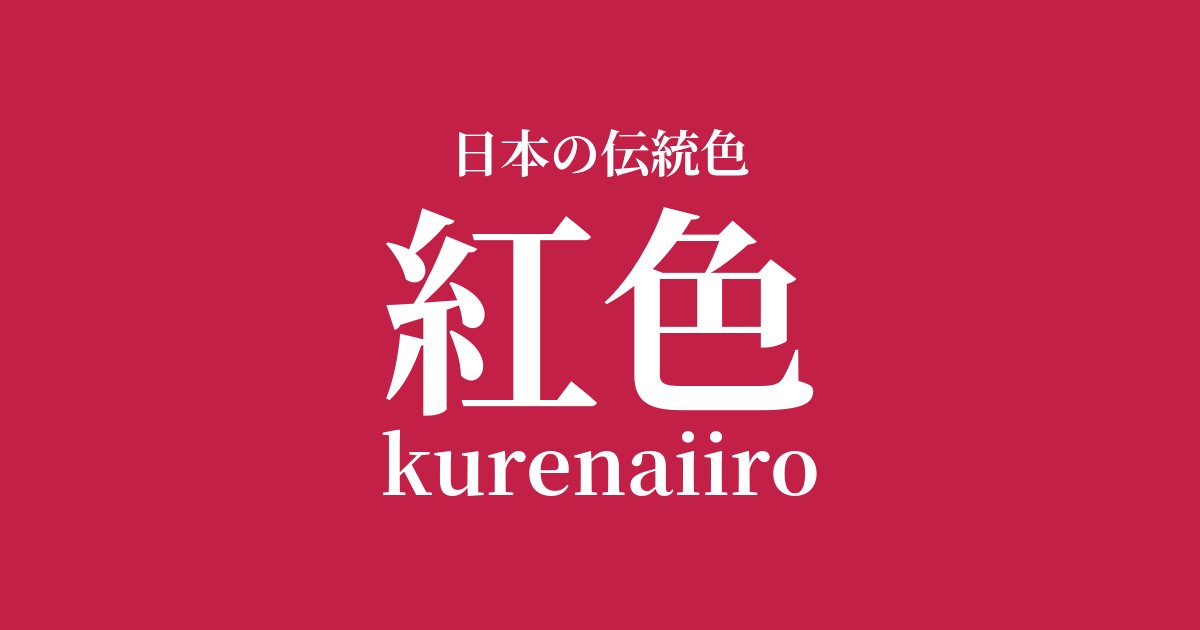
| Japanese color name | Crimson |
|---|---|
| reading | kurenaiiro |
| HEX | #C22047 |
| RGB | 194, 32, 71 |
What is the color crimson? Origin and etymology
The origin of the word "beniiro" (crimson) is said to be derived from "kure no ai," which means indigo (dye) that was introduced from the Kingdom of Wu in China. The raw material is the petals of the safflower, a plant of the Asteraceae family, and contains a water-soluble yellow pigment and a red pigment extracted with an alkaline liquid. Crimson is the color obtained by dyeing with only this rare red pigment, and its vividness has made it a noble color since ancient times.
The process of extracting red pigment from safflower was extremely laborious, requiring a large number of petals and repeated dyeing to achieve a deep color. Therefore, safflower dyeing was extremely expensive, and the deep crimson color obtained through repeated dyeing was called "kokikurenai" (deep crimson) and considered the highest quality. In Heian period literature, safflower was also called "suetsumuhana" (last flower), and scenes of picking its flowers are often depicted.
Crimson Historical Background
It is said that crimson has been used as a color indicating high rank since the time of the Twelve Levels of Court Rank established in the Asuka period. In the Yōrō Code of the Nara period, it was designated as a color that could only be worn by members of the imperial family and high-ranking officials, demonstrating its high value. Deep crimson, in particular, was once considered a forbidden color that could only be worn by a limited number of people, such as the emperor.
During the Heian period, crimson became a color of admiration for women in aristocratic society, and it was frequently incorporated into the layered colors of the twelve-layered kimono (junihitoe). Classical literature such as "The Tale of Genji" and "The Pillow Book" also contain descriptions praising the beauty of crimson clothing. In this era, crimson played an important cultural role as a symbol of beauty and authority.
During the Edo period, the widespread cultivation of safflower made rouge affordable for ordinary people. Its demand as a cosmetic product particularly increased, and it became extremely popular among courtesans and town girls who applied it to their lips. This rouge, known as "sasa-iro-beni" (bamboo leaf colored rouge) for its iridescent sheen, was highly prized, and ukiyo-e prints show that it was a popular choice among fashion leaders of the time.
Related literature, waka poetry, and seasonal words
Crimson appears frequently in classical literature, vividly coloring the characters' clothing and the scenes depicted. In "The Tale of Genji," one of the princesses Hikaru Genji encounters is called "Suetsumuhana" because of her red nose. This is an old name for safflower, an example of how a color name strongly influences a character's impression. Furthermore, vibrant crimson clothing is depicted throughout the work as a symbol of noble women.
In Sei Shōnagon's "The Pillow Book," red hues frequently appear as a symbol of beauty. In the sections on "things that are auspicious" and "things that are beautiful," red clothing and red plum blossom textiles are mentioned, conveying the refined sense of color of the Heian aristocracy. Furthermore, safflower dye was also a subject of waka poetry, and its vivid red was celebrated as a color symbolizing the passion of love and vitality.
Crimson tears flow down my sleeves, and flowers scatter upon them, as I try to hide from prying eyes.
Color scheme preview
This is to check the readability of the text when this color is used as the background.
Red color scheme proposal
Light green (#A5C43B)
A combination of fresh green reminiscent of spring grass and vibrant crimson. This color scheme, also seen in classical "layered color combinations," gives a youthful and cheerful impression. The colors complement each other, creating a bright and cheerful atmosphere.
Indigo (#264348)
Deep indigo and vibrant crimson are almost complementary colors, enhancing each other's beauty. The subdued indigo balances the vibrancy of the crimson, creating a powerful and striking contrast. This sophisticated color scheme can also be seen in Edo period ukiyo-e prints.
White training (#FFFFFF)
When combined with pure white, the vibrancy of the crimson color stands out most. The red and white color scheme has long been used in Japan for celebrations and sacred occasions. It gives a pure and dignified impression, adding definition and elegance to the design.
Practical Scenes
In the world of kimono, crimson is an indispensable color, especially for formal wear and celebratory attire. It is frequently used in gorgeous outfits that mark important milestones in life, such as the furisode kimono worn at coming-of-age ceremonies and the uchikake bridal kimono. The red and white color scheme is considered a symbol of good fortune, expressing dignity and joy befitting auspicious occasions.
In interior design, crimson is an effective accent color that tightens up a space. Incorporating it into cushion covers, a portion of wallpaper, or decorative items can give the entire room an energetic and sophisticated feel. It's a color that looks great not only in Japanese modern spaces but also in simple, contemporary architecture.
In web and graphic design, the strong appeal of the color red is utilized. Using it in buttons, headlines, and logos that you want to attract attention can draw the user's eye and convey passion and vitality. Combining it with white, black, or dark blue creates a modern and impactful design.