
| Japanese color name | Red plum |
|---|---|
| reading | small |
| season | 春 |
| Color of the table | Plum blossom color (kobaiiro) |
| Back color | Suou |
What is a red plum blossom? Origin and etymology
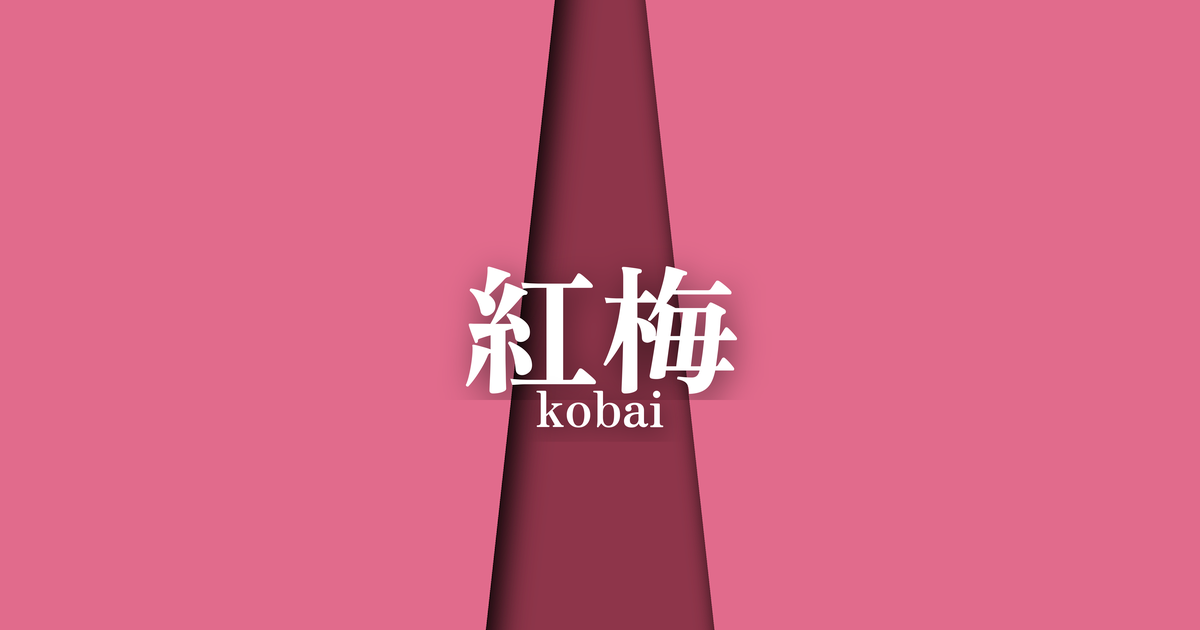
"Koubai" (紅梅), as its name suggests, is a color combination derived from the crimson plum blossoms that bloom in early spring. The "Koubai color" used on the outside represents the vibrant pink of the blooming petals, while the "Suou" on the inside represents the dark reddish-purple of the plum tree's trunk and branches. This combination of two colors skillfully expresses the beautiful scene of the crimson plum blossoms blooming proudly in the still chilly air.
During the Heian period, aristocrats enjoyed incorporating the colors of natural landscapes and plants into the color schemes of their clothing, delicately perceiving and expressing the changing seasons. Red plum blossoms were one of the most beloved color combinations, symbolizing the joy of spring's arrival after the harsh winter and the breath of life.
Historical background of red plum blossoms
In the aristocratic society of the Heian period, the color coordination of clothing was an important element that demonstrated an individual's education and aesthetic sense. "Layered color combinations" were considered stylish if they anticipated the season, and "red plum blossoms" were worn from the end of winter to the beginning of spring, specifically from the first month of the lunar calendar to February.
This color scheme was particularly popular among the ladies-in-waiting serving in the imperial court, and was favored for use in formal attire such as the twelve-layered kimono (junihitoe). Its name is also recorded in books on court customs and traditions, such as the "Masasuke Shōzoku Shō," and although there were slight variations in the shades of the colors over time, the basic color scheme has remained unchanged and has been passed down to later generations.
Related literature, waka poetry, and seasonal words
In the "Young Murasaki" chapter of "The Tale of Genji," there is a description of one of the garments that Hikaru Genji gave to the young Murasaki when he first fell in love with her: it is described as having "a crimson plum blossom pattern." This refers to a crimson plum blossom colored fabric, indicating that this color was recognized as a symbol of youthfulness and nobility.
Furthermore, in Sei Shonagon's "The Pillow Book," it is written, "Of all the blossoms on trees, both dark and light red are red plum blossoms," praising red plum blossoms in particular among plum varieties. It is thought that this aesthetic sense depicted in classical literature became the cultural background that supported the popularity of "red plum blossom" as a color for clothing.
To whom else but you can I show the plum blossoms? Their color and fragrance are known only to those who know.
The season and scenery of red plum blossoms
"Koubai" (red plum blossom) is a color combination that heralds the arrival of early spring. The most appropriate time to wear it is from the first month of the lunar calendar to February, which corresponds to early February to early March in the modern calendar. It was worn to coincide with the season when plum blossoms begin to bloom, anticipating the arrival of spring.
This color scheme expresses the powerful vitality and dignified beauty of red plum blossoms blooming amidst a landscape still covered in snow. Incorporating "red plum blossoms" into one's attire was a reflection of the refined sensibilities of the Heian aristocracy, showing their appreciation for the changing seasons and their anticipation for the new season.
Color scheme proposal for red plum blossoms
Light green (#A5C949)
Light green is the color of young grass sprouting in early spring. The contrast between the red plum blossoms and the young leaves evokes a vibrant scene of spring. In traditional Japanese clothing, it is used in garments such as the akome (a type of undergarment), creating a youthful and fresh impression.
White (#FFFFFF)
White symbolizes purity and sanctity, and effectively highlights the vibrant color of the red plum blossoms. It evokes the image of red plum blossoms blooming amidst lingering snow, creating an elegant and pure beauty. It is also a suitable background color in modern designs.
Yamabuki (#F8B500)
The yellow kerria flower blooms in spring, slightly later than the red plum blossom. Combining it with the red plum blossom can express the vibrant transition of the season as spring approaches its peak. The combination of warm colors gives a warm and lively impression and is suitable for festive occasions.
Practical Scenes
During the Heian period, it was mainly used as part of the layering of women's twelve-layered kimonos. It was worn as an outer garment (uwagi) or inner robe (uchiki) to highlight the vibrant colors of the red plum blossom. It is also said to have been used as a type of trousers (sashinuki) for young male aristocrats.
In modern times, this color scheme is incorporated into traditional Japanese clothing accessories such as kimonos, obi sashes, and obi ties, adding a seasonal touch to outfits for spring tea ceremonies, theater performances, and graduation ceremonies. In interior design, using it on cushions or noren curtains can add a vibrant and warm accent to a space.
In the fields of web design and graphic design, this color scheme is used for spring campaigns and women's products. The elegance of the plum blossom color and the calmness of the madder red give a refined and sophisticated impression, making it a color scheme that contributes to improving the brand image.