
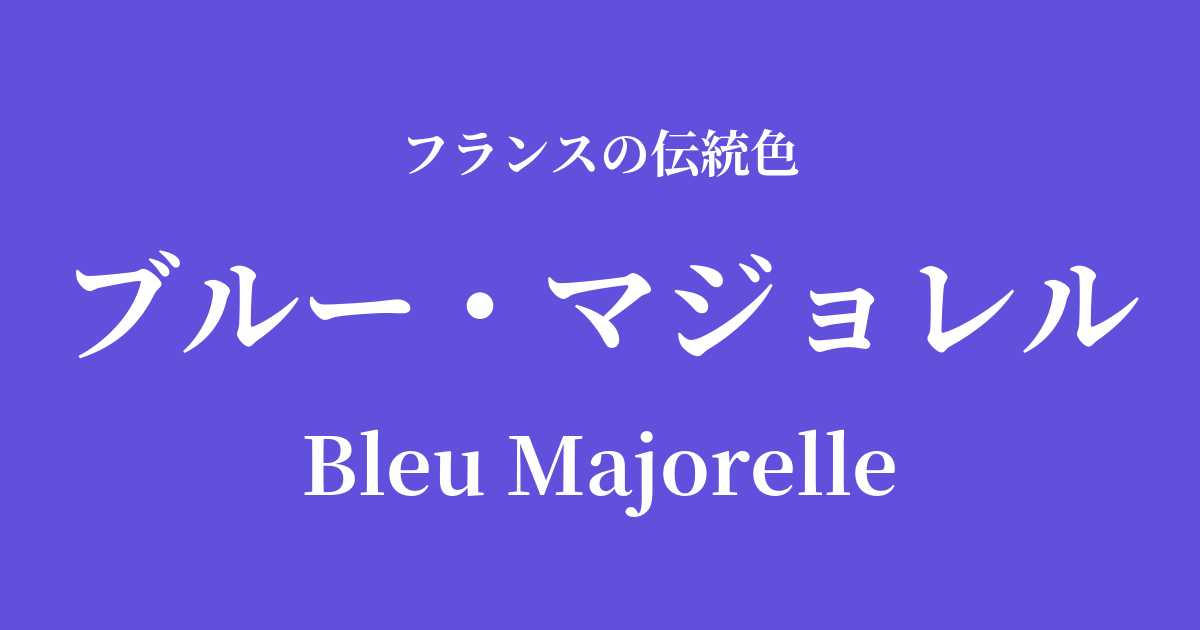
| French | Bleu Majorelle |
|---|---|
| Katakana | Blue Majorelle |
| HEX | #6050dc |
| RGB | 96, 80, 220 |
What is Blue Majorelle? Origin and Etymology
Blue Majorelle is a vibrant, deep blue color named after the French painter Jacques Majorelle (1886-1962). Its name originates from its striking use in the "Majorelle Garden" in Marrakech, Morocco, which he dedicated his life to creating.
This color is an intense cobalt blue that captivates the viewer, characterized by a subtle hint of purple. Majorelle is said to have been captivated by the color of Moroccan skies and the blue of traditional tiles used in local homes and fountains, and to have blended her own unique color to express them. It is a color that is carefully calculated to reveal its true beauty when bathed in strong sunlight.
The historical background of Blue Majorelle
Unlike the classical French history of monarchy and revolution, Blue Majorelle emerged from 20th-century art and cross-cultural exchange. From the late 19th to the early 20th century, "Orientalism," which sought inspiration from the cultures of North Africa and the Middle East, was popular among French artists. Jacques Majorelle was one of them, and in 1917, he first visited Morocco and was captivated by its light and colors.
In 1923, he purchased land in Marrakech and began constructing a garden and studio. He used this special blue for every element of the garden—walls, fountains, pergolas, and flowerpots—creating a vivid contrast with the green of the plants. Thus, Blue Majorelle became synonymous with the garden.
After his death, the garden nearly fell into disrepair, but in 1980, fashion designer Yves Saint Laurent and his partner Pierre Bergé bought and restored it. Saint Laurent loved this place dearly and used it as a source of inspiration for his own creative work, which led to the name Blue Majorelle gaining worldwide recognition and establishing it as a proud modern traditional color of France.
Blue Majorelle in the World of Art and Fashion
Blue Majorelle plays a significant role, first and foremost, in the paintings of Jacques Majorelle himself. He depicted the bustling markets of Morocco, the landscapes of the Atlas Mountains, and the lives of the local people using this vivid blue and other rich colors.
In the world of fashion, Yves Saint Laurent is known for frequently incorporating this color into his collections. The bold use of color and exotic designs seen in his haute couture are deeply connected to the inspiration he drew from the Majorelle Garden. Blue Majorelle has become more than just a color; it has become a fashion color that symbolizes sophistication, passion, and exoticism.
Furthermore, the Majorelle Garden itself is regarded as a comprehensive work of art where architecture, landscaping, and color are integrated. The Art Deco-style atelier, the plants collected from all over the world, and the vibrant blue Majorelle color that connects them all continue to provide visitors with a powerful aesthetic experience.
For many years, I have found an inexhaustible source of inspiration in the Majorelle Garden, and I have often dreamed of its unique colors.
Color scheme preview
This is to check the readability of the text when this color is used as the background.
Blue Majorelle color scheme proposal
John Briand (#F3D959)
By combining it with a vibrant yellow that is close to its complementary color, the two colors enhance each other to the fullest. It gives an energetic and exotic impression reminiscent of the Moroccan sun and desert.
Blanc Cassé (#F8F2E5)
The warm off-white softens the intensity of the blue majorelle, creating a sophisticated space. It gives a fresh and modern impression reminiscent of a Mediterranean resort.
Rose Pompadour (#ED7A9E)
The combination of vibrant blue and gorgeous pink creates a bold yet romantic atmosphere. In fashion and design, it gives a unique and playful impression.
Practical Scenes
Blue Majorelle is a very striking color, so it's most effective when used as an accent in a space or design.
In interior design, using this color as an accent wall in the living room, or incorporating it through small items like cushions, artwork, or vases, will tighten up the overall space and create a modern, sophisticated atmosphere. It pairs exceptionally well with white, beige, and natural wood.
In fashion, simply adding one item like a dress, blouse, bag, shoes, or scarf can elevate an entire outfit. It looks especially beautiful in the summer sun, and when paired with white or gold accessories, it creates an elegant and striking style.
In web and graphic design, using accent colors for call-to-action buttons or important headings can effectively capture the user's attention. It's recommended to use them as key colors and strategically place them rather than using them extensively as background colors.