
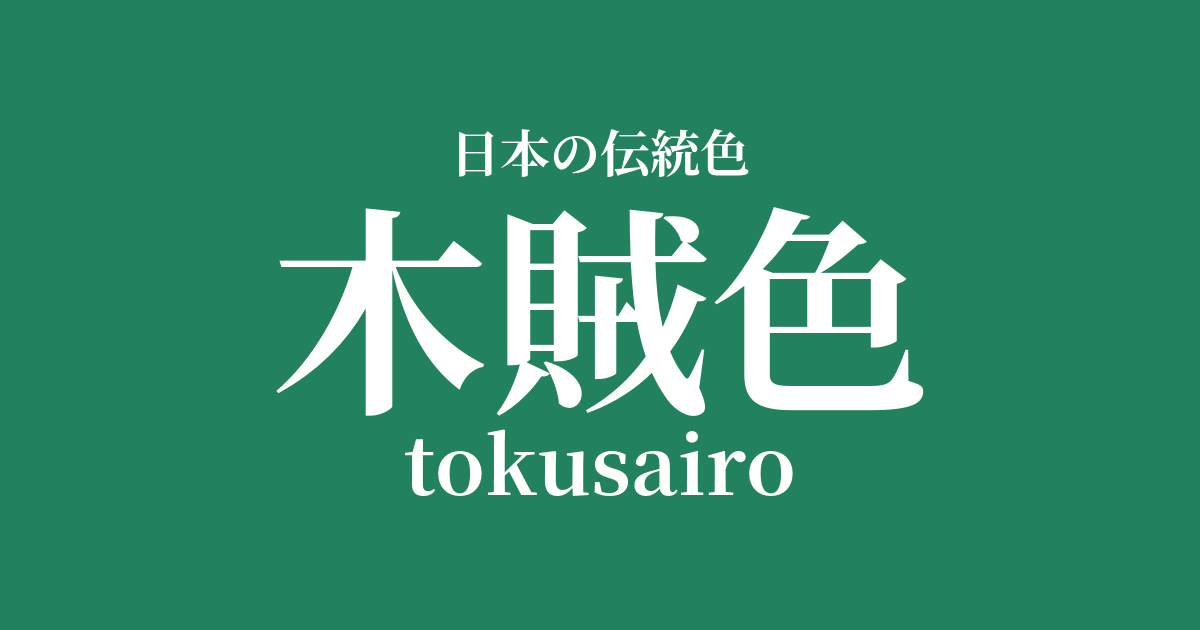
| Japanese color name | Wood bandit color |
|---|---|
| reading | tokusairo |
| HEX | #22825D |
| RGB | 34, 130, 93 |
What is horsetail green? Origin and etymology.
Tokusa-iro (horsetail green) is derived from the color of the stem of the evergreen plant "Tokusa" (horsetail), which belongs to the Equisetaceae family of the Pteridophyta division. Tokusa can also be written as "Togusa" (tofu grass), and it is said that the name comes from the fact that its rough stem was used as a natural whetstone to polish swords and wooden crafts. Tokusa-iro faithfully captures the deep, calm, bluish-green color of this plant. It is characterized by a deep hue that combines the strength and tranquility of the natural world.
Historical background of horsetail green
Horsetail green is known as a color that was popular in the mid-Edo period. In particular, it is said that the use of this color in the costume of Banzuiin Chobei, the character played by the Kabuki actor Matsumoto Koshiro V in the play "Suzugamori," made it explosively popular among the common people of Edo. Horsetail green was also used in the actor's pattern called "Kōraiya lattice," named after his family's stage name "Kōraiya," and it became one of the colors that symbolized the fashion of the time. This color was widely cherished as a color that embodied the "chic" aesthetic sense of the Edo people.
Related literature, waka poetry, and seasonal words
In literature, the color of horsetail often appears as the plant itself. The plant "horsetail" is a seasonal word for autumn and is used in haiku to express a sense of loneliness and wabi-sabi aesthetics. There is also a Noh play called "Tokusa" (Horsetail), which tells the story of an old man who cuts horsetail in Shinano Province and is reunited with his long-lost child. This story evokes deep emotion by associating the lonely scenery of horsetail with the love between parent and child.
Although they are rarely used directly as color names in poetry, the plants behind them have long been deeply rooted in Japanese culture.
Cutting horsetail grass at the inn, the fern grass by the eaves
Color scheme preview
This is to check the readability of the text when this color is used as the background.
Horsetail green color scheme proposal
Rusty light green (#86A8A0)
The deep green of horsetail and the muted blue-green of rusty light blue are both calm tones that complement each other well. They give a gentle and refined impression reminiscent of natural landscapes, creating an elegant harmony.
Persimmon color (#ED6D3D)
By combining a deep horsetail green with a vibrant, warm persimmon color, the two colors complement each other, creating a rich and vibrant impression reminiscent of autumn foliage.
White Rat (#BDC0BA)
The rich, dignified feel of the horsetail color is softened by the bright, soft gray. This creates a modern and sophisticated impression, achieving both cleanliness and a sense of luxury. It's a color scheme well-suited to minimalist designs.
Practical Scenes
Horsetail green has been used as a color for kimonos and obi sashes since ancient times, and is especially often seen in patterns that reflect the refined tastes of the Edo period. When used in men's haori jackets and hakama trousers, it creates an impression of composure and dignity. In women's kimonos, incorporating it as an accent in obi sashes and accessories completes a sophisticated adult look.
In interior design, horsetail green can be incorporated into wallpaper, curtains, sofas, and other fabrics to bring a sense of calm and depth to a space. It blends well with both Japanese-style rooms and modern Western-style rooms. It also pairs well with houseplants and wooden furniture, creating a relaxed atmosphere that evokes a sense of nature.
In web design, using horsetail green as a background or accent color can convey a sense of reliability and sophistication. It is particularly suitable for websites of traditional crafts, natural cosmetics, and luxury inns. Combining it with white or beige tones creates an elegant and calm design while maintaining readability.