
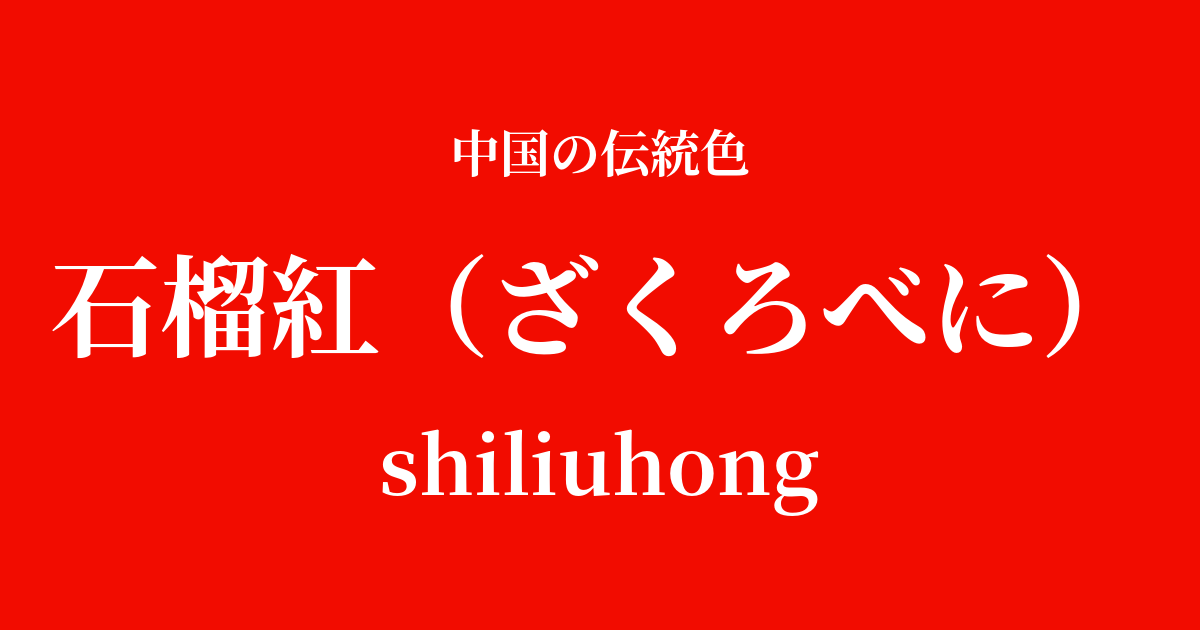
| Color name | Pomegranate red |
|---|---|
| reading | Pomegranate Red |
| pinyin | shiliuhong |
| HEX | #F20C00 |
| RGB | 242, 12, 0 |
What is pomegranate red? Origin and etymology
As its name suggests, Sekiryukou (or Zakurobeni) is a vibrant, life-affirming red color reminiscent of ripe pomegranate fruit and flowers.
Because pomegranates contain numerous red seeds within a single fruit, they have long been considered an auspicious fruit in China, symbolizing "many children and abundant fortune." Due to this good fortune, the color of pomegranates, known as pomegranate red, has also been cherished by people as a color that symbolizes fertility, prosperity, and family happiness.
Historical background of pomegranate
It is said that pomegranates were brought back from the Western Regions by Zhang Qian during the Han Dynasty. Their beautiful flowers and auspicious fruit eventually became beloved throughout China.
Pomegranate red was particularly popular during the Tang Dynasty, a period of flourishing culture. The anecdote that Yang Guifei, known as a woman of unparalleled beauty, dearly loved a skirt of this color, called a "pomegranate skirt," is very famous. The emperor, showing respect for Yang Guifei's pomegranate skirt, ordered his ministers to prostrate themselves before it, giving rise to the expression "to prostrate oneself beneath a pomegranate skirt." This expression has been passed down to the present day to describe a man who is completely captivated by the charm of a beautiful woman.
As this story illustrates, pomegranate red was not merely a fashionable color, but became a color that symbolized the beauty and charm of women in the Tang Dynasty. Throughout the subsequent Ming and Qing dynasties, it remained an important color widely used in auspicious occasions, such as wedding attire and celebratory decorations.
Pomegranate red in Chinese art and crafts
The color pomegranate red is most closely associated with clothing culture, particularly the "pomegranate skirt" worn by women during the Tang Dynasty. These silk skirts, dyed using the finest dyeing and weaving techniques of the time, adorned the court and capital with their vibrant red color. Many poems and paintings depict women wearing pomegranate skirts, conveying the splendor of that culture to this day.
Furthermore, pomegranate red is an important color in paintings such as Gongbi painting. Pomegranates themselves are depicted as auspicious motifs, and in portraits, it was used as the color of women's clothing to express their beauty and social status. The vibrant red has the effect of giving the entire picture a sense of vibrancy and life.
Red-skinned stone-spelled flower
Color scheme preview
This is to check the readability of the text when this color is used as the background.
Suggested color scheme for pebbled red
Moon White (#D9E4E8)
By combining a vibrant pomegranate red with a pale, bluish-white reminiscent of moonlight, the passionate red is enhanced, creating a pure and refined impression. It's an elegant combination where each color beautifully complements the others.
Matsuka (#BCEE68)
When combined with pine blossoms, which have a bright yellowish-green color, it creates a natural and vibrant color scheme reminiscent of pomegranate fruit and leaves. It gives a lively, youthful, and positive impression.
Raven blue (#424242)
By combining it with a slightly bluish black, like a crow's feather, the vibrancy of pomegranate red stands out, creating a modern and powerful impression. It's perfect for creating a dramatic and luxurious space.
Practical Scenes
In the world of fashion, pomegranate red adds a touch of glamour and passion to an entire outfit when incorporated into items such as dresses, blouses, and scarves. It will make a particularly striking statement when worn at celebratory occasions and parties.
In interior design, it's recommended to use it as an accent color for cushion covers, rugs, and art panels. It brings energy and warmth to a space and brightens the mood of those who see it. In particular, adding it as an accent color to a modern space based on white or gray creates a sophisticated impression.
In web and graphic design, its vibrant colors make it effective for buttons, banners, and headlines that you want to attract attention. It's suitable for situations where you want to create a positive and powerful image, such as celebrations, sales, or campaigns that convey passionate messages.