
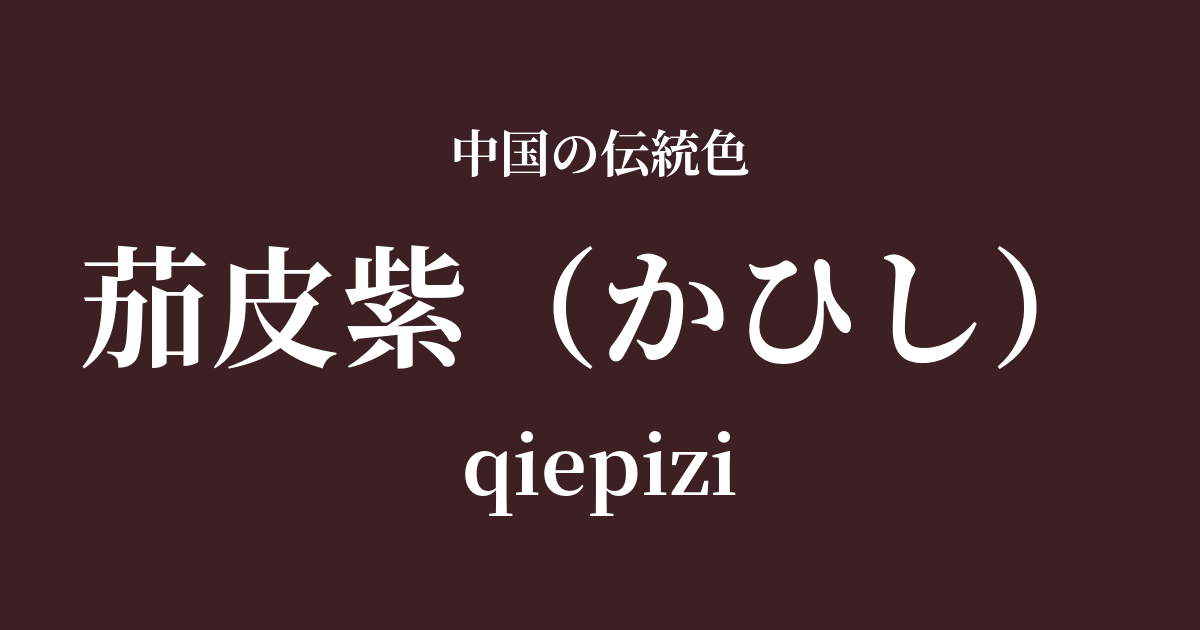
| Color name | eggplant purple |
|---|---|
| reading | Kahishi |
| pinyin | qiepizi |
| HEX | #3D2023 |
| RGB | 61, 32, 35 |
What is "Nasugawa Murasaki"? Origin and etymology
As the name suggests, "kahishi" (eggplant skin purple) derives its name from the deep, lustrous purple color seen on the skin of a ripe eggplant. It is a complex and beautiful shade that is almost black in depth, yet appears subtly reddish when it catches the light.
This name, inspired by plants in nature, is both realistic and elegant. By specifically mentioning "eggplant skin" rather than simply "purple," it expresses the unique sheen and vibrant, life-affirming colors of the eggplant.
Historical background of eggplant purple
Eggplant purple gained particular prominence on the historical stage during the Qing Dynasty, especially during its golden age spanning the reigns of the Kangxi, Yongzheng, and Qianlong emperors. During this period, the imperial kilns, known as "Guanyao," located in Jingdezhen, Jiangxi Province, produced the highest quality porcelain for the emperor.
Among these, single-color glazed porcelain using a glaze called "eggplant skin purple glaze" required extremely high skill. This glaze, whose main component is manganese oxide, only develops a deep and stable purple color when the firing temperature and oxygen supply are precisely controlled. Due to its rarity and beauty, it was used for ritual vessels, stationery, and everyday tableware in the royal court, and was deeply cherished by emperors and nobles. This color was also a symbol of the refined aesthetic sense of the time and the advanced craftsmanship that made it possible.
Eggplant purple in Chinese art and crafts
The most iconic example of eggplant purple is the "eggplant purple glaze" porcelain produced during the Qing Dynasty. Various forms of vessels were created, including vases, jars, bowls, and plates. The surface has a moist, almost wet sheen, and the shades of purple subtly change depending on the angle of the light, revealing a profound and captivating expression.
In fashion culture, purple has long been considered a color signifying noble status. A calm and dignified shade of purple, such as eggplant purple, was dyed onto silk fabrics and is believed to have been used in the attire of royalty and high-ranking officials. Its deep hue quietly conveyed the wearer's authority and refinement.
Color scheme preview
This is to check the readability of the text when this color is used as the background.
A color scheme proposal for eggplant purple.
Tsukihaku (#EAF4FC)
The deep, rich color of eggplant purple is beautifully complemented by the pure, bright color of moon white. It gives off an elegant and refined impression, reminiscent of the moonlight on a quiet night.
Akika color (#D9A44E)
This combination evokes images of ripe fruit and the bountiful harvest of autumn. The calming tone of eggplant purple is complemented by the warmth of autumn fragrance, creating a rich and profound impression.
Matsuka Midori (#B0D235)
This natural color scheme is reminiscent of the relationship between the eggplant fruit and its calyx. The richness of eggplant skin purple is combined with the youthful vitality of pine blossom green, creating a lively yet calm impression.
Practical Scenes
In interior design, incorporating eggplant purple into accent walls, sofas, and cushions brings a sense of depth and elegance to a space. Combining it with lighter colors like moon white or off-white creates a modern and sophisticated atmosphere. It also pairs exceptionally well with metallic materials such as gold and brass.
In fashion, using this color over large areas, such as dresses and coats, creates an elegant and mysterious charm. On the other hand, it's also effective as an accent color in accessories like scarves, bags, and belts. Pairing it with beige or autumnal tones creates a warm and sophisticated look.
In web design and graphic design, using this color as a background can deeply express the worldview of luxury brands or content related to history and culture. When using it as a main color, it is recommended to combine it with white or light gray to ensure text readability.