
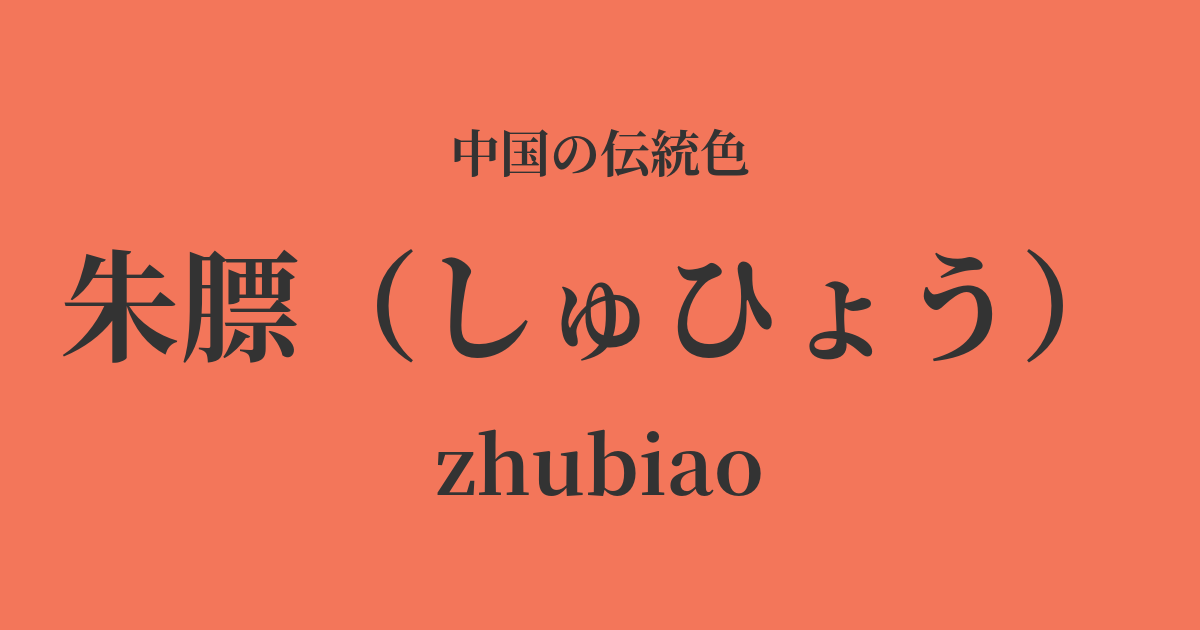
| Color name | Vermilion |
|---|---|
| reading | Shuhyo |
| pinyin | zhubiao |
| HEX | #F3765A |
| RGB | 243, 118, 90 |
Who is Zhu Hui? Origin and etymology
Zhuhyo is a vibrant, deep vermilion pigment made from the mineral cinnabar, or mercury sulfide. Its name comes from its unique refining method.
"Shu" originally meant vermilion, and "hyo" originally meant animal fat or the outermost layer of meat. In the world of pigments, the lightest and purest layer of particles that floated gently to the surface of the water during the refining process called "suihi," in which cinnabar raw material was finely crushed and ground in a mortar in water to remove impurities, was called "hyo." This uppermost layer of pigment was considered the highest quality "shuhyo," and its vivid color set it apart from other vermilion pigments.
Thus, the name Zhuhai not merely refers to a color, but also embodies the pride of the traditional techniques involved, from the selection of materials to their refinement, and the resulting pigment of the highest quality.
The historical background of Zhu He
The use of cinnabar, the raw material for vermilion glaze, is very ancient, and it has been found in Neolithic sites in China. Initially, it is thought to have been used for warding off evil spirits or in rituals, but as its value as a pigment became recognized, it became a special color in art and architecture.
Especially from the Tang Dynasty onward, as painting techniques developed, vermilion pigment became an indispensable pigment for painters due to its vividness. In the refined landscape paintings of the Song Dynasty, it was used to color autumn leaves and building pillars, giving the painting a sense of life and splendor. Furthermore, in literati painting from the Yuan Dynasty onward, the highest quality vermilion pigment was used as ink paste for stamping signatures, becoming an important element that tightened the overall look of the work.
During the Ming and Qing dynasties, court painters eagerly used vermilion in their portraits of emperors and lavish decorative paintings. Its fade-resistant properties and dignified hue made it a fitting symbol of authority and eternity. Furthermore, in Taoist thought, cinnabar was considered an ingredient in the "golden elixir," a miraculous elixir of immortality. Thus, vermilion became associated with vitality and mystery, and was etched into people's minds as a color with deep cultural significance.
Zhu Hei in Chinese Art and Crafts
Zhu Hei's beauty is best showcased in the world of traditional Chinese painting. In "Gongbi painting," which is characterized by its meticulous detail, he uses his vibrant red in the coloring of figures' clothing and lips, as well as in the petals of flower and bird paintings, bringing elegance and realism to his works.
In landscape painting, this color was indispensable for depicting sunsets and fiery autumn leaves. Adding a single touch of vermilion to the majestic natural landscapes painted with varying shades of ink brings the changing seasons and the passage of time to life with vivid detail. It is said that even the modern master Zhang Daqian favored this color.
Furthermore, in the world of calligraphy, the highest quality ink used for the seal paste (indei) applied at the end of a work is considered to be made from vermilion. The harmony of the white of the paper, the black of the ink, and the vermilion of the seal completes the artistry of a calligraphic or painted work. In addition, vermilion has been frequently used to decorate the pillars and walls of palaces and temples, imbuing the space with solemnity and sanctity.
Hidee flower red katsuhi, Harukie water green color blue
Color scheme preview
This is to check the readability of the text when this color is used as the background.
Zhu Ging's color scheme proposal
Moon White (#D9E4E8)
When combined with a pale, pure moon-white, the vibrancy of the vermilion stands out, creating a refined and elegant impression. Like a single streak of vermilion painted on white porcelain, the colors complement each other, resulting in a dignified color scheme.
Matsuka Midori (#B0D259)
The youthful, pine-needle-like Matsuka-ryoku harmonizes with the warmth of Zhuhai, creating a vibrant and lively impression. It's an energetic and gorgeous combination, reminiscent of flowers and leaves found in nature.
Mayuzumi (#495859)
The deep, rich brown color perfectly complements the vibrant red of the vermilion, giving the overall look a dignified and refined feel. This sophisticated color scheme evokes traditional calligraphy, paintings, and lacquerware, making it perfect for adults.
Practical Scenes
In interior design, reddish-brown is an ideal accent color that brings vibrancy and energy to a space. Simply incorporating it through small items like cushions, vases, or art panels will give the entire room a refined and sophisticated feel. Using this color as an accent wall is also effective in creating a dramatic space.
In the world of fashion, it's a color that takes center stage in an outfit. In particular, when paired with basic colors like white, black, gray, and beige, the vibrant beauty of vermilion stands out. Just adding a single item, such as a scarf, bag, or lip color, can add a passionate and striking accent to your look.
In web and graphic design, it's effective to use it for buttons, icons, and important headings that you want to attract the user's attention. Due to its strong presence, rather than using it excessively, using it selectively as a key color can give the design contrast and a sense of luxury.