
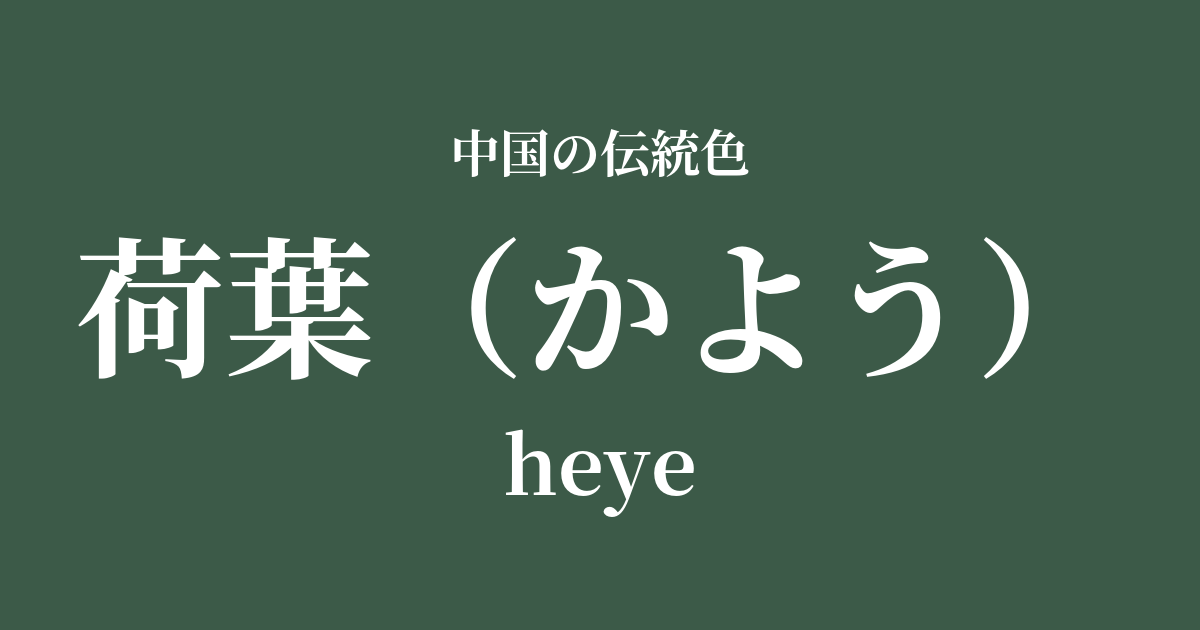
| Color name | cargo leaves |
|---|---|
| reading | Kayou |
| pinyin | heyo |
| HEX | #3C5A48 |
| RGB | 60, 90, 72 |
What is Nakuyo? Origin and etymology
"Kayou" is a color name that literally means "lotus leaf." It refers to the deep, rich green color of a lotus leaf that has soaked up the summer sun and is full of vitality.
The lotus holds a special place in Chinese culture. Born from the mud, yet blooming into a pure and beautiful flower, it has been revered as a symbol of the "gentleman," representing integrity and purity. The color of its leaves, the lotus leaf, is not merely green, but a color that evokes vigorous vitality, growth, and the refreshing feeling of a summer waterside, and is deeply rooted in people's hearts.
Historical background of the lotus flower
The culture of appreciating lotus flowers has been nurtured throughout China's long history. In particular, the culture of appreciating lotus flowers among literati reached its peak during the Song dynasty. The line "Emerging from the mud, yet unstained," from Zhou Dunyi's "On Loving the Lotus," is extremely famous and solidified the noble image of the lotus flower.
Given this cultural background, the color of the lotus leaf, "Lotus Leaf," also became deeply associated with the aesthetic sensibilities of literati who loved nature and valued a spirituality detached from the mundane world. During the Ming and Qing dynasties, magnificent lotus ponds were built in the imperial gardens, and emperors and nobles enjoyed the scenery to escape the summer heat. This color was gently integrated into the lives and spiritual culture of the people of that time.
Lotus leaves in Chinese art and crafts
The color of the lotus leaf has been richly expressed in the world of Chinese art and crafts. In ink painting and meticulous brushwork, it is an indispensable color when depicting summer scenes, used to represent fresh lotus leaves. In particular, the landscape paintings of Southern Song painters often show an effective use of a deep green reminiscent of this color.
In the world of ceramics, the deep green of the celadon glaze, exemplified by the Longquan kilns, resonates with the quiet and serene beauty of the lotus leaf. Furthermore, numerous vessels shaped like lotus leaves themselves were created, adding a refreshing touch to the dining table.
In clothing culture, this color is used in Hanfu and Qipao (Chinese dresses) to express a calm, mature elegance and the coolness of summer attire. When lustrous silk fabrics are dyed in this color, the interplay of light and shadow creates a deeper, more beautiful hue.
Nariba Isshiki-sai
Color scheme preview
This is to check the readability of the text when this color is used as the background.
Color scheme proposal for Kayo
Dark blue (#E4D2D8)
The natural and harmonious color scheme is reminiscent of the colors of lotus leaves and roots. It gives off a calm elegance and a gentle, refined impression.
Moon White (#D9E9E5)
It evokes a scene like a lotus pond illuminated by moonlight on a summer night. The sophisticated color scheme gives a sense of coolness and tranquility.
Stone yellow (#F8B555)
The deep green is accented by vibrant yellow, and the colors complement each other beautifully. It gives a lively impression that evokes the summer sunshine and the vitality of plants.
Practical Scenes
Incorporating lotus into your interior design brings a sense of calm and depth to the space. Using it as an accent in wallpaper, curtains, or cushions can create a relaxed atmosphere reminiscent of being in a forest. It also pairs perfectly with houseplants, and combining it with white, beige, or wood tones creates a modern and sophisticated space.
In fashion, this color is used to create an intelligent and elegant impression. Choosing this color for clothing made from high-quality natural materials such as silk blouses or linen dresses will further enhance the beauty of the materials. Using it as an accent color in accessories such as bags and scarves is also an effective way to add depth to your outfit.
In web and graphic design, it's suitable for situations where you want to convey trustworthiness and stability. Using it as the main color for a website themed around natural products or traditional culture effectively expresses its worldview. Combining it with gold or light gray can also create a sophisticated and luxurious design.