
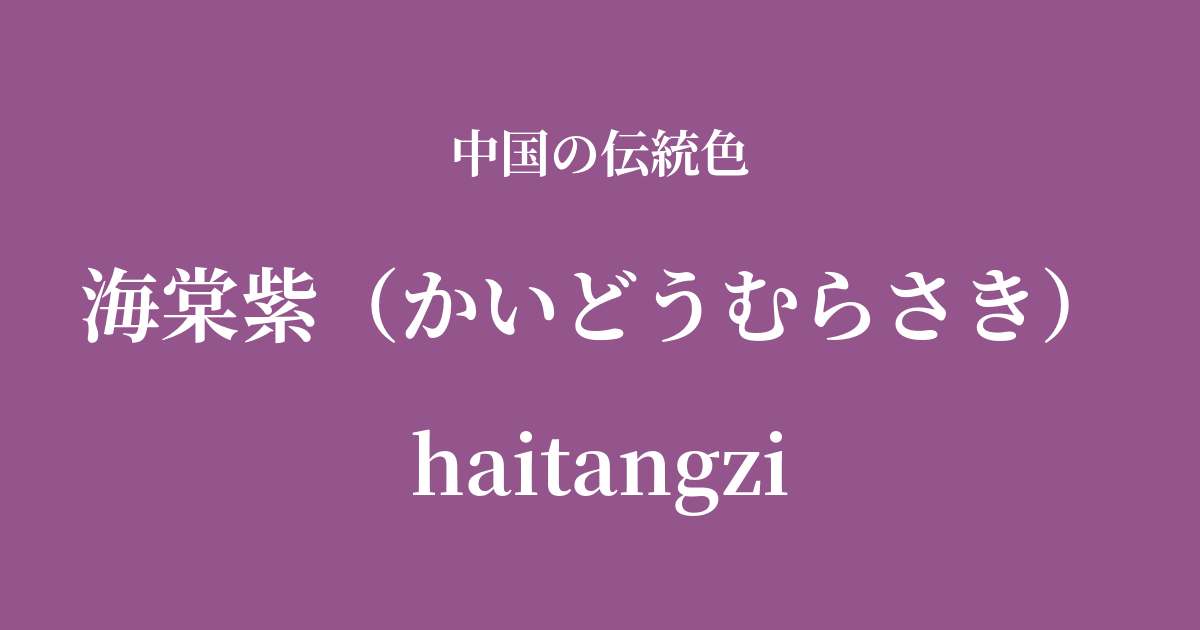
| Color name | Kaito Purple |
|---|---|
| reading | Kaido Murasaki |
| pinyin | haitangzi |
| HEX | #93558C |
| RGB | 147, 85, 140 |
What is the name of the flowering crabapple? Origin and etymology.
Kaido Murasaki, as its name suggests, is an elegant purple color derived from the flower of the crabapple tree (Kaido), which blooms with the arrival of spring. The crabapple tree, a member of the rose family, has been cherished in China since ancient times, and its beauty has inspired the creative spirit of many poets and painters.
This color captures the delicate reddish-purple hue of the flowering crabapple petals. It's not just a simple purple; its warmth and vitality evoke the fresh appearance of flowers blooming in the spring sunshine.
The color purple has long been considered a symbol of nobility and mystery. By associating this purple with the graceful and lovely flowering crabapple ("kaidō"), it has become established as a color name that expresses not only nobility but also a refined beauty and sophisticated charm.
Historical background of the flowering crabapple (Kaitō-murasaki)
In Chinese history, purple was an extremely precious color with special significance. Because purple dye was difficult to produce and expensive, its use was limited to the emperor and a select few high-ranking officials, and it was considered a symbol of authority and wealth.
During the Tang Dynasty, the story of Yang Guifei, a woman renowned for her unparalleled beauty, and her deep love for the crabapple blossom is famous. It is said that Emperor Xuanzong described Yang Guifei's sleeping posture as "like a crabapple blossom that has not yet slept enough," and from this story, the crabapple blossom became a symbol of beauty. Through such stories, it is believed that the color of the crabapple blossom, and by extension the color crabapple purple, became deeply ingrained in people's hearts as a color representing elegance and beauty.
During the Song Dynasty, the begonia became even more popular among literati as a subject for poetry and painting. They celebrated the beauty of the begonia and attempted to express its delicate hues in their works. In this way, begonia purple transcended being merely a color name and came to be recognized as an artistic color with a rich cultural background.
Begonia in Chinese Art and Crafts
The elegant shade of begonia purple can be seen in various fields of Chinese art.
In particular, in the field of fashion, this color was likely used for the Hanfu and court attire worn by noblewomen. When expressed in lustrous silk fabric, the hue subtly changes depending on the light, further enhancing its beauty. It was also sometimes used partially as embroidery thread, adding splendor and depth to the garments.
Furthermore, in the world of ceramics, the purplish-red glaze seen in Jun ware and other types exhibits a complex and beautiful hue reminiscent of begonia purple. These colors, born by chance in the kiln, are unique to each piece, and were highly valued as works of art created by the forces of nature.
In painting, this color is used to depict the crabapple blossom itself, often in techniques such as Gongbi painting. Painters meticulously portray the delicate gradations of each petal, expressing the vitality and elegance of the crabapple.
Just after midnight, Hana fell asleep, and the late Yakitakasho Kosho.
Color scheme preview
This is to check the readability of the text when this color is used as the background.
A color scheme proposal for crabapple purple.
Moon White (#EAEFEF)
The vibrant beauty of the crabapple purple is enhanced by the pure and understated white of the moonflower. This color combination creates a quiet, refined, and elegant impression.
Mayuzai (#405B73)
By combining it with the deep indigo color of Mayuzumi, the mystical aspects of Kaido-murasaki are emphasized. It creates a quiet and intellectual atmosphere reminiscent of a garden at night.
Anzu Huang (#F8B37F)
The warm apricot yellow adds warmth and approachability to the begonia purple. The colors complement each other, resulting in a vibrant yet warm color scheme.
Practical Scenes
With its elegant and calming nature, the color of the flowering crabapple is a versatile color that can be used in a variety of modern settings.
In fashion, incorporating this color into dresses, blouses, and scarves creates an elegant and sophisticated impression. It pairs particularly well with glossy materials such as silk, satin, and velvet, highlighting the depth of the color. Using it as an accent color in accessories like bags and shoes is also a wonderful idea.
In interior design, using it in fabrics such as cushion covers, curtains, and rugs brings a sense of calm and luxury to the space. It's also effective to incorporate it into an accent wall. Combining it with gold or brass lighting and accessories will create an even more luxurious atmosphere.
In web and graphic design, it's suitable for expressing a sense of luxury, femininity, or traditional beauty. Using it as a main color can create an impressive website, while using it as an accent color can tighten the overall design.