
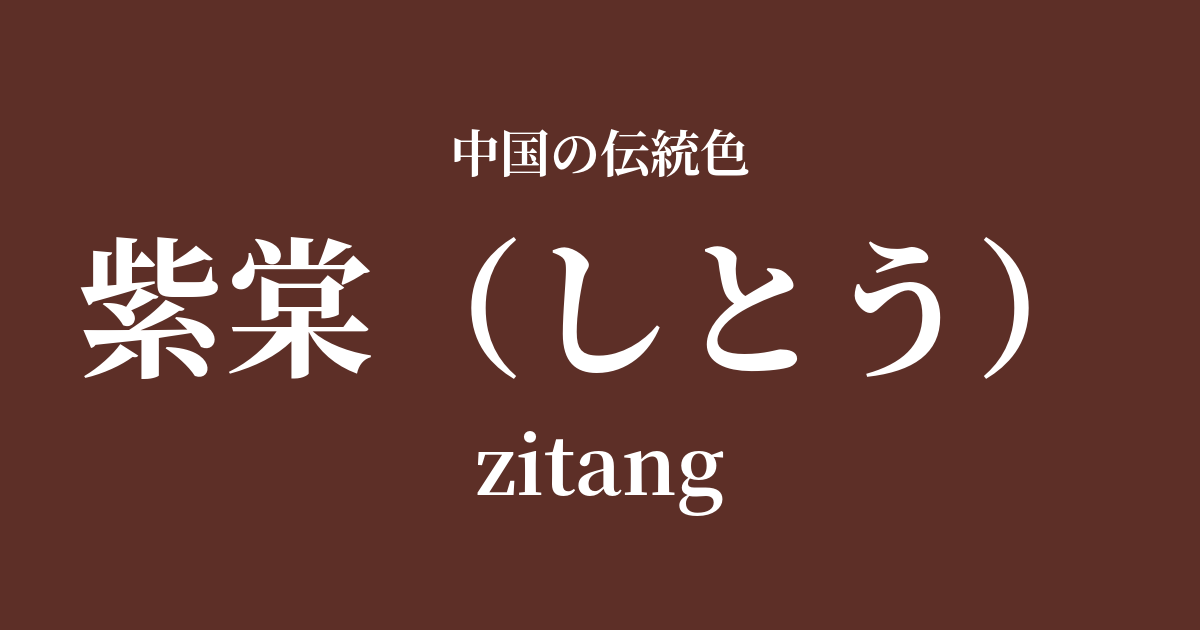
| Color name | Shitou |
|---|---|
| reading | Shito |
| pinyin | zitang |
| HEX | #5D2F27 |
| RGB | 93, 47, 39 |
What is *Shito*? Origin and etymology
The name "Shito" (紫棠) is composed of two characters, "purple" (紫) and "tang" (棠). "Tang" refers to the crabapple tree (Kaido), which blooms with beautiful flowers in spring.
However, the color of the purple crabapple differs from the bright pink or red of the common crabapple blossoms; it is a deeper, purplish-reddish-brown. This is thought to be inspired by the color of the blossoms of certain crabapple varieties, the color of the ripe fruit, or the deepening hue of the blossoms over time.
The addition of the character for "purple" elevates this color from a simple reddish-brown to one that possesses a noble and calming nuance. In this way, it is a color with a poetic resonance, elevating a refined aesthetic sense derived from natural scenery into a color name.
Historical background of the purple pea tree
The name "purple tang" (紫棠) became particularly well-known due to the influence of the Qing Dynasty literary work "Dream of the Red Chamber." In this story, purple tang appears as one of the colors of "soft silk" (軟煙羅), the finest type of thin silk used in the residences of the upper class.
In the story, when the characters choose the color of the gauze to hang on the windows, "purple pagoda" is mentioned alongside elegant color names such as "rain-sun blue" and "autumn fragrance color." From this description, we can infer that purple pagoda was a sophisticated color favored by the wealthy at the time.
During the Ming and Qing dynasties, dyeing and weaving techniques developed significantly, and the combination of plant dyes allowed for the creation of more complex and profound colors. Purple peach is also thought to be one of the colors that reflected the aesthetic sensibilities of the time, achieved by using dyes such as sappanwood and madder.
Purple Tang in Chinese Art and Crafts
The deep, calming hues of the purple ginkgo tree can be found in various Chinese arts and crafts.
For example, the colors of iron glazes such as "Jiangyu" and "Shuyu" found in ceramics from the Ming and Qing dynasties are similar to the reddish-brown and lustrous appearance of the purple ginkgo tree. The deep, rich texture created by these glazes resonates with the profound beauty of the purple ginkgo tree.
Furthermore, in the realm of fashion culture, as depicted in "Dream of the Red Chamber," this color was highly valued as a color for silk fabrics such as Hanfu. It was particularly favored for autumn and winter clothing, and for occasions where composure and dignity were required. Even in modern Hanfu designs, it remains a popular color for its classical and elegant appearance.
Furthermore, these colors are highly compatible with the colors of furniture from the Ming and Qing dynasties made from high-quality woods such as rosewood and redwood, and are dignified colors that harmonize with traditional Chinese interior spaces.
There are four colors of soft smoke: one color is blue, one color is autumn, one is pine green, and one color is pine green.
Color scheme preview
This is to check the readability of the text when this color is used as the background.
Purple Tang's Color Scheme Proposal
Tsukihaku (#EAF4FC)
The deep reddish-brown of the purple peach blossom is combined with the pale bluish-white of moonlight, creating a quiet and refined impression. It's a beautifully contrasting color scheme that evokes a sense of elegance in the stillness of the night.
Akika (#D9B612)
The autumn fragrance color, which also appears in "Dream of the Red Chamber," is a warm yellow reminiscent of autumn rice stalks. When combined with purple pagoda, it creates a deep and calming color scheme that evokes the season of abundance.
Pine green (#2A5543)
The reddish hue of the purple peach and the deep green of pine needles are almost complementary colors that enhance each other's beauty. The combination of natural strength and gravitas creates a dignified and classical impression.
Practical Scenes
In interior design, incorporating dark brown wood into accent walls, curtains, or sofas brings a sense of depth and tranquility to the space. Even adding small items like cushions or rugs creates warmth and richness. It pairs particularly well with dark brown wooden furniture.
In fashion, using it in autumn and winter coats, jackets, and knitwear gives a refined and intellectual impression. Incorporating it into dresses and skirts creates a classic and elegant atmosphere. Pairing it with gold-toned accessories enhances its glamour.
In web design, using it as a background color can convey a sense of luxury and reliability. Using it as an accent color for headings and buttons can attract attention while maintaining a calm impression. It is particularly suitable for websites dealing with traditional crafts or historical themes.