
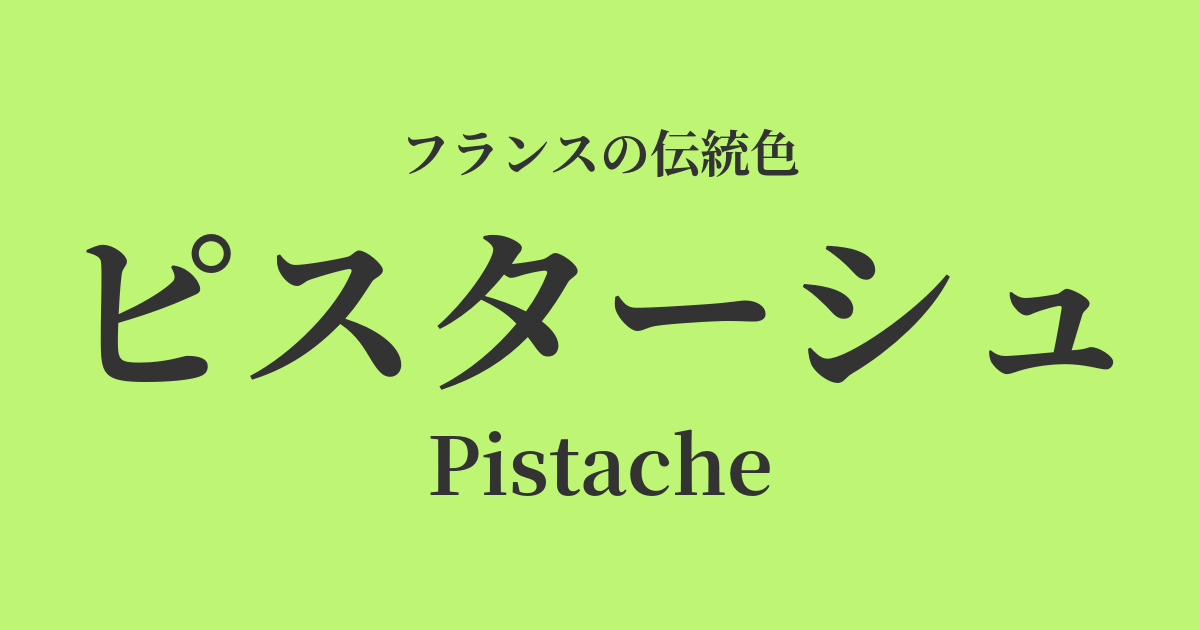
| French | Pistache |
|---|---|
| Katakana | Pistachio |
| HEX | #BEF574 |
| RGB | 190, 245, 116 |
What is pistache? Origin and etymology
"Pistache" is a French word that simply means "pistachio." As the name suggests, it derives from the gentle, vibrant yellowish-green color that is visible when you crack open a pistachio nut.
Pistachios are believed to have originated in Central Asia and were introduced to Europe during the Roman era. In France, they began to be used in court cuisine and confectionery making around the 17th century, and their beautiful color also delighted people's eyes. They became particularly popular as the color of macarons and ice cream (pistache glace), and through food culture, they became established as a color of France.
The historical background of pistachios
Pistachio gained particular prominence as a color during the Rococo period of the 18th century. During this time, ladies of the court, including Madame de Pompadour, the mistress of Louis XV, and Marie Antoinette, who would later become queen, had a great fondness for light and elegant pastel colors.
Pistachio, along with Rose Pompadour (pale pink) and Ciel (sky blue), became a representative color that adorned the fashion and interiors of the time. This color was used in the fabrics of luxurious dresses, the silk textiles that adorned the walls, and the porcelain fired at the Sèvres porcelain factory, and it has etched its name in history as one of the colors that symbolizes the delicate and refined aesthetic of the Rococo style.
Pistachios in the world of art and fashion
In the world of art, bright pastel colors like pistachios were indispensable to the palettes of Rococo painters. Mythological paintings and fêtes galantes by François Boucher and Jean-Honoré Fragonard depict the elegant lives and love affairs of the aristocracy, and the pale green used in the backgrounds and costumes gives the works a sweet and dreamy atmosphere.
In fashion, this color was not only a popular choice during the Rococo era, but remains a highly sought-after color in spring and summer collections today. Combining freshness and gentleness, this color gives the wearer a youthful and fresh impression. Furthermore, this color is often effectively used in motifs of "Toile de Jouy," a traditional French textile.
Color scheme preview
This is to check the readability of the text when this color is used as the background.
Pistachio color scheme proposal
Rose Pompadour (#EDD2D9)
This elegant and sweet combination is reminiscent of the Rococo era. It gives a feminine, sophisticated, and soft impression perfect for spring.
Gris de Lignan (#DCD3C5)
By pairing it with a natural gray like flaxen, the brightness of pistachio is highlighted, creating an overall calm and serene impression.
Blanc d'Argent (#E9E8E1)
By combining it with a clean, almost white off-white, the fresh appeal of pistachio is brought out to its fullest, creating a modern and bright space.
Practical Scenes
In the field of interior design, pistachio brings brightness and tranquility to a space. When used over a large area, such as in wallpaper, curtains, or sofa upholstery, it creates a pleasant atmosphere reminiscent of fresh spring leaves. It pairs exceptionally well with white or light wood-grain furniture, making it ideal for creating French country or natural style spaces.
In fashion, pistachio is a key color for spring and summer outfits. A pistachio dress or blouse will instantly brighten your face. Additionally, incorporating it as an accent color in accessories like bags, shoes, or scarves adds a light and sophisticated touch to your overall look.
In web and graphic design, this color is often used for brands that want to convey a gentle and natural image, such as organic products, natural cosmetics, baby products, and sweets. It is an effective color for creating a sense of security and approachability.