
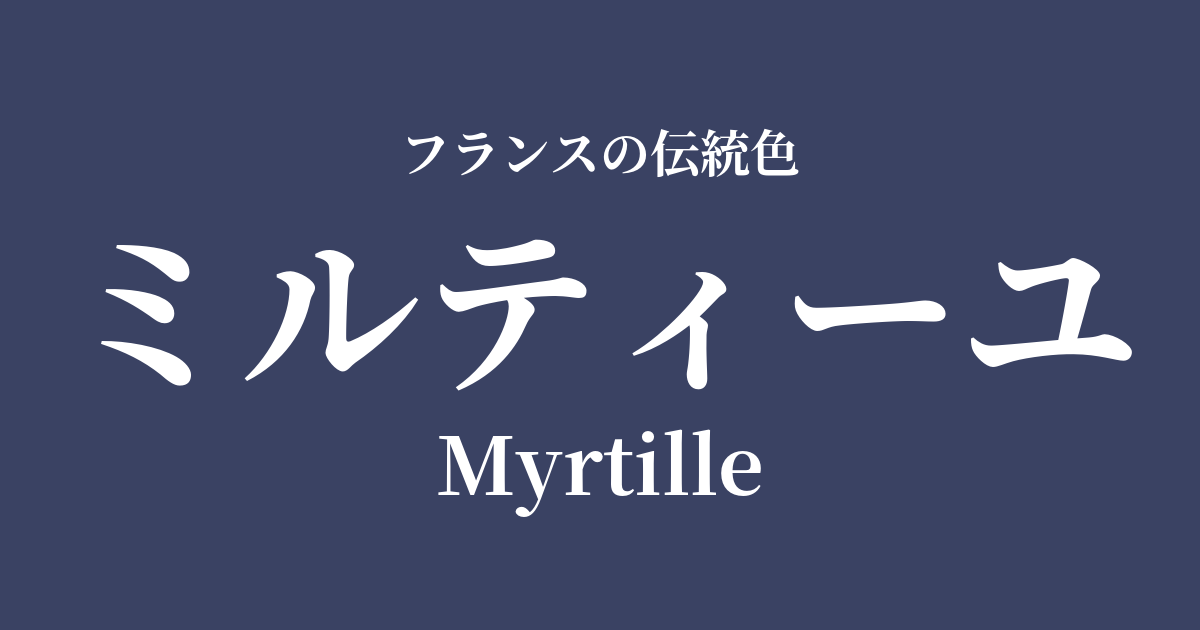
| French | Myrtille |
|---|---|
| Katakana | Myrtille |
| HEX | #3a4263 |
| RGB | 58, 66, 99 |
What is Myrtille? Origin and Etymology
"Myrtille" is a French word meaning blueberry (especially wild bilberries). As the name suggests, the color comes from the color of the skin of that small yet powerful fruit that ripens quietly deep in the forest.
Ripe myrtle berries are a deep, almost black, bluish-purple color, and their surface is covered with a white powder called "bloom." This complex and deep hue is a mystical color created by nature that cannot be described simply as blue or purple.
In France, myrtille has long been a beloved ingredient in tarts, jams, and liqueurs, deeply rooted in people's lives and culinary culture. This color reflects the bounty of France's rich natural environment and the simple, heartwarming scenes of everyday life.
Historical background of Myrtille
The color name "myrtille" is not directly linked to any particular royalty, nobility, or historical events. Rather, this color can be said to have been nurtured within the lives of ordinary people in France and within the regional cultures.
In medieval Europe, blue dye was extremely expensive and precious. However, people extracted pigments from readily available plants to enrich their daily lives. Berries like myrtle are said to have been used as simple dyes for dyeing cloth at home. However, plant-derived pigments were difficult to fix and it was hard to maintain vibrant colors for long, so they were mainly used for everyday clothes and household goods.
In modern times, with the development of chemical dyes, these traditional colors derived from nature began to be re-evaluated. From the 19th century onward, as colors were systematically organized, poetic and nature-rooted names like "myrtille" were added to specific color palettes and came to be recognized as one of the colors symbolizing France.
Myrtille in the world of art and fashion
The deep, contemplative bluish-purple of myrtille has captivated many artists. This hue can be found particularly in the landscape paintings of 19th-century Impressionist and Post-Impressionist artists.
The twilight skies and water reflections painted by Claude Monet, and the deep blue of the swirling night sky depicted by Vincent van Gogh in "The Starry Night," all possess a mystical nuance reminiscent of myrtle. They skillfully used these complex intermediate colors to capture the fleeting expressions created by the interplay of light and shadow.
In the world of fashion, myrtille is a color that has been loved across generations. Softer than navy and more expressive than black, this color symbolizes intelligence and elegance. Especially in autumn and winter collections, it is combined with high-quality materials such as wool, velvet, and cashmere to create a refined style. Leading French fashion houses also frequently incorporate this shade as a chic and sophisticated color.
The deeper the blue, the more it awakens humanity to the supernatural, to the infinite.
Color scheme preview
This is to check the readability of the text when this color is used as the background.
Myrtille's color scheme proposal
Ficelle (#f3e5d3)
The deep blue-violet of Myrtille is combined with the natural beige of Ficelle, meaning hemp twine, creating a sophisticated and elegant impression. The colors complement each other perfectly, making it ideal for creating a calm and intellectual space.
Vert Tilleul (#c0dfa1)
The combination of deep forest blueberries and the bright green of young linden leaves creates a natural and vibrant impression. While fresh, the myrtle adds a touch of calm and balance to the overall look.
Rose Pompadour (#ed82a4)
The deep, sophisticated myrtille is paired with the vibrant and lovely rose pompadour, creating an elegant color scheme that exudes mature femininity. It's not overly sweet, giving off a refined impression.
Practical Scenes
In interior design, myrtle is a color that brings calmness and depth to a space. Incorporating it into accent walls in studies or bedrooms, or using it in fabrics such as sofas, cushions, and rugs, creates a relaxing and sophisticated atmosphere. Combining it with gold, brass, or walnut furniture can also create a classic and substantial style.
In fashion, myrtille is an incredibly versatile color that's easy to wear. Choosing it for key pieces like dresses or coats gives an intelligent and sophisticated impression. It also looks great incorporated into accessories like bags, scarves, and shoes. It pairs exceptionally well with basic colors like white, gray, and beige, instantly elevating your everyday look.
In web and graphic design, myrtle is suitable for conveying reliability and expertise. Using it on corporate websites or brand logos creates a sense of calm and sophistication. When used as a background color with white or light gray text, it results in a highly readable, eye-friendly, and refined design.