
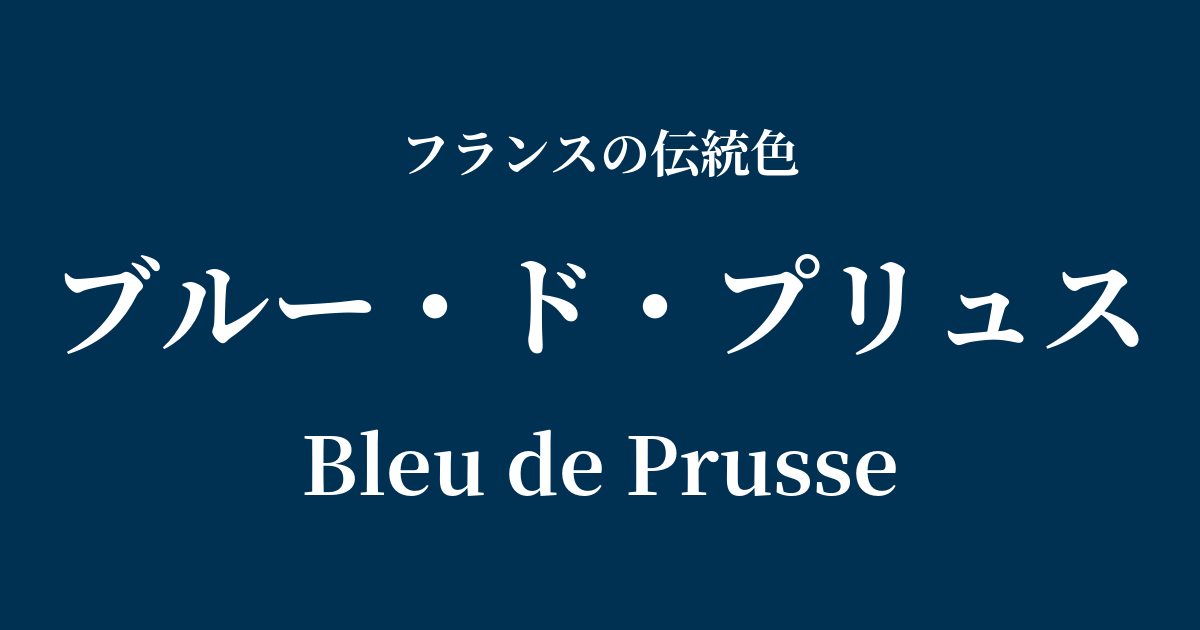
| French | Bleu de Prusse |
|---|---|
| Katakana | Bleu de Plus |
| HEX | #003153 |
| RGB | 0, 49, 83 |
What is Bleu de Plus? Origin and etymology
Bleu de Prusse is widely known in Japanese as "Prussian Blue." Its name means "Prussian blue" and originates from its discovery in the Kingdom of Prussia (present-day northern Germany) in the early 18th century.
The discovery of this pigment was actually a product of chance. It is said that around 1706, a Berlin dyer named Johann Jakob Diesbach accidentally mixed in a substance that was not meant to be used while manufacturing red pigment, resulting in this deep, vibrant blue color.
Until then, blue pigments were limited to expensive ultramarine made from lapis lazuli and plant-derived indigo. Bleu de Plus, which could be produced cheaply and reliably, was a groundbreaking invention and quickly captivated artists and craftsmen throughout Europe.
Historical background of Bleu de Plus
Bleu de Plus was a particularly beloved color in 18th-century France. In the opulent court culture of the Rococo era, its deep blue brought elegance and sophistication to the clothing and interior decorations of royalty and nobility. Madame de Pompadour, the mistress of Louis XV, is said to have been especially fond of this color.
During the French Revolution, this blue was also used as the blue in the tricolor flag, symbolizing liberty. However, the shade of blue in the flag has changed over time, and the current blue in the French flag is officially a brighter shade.
In the 19th century, this color was also adopted for the uniforms of Napoleon's army. Its deep, dignified hue gave soldiers a sense of unity and strength, and it became widely recognized as the symbolic color of the French army.
Bleu de Plus in the world of art and fashion
In the art world, Bleu de Plus was a favorite color of many painters. Rococo painters such as Antoine Watteau and François Boucher used this blue when depicting elegant scenes, giving their works depth and a sense of narrative.
Furthermore, this color has crossed the seas and had a significant influence on Japanese art. In the late Edo period, the vivid blue seen in Katsushika Hokusai's masterpiece "The Great Wave off Kanagawa" from his "Thirty-Six Views of Mount Fuji" was made possible by the use of "Berlin blue," or Bleu de Plus, which had just begun to be imported at the time. This new blue brought unprecedented possibilities for expression to Ukiyo-e prints.
In the world of fashion, its sophisticated and understated hue has made it a timeless favorite. It is particularly often used in uniforms and formal attire, establishing itself as a color that conveys trustworthiness and integrity.
Color scheme preview
This is to check the readability of the text when this color is used as the background.
Color scheme proposal for Bleu de Plus
Blanc d'Argent (#E8E4D9)
Combining deep Bleu de Plus with pure and bright Blanc d'Argent creates a sophisticated contrast. This combination is ideal for intelligent and modern spaces, and for designs with a clean impression.
Jaune de Naples (#F7DC6F)
The gravitas of Bleu de Plus and the cheerful brightness of Jaune de Naples complement each other perfectly. This color combination is classic yet playful and vibrant.
Rose Pompadour (#ED87A3)
This historical and elegant combination evokes the 18th-century French court. The calming presence of Bleu de Plus harmonizes with the sweetness of Rose Pompadour, creating a romantic and refined atmosphere.
Practical Scenes
In interior design, using it as an accent wall in spaces where tranquility is desired, such as a study or bedroom, brings depth and an intellectual atmosphere to the space. Furthermore, incorporating it into fabrics such as cushions and curtains can easily create a chic space.
In fashion, this color, deeper than navy and more expressive than black, is perfect for formal items such as suits, jackets, and coats. It conveys trustworthiness and sophistication, allowing you to express your individuality even in business settings. It also looks great incorporated through accessories like scarves and bags.
In web design, using this color as a background enhances content readability and gives users a calm impression. It is particularly effective for corporate websites where trustworthiness and expertise are required, as well as for brand sites that want to project a sense of luxury.