
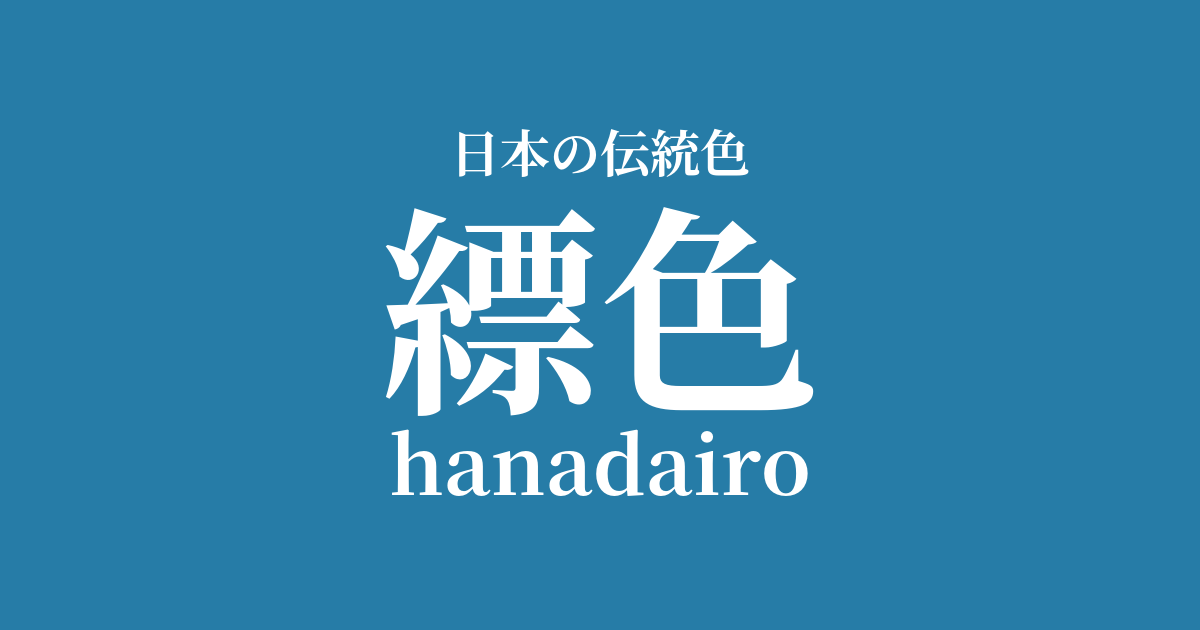
| Japanese color name | dark brown |
|---|---|
| reading | hanadairo |
| HEX | #267CA7 |
| RGB | 38, 124, 167 |
What is "Hanada-iro" (light blue)? Origin and etymology.
Hanada-iro is a color name that is said to originate from the old Japanese word "hanada," which means dayflower (Commelina communis). It was named because it resembles the color of the blue juice obtained by crushing the petals of the dayflower. However, since the pigment of the dayflower is sensitive to water and fades quickly, it was not actually used as a dye for cloth, but rather as a color mainly expressed in indigo dyeing. Among indigo dyes, it has become established as a term that refers to a particularly bright and vivid blue.
In ancient times, the dayflower appeared in the Manyoshu anthology under the name "tsukikusa" (moon grass). Due to its fleeting nature, it was used in poetry as a symbol of the changeability of human hearts and ephemeral love. Thus, the background of the indigo color is deeply connected to the beautiful color of the flower and the delicate aesthetic sense of the ancient Japanese people towards its transience. The color name itself has played a role in connecting natural scenery with people's feelings.
The historical background of the blue color
The history of the indigo color is long, and its name can be found in the clothing regulations of the Yōrō Code, which was established during the Nara period. The Engishiki, compiled during the Heian period, contains detailed regulations indicating the shades of indigo dye, such as "deep indigo," "medium indigo," and "light indigo," showing that it held an important position as an official color. During this period, indigo was used as the color of clothing for the nobility, according to their social status and age.
In Heian period aristocratic society, indigo blue was favored as a color symbolizing youthfulness and intelligence. It was particularly used in the clothing of young men and as part of the color combinations in women's layered garments, and was an indispensable color for expressing refined aesthetics. It is also frequently depicted in literary works as the color of characters' clothing.
With the advent of the Edo period, indigo dyeing became widespread among ordinary people along with the popularization of cotton. The cool and stylish shade of indigo became widely used for yukata (summer kimono), tenugui (hand towels), and noren (curtains), and it became deeply rooted in popular culture as a color that brightened summer life. Ukiyo-e (woodblock prints) also depict people wearing indigo attire during that time.
Related literature, waka poetry, and seasonal words
The color indigo blue has been mentioned in many literary works due to its beauty. In particular, in Heian period literature, it frequently appeared as the color of characters' clothing, playing a role in symbolically depicting scenes and the characters' emotions. In works such as "The Tale of Genji" and "The Pillow Book," descriptions of characters wearing indigo blue clothing add an elegant touch to the scenes.
In the world of Japanese poetry, the dayflower, the direct origin of the color indigo, is known as "tsukikusa" (moonflower). The Manyoshu anthology contains numerous poems that liken the fleeting nature of the moonflower's dye to the transience of human emotions and the ephemerality of love. From this, it can be interpreted that indigo encompasses not only beauty but also a somewhat poignant sense of impermanence.
I will dye my clothes with moonflower, even though they will fade after being wet with morning dew.
Color scheme preview
This is to check the readability of the text when this color is used as the background.
A proposed color scheme in light blue.
White training (#FFFFFF)
This combination emphasizes a sense of coolness and cleanliness. The vibrant blue of the indigo color is highlighted by the white, creating a refreshing and dignified impression. This color scheme is often seen in traditional Japanese designs, such as summer kimonos and ceramic painting.
Blue gold (#FABE29)
Indigo and turmeric are a combination of dyes that have been used since ancient times. They are close to complementary colors, and have the effect of making each other appear more vibrant. The result is a powerful and gorgeous color scheme that also evokes a sense of Japanese elegance.
Soot bamboo color (#6E5B46)
By combining it with a calm, brownish-bamboo color, the vibrancy of the indigo is subtly toned down, creating a sophisticated and mature impression with depth and understated elegance. This is a refined color scheme often seen in the stylish attire of the Edo period and in the formal ceremonial robes of samurai families.
Practical Scenes
In the world of traditional Japanese clothing, indigo blue is particularly favored for summer items such as yukata, obi sashes, and obiage (sash ties). Its cool hue provides a refreshing feeling during Japan's hot and humid summers and creates a stylish look. It also gives a youthful and intellectual impression, so it is sometimes incorporated into formal kimonos such as houmongi and komon.
In interior design, using it as an accent color brings a Japanese modern atmosphere and a sense of calm to a space. Incorporating it into cushion covers, noren curtains, or parts of wallpaper creates a sophisticated impression. It pairs particularly well with natural materials such as white, off-white, and wood grain.
In modern graphic and web design, indigo blue remains an effective color for conveying trustworthiness and integrity. Using it as a corporate color for a company or as a key color for a website dealing with traditional products can create a design that evokes a sense of dignity and history.