
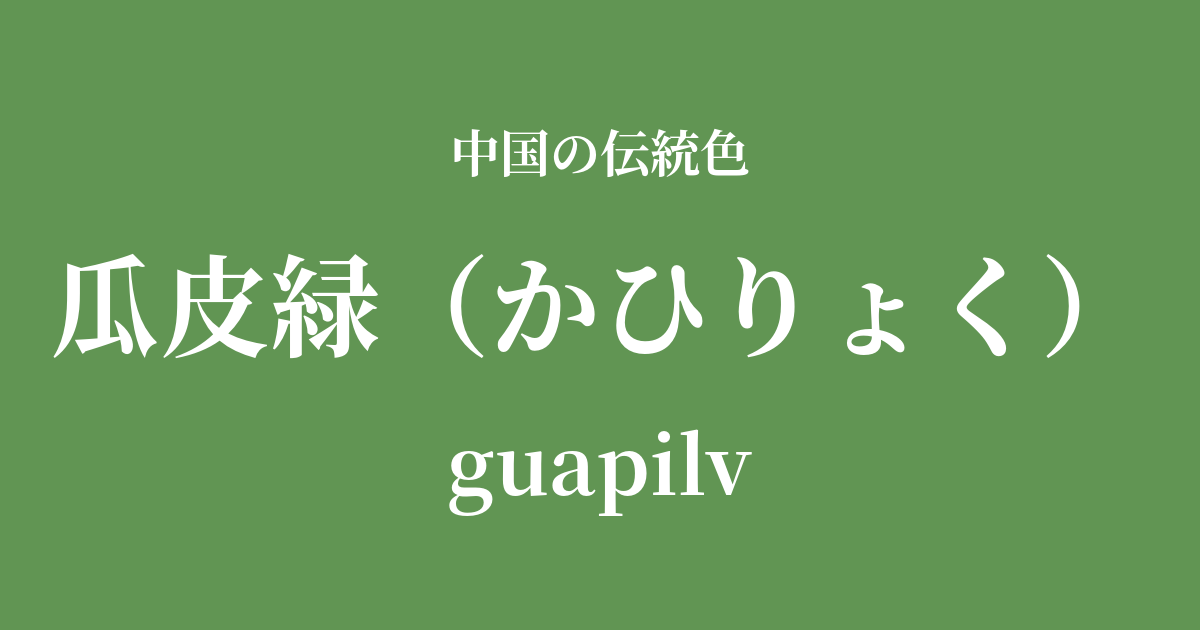
| Color name | Melon skin green |
|---|---|
| reading | Kahiryoku |
| pinyin | guapilv |
| HEX | #619553 |
| RGB | 97, 149, 83 |
What is "Guapi Green"? Origin and etymology
Kahiryoku, as the name suggests, means "the green of a melon's skin," and is a very realistic and approachable color name. Specifically, it refers to the deep, glossy green of the rind of a watermelon, a symbol of summer, that has ripened under plenty of sunlight.
This color name symbolizes China's rich color culture, which has derived its names from natural landscapes and familiar plants. The sound of "Guapi Green" evokes pleasant images such as the vitality of midsummer, abundant harvest, and the refreshing coolness of thirst-quenching fruit.
Historical background of Guapi Green
The color name "guap skin green" became widely known mainly during the Ming and Qing dynasties. In particular, during the reign of Emperor Kangxi of the Qing dynasty (1662-1722), this color underwent significant development as a glaze for ceramics.
This glaze, known as "melon skin green glaze," was technically highly sophisticated, and its deep yet vibrant color captivated the court and nobility. This color was not only beautiful, but was also considered an auspicious color symbolizing fertility and longevity. The adoption of this color in courtware and decorative items speaks to the aesthetic sensibilities of the people of that time, who sought to incorporate the beauty of nature into their lives.
Guapi Lü in Chinese Art and Crafts
The artwork most closely associated with "Guapi Green" is the ceramics of the Qing Dynasty that used this glaze. This is a type of monochromatic glaze (a glaze fired in only one color), and as the name suggests, it is characterized by its beautiful green color reminiscent of a watermelon rind. Various items such as vases, bowls, pitchers, and brush washers were made with this glaze, and its uniform, deep color is considered one of the pinnacles of Qing Dynasty ceramic technology.
In fashion culture, melon-skin green was a favored color for summer clothing. Garments dyed in this color from silk or cotton fabrics had a cool and vibrant appearance. In particular, it was often used as a cheerful summer outfit among the court and upper classes of the Qing dynasty.
Color scheme preview
This is to check the readability of the text when this color is used as the background.
Color scheme suggestion for melon skin green
Coral beads (#F8A393)
The combination of green and red, which are close to complementary colors, vividly enhances each other's beauty. The warm, soft hues of the coral beads add an elegant splendor to the lively impression of the melon-skin green, creating a sophisticated contrast.
Moon White (#D9E9E5)
The pure and understated shade of moon white highlights the vividness of melon peel green, creating an elegant and calm overall atmosphere. This color scheme evokes a refreshing and intellectual impression, reminiscent of a cool summer breeze.
Fujio (#FFD700)
By combining it with a vibrant wisteria yellow, the natural imagery of melon-skin green is further emphasized. This color scheme evokes sunlight and lush greenery, creating a bright and energetic impression that uplifts the spirits of those who see it.
Practical Scenes
In interior design, incorporating melon bark green into accent walls, cushions, or curtains brings a sense of vitality and refined tranquility to a space. Its beautiful green color is further enhanced when combined with natural shades such as white, beige, or light wood tones.
In fashion, using scarves in key pieces like dresses and blouses creates an elegant yet striking style. Additionally, incorporating them in accessories such as scarves, bags, and jewelry adds a fresh and vibrant accent to an outfit.
In web and graphic design, it is an effective key color for content themed around nature, health, and the environment. It is suitable when you want to convey both trustworthiness and a fresh image, and when combined with a white or light gray background, it creates a clean and highly visible design.