
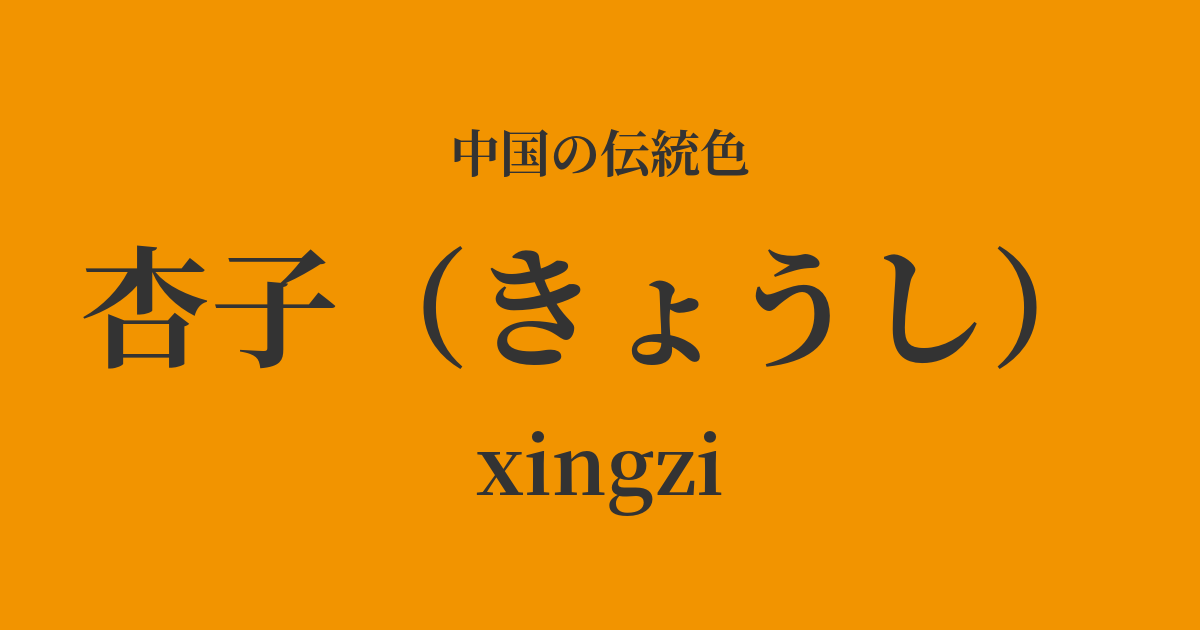
| Color name | apricot |
|---|---|
| reading | Teacher |
| pinyin | xingzi |
| HEX | #F29400 |
| RGB | 242, 148, 0 |
What is apricot? Origin and etymology
As its name suggests, Kyoshi is a vibrant, warm orange color derived from the color of ripe apricots.
In Chinese, it is pronounced "xìngzi," and the Japanese reading "kyōshi" originates from its on'yomi (Sino-Japanese reading). This color not only represents the beauty of the fruit, but has also held special significance in Chinese history and culture. In particular, due to its deep connection with the imperial examination system of the Tang Dynasty, which will be discussed later, it is known as a color that symbolizes glory and hope.
The historical background of Kyoko
The historical background of the apricot color is closely linked to the imperial examination system, known as the "Keju," which was established during the Tang Dynasty to select government officials.
The banquet held to celebrate those who passed the "Jinshi-ke," the final examination of the imperial examination system, was called the "Xingyuan Banquet." It is said that this banquet got its name from the fact that it was held in the apricot garden on the banks of Qujiang Pond in Chang'an, the capital city, amidst the blooming apricot blossoms of spring.
This banquet was the highest honor for brilliant students who had overcome difficult challenges after arduous studies. It is said that the robes they wore on this auspicious occasion were apricot-colored. Because of this, apricot color became deeply rooted in Chinese culture as a very auspicious color, symbolizing academic achievement, success in life, and a bright future.
Apricots in Chinese Art and Crafts
In fashion culture, apricot yellow has been used as a color symbolizing honor and celebration. It is particularly known as the color of the "Jinshi Pao," the formal robe worn by those who passed the imperial examinations, symbolizing their intelligence and glorious beginnings. Even today, this color is sometimes incorporated into the designs of Hanfu and Qipao, adding a touch of splendor to celebratory occasions.
Furthermore, in Chinese painting, especially in the world of flower-and-bird paintings, this vibrant color is used when depicting apricot blossoms and fruits. As a symbol of the arrival of spring and abundance, it gives the painting a sense of life and warmth, soothing the viewer's heart. In ceramics, too, a rich hue similar to apricot can be found in the yellow and brown glazes seen in Tang sancai ware.
The spring breeze is good at horseshoe racing, and the flowers are all day long.
Color scheme preview
This is to check the readability of the text when this color is used as the background.
Apricot's color scheme proposal
Tsukihaku (#EAF4FC)
The vibrant apricot color is enhanced by the pure and intelligent bluish-white of moonlight. This dignified color scheme evokes the cheerful and composed spirit of a brilliant student who passed the imperial examinations.
Peony color (#EEA2A4)
Although it's a combination of warm colors, the brightness of apricot and the elegant pink of peony complement each other, creating a very vibrant and festive impression. It's a color scheme suitable for celebrations and special occasions.
Matsuka Midori (#BCEE68)
This combination evokes the colors of ripe apricots and fresh pine needles. It creates a natural and bright color scheme that conveys the vitality and abundance of nature, giving viewers a sense of reassurance and vitality.
Practical Scenes
In the world of fashion, apricot yellow works well as an accent color, adding vibrancy and warmth to an outfit. Incorporating it into accessories such as scarves, bags, and jewelry will give your entire look a brighter and more positive impression. It's a color that looks especially good in spring fashion.
In interior design, using it in cushion covers, art panels, and small accessories brings warmth and vibrancy to a space. It pairs well with natural spaces based on white, beige, and wood tones, functioning as a pleasant accent.
In web and graphic design, it's suitable for situations where you want to convey friendliness and energy. It's effective when used on elements you want to attract user attention, such as buttons and banners, and can create a positive impression.