
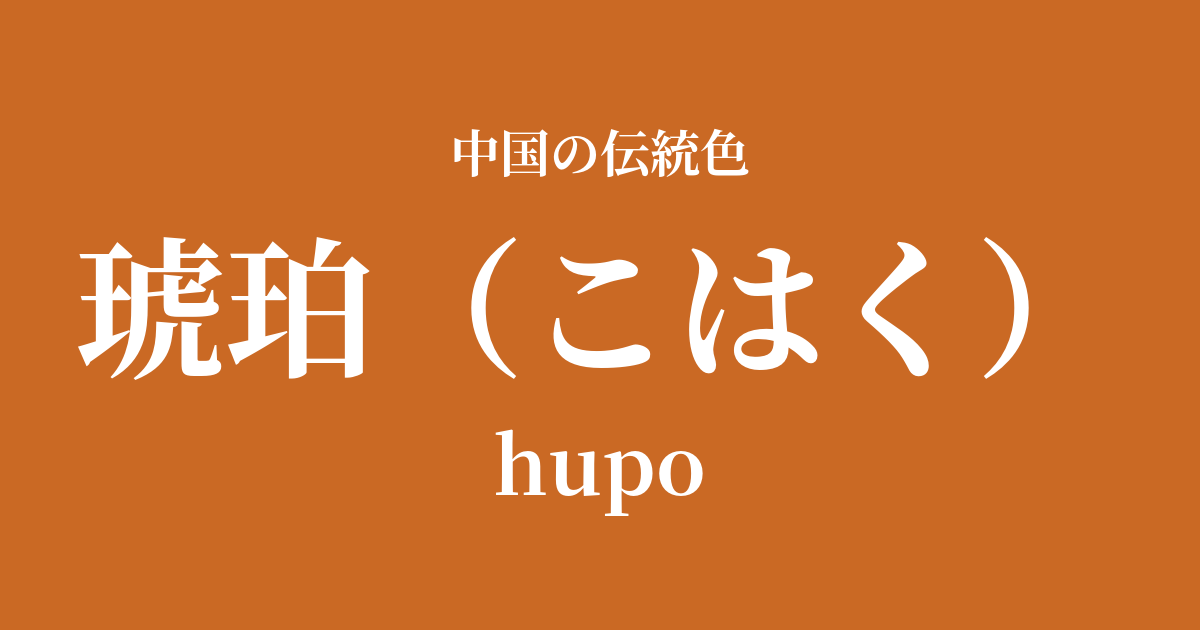
| Color name | amber |
|---|---|
| reading | Amber |
| pinyin | hupo |
| HEX | #CA6924 |
| RGB | 202, 105, 36 |
What is amber? Origin and etymology
Amber, as the name suggests, is a deep, lustrous orange color derived from the gemstone "amber." This gemstone, formed from fossilized tree resin over eons, has captivated people since ancient times with its unique transparency and warm hue.
In China, amber was sometimes written as "虎魄" (hu po), which is based on an old legend that after a tiger dies, its soul returns to the earth and turns into stone. This legend gives the color amber a mystical and powerful image.
The Jin Dynasty book "Bowu Zhi" (Treatise on Natural History) contains a description stating that "pine resin, when it enters the ground, becomes Poria cocos after a thousand years, and after another thousand years, it becomes amber." Thus, amber was not merely a beautiful stone, but was also considered a symbol of vitality and longevity, nurtured in nature over long periods of time.
Historical background of amber
Amber has long been considered a precious commodity in Chinese history. During the Han Dynasty, high-quality amber was brought from the Western Regions via the Silk Road and was highly valued among royalty and nobility.
During the Tang Dynasty, amber's popularity soared along with the flourishing of culture. It was not only used as an ornament but also as a subject in poetry, its beauty celebrated. In the internationally diverse capital of Chang'an, the exotic gleam of amber must have been an object of people's admiration.
In the "Compendium of Materia Medica," a pharmacopoeia compiled during the Ming Dynasty, amber is also described as a medicine. It was believed to have calming properties and improve blood circulation, and was used not only as jewelry but also as a kind of amulet to wish for health and longevity.
In the Qing Dynasty court, amber was cherished by the emperor and royalty for use in prayer beads and intricately carved ornaments. Its warm yet dignified hue played a special role as one of the colors that adorned the splendor of court culture.
Amber in Chinese Art and Crafts
Amber's luster displays a wide range of expressions in Chinese art and crafts. The most representative examples are jewelry such as hairpins, necklaces, and sash clasps. In particular, during the Qing Dynasty, many snuff bottles and ornaments were made from amber with intricate carvings, and the level of skill displayed is truly remarkable.
In fashion culture, amber was a color that combined nobility and warmth, and was used in silk fabrics and Hanfu (traditional Chinese clothing). It looked particularly beautiful in autumn attire, creating a vibrant atmosphere that seemed to celebrate the season of abundance. Because it is a subdued color yet has a strong presence, it is said to have been incorporated into ceremonial clothing and formal wear for high-ranking officials.
In the world of ceramics, there is a glaze called "ameyu" (amber glaze), which evokes the color of amber. As the name suggests, its smooth, amber-like sheen and deep color are reminiscent of the texture of amber, adding warmth and color to everyday tableware.
Zeng Er Lao Fu Shen, this is the cold pine liquid.
Color scheme preview
This is to check the readability of the text when this color is used as the background.
Amber color scheme proposal
Ai (#001F4C)
The warm orange of amber and the calm indigo of dew blue are close to complementary colors, and they enhance each other's beauty. This color combination gives a dignified and intellectual impression.
Pilestone (#9C3824)
By combining amber with ochre, which shares the same warm color tones, a harmonious, warm, and rich impression is created. The natural and calming color scheme is reminiscent of autumn foliage.
Ivory white (#FFF1D7)
The bright, soft ivory white accentuates the depth and luster of the amber. With its elegant and sophisticated atmosphere, it's recommended for spaces where you want to achieve both cleanliness and warmth.
Practical Scenes
Incorporating amber into your interior design brings warmth and tranquility to a space. An easy way to do this is through fabrics such as cushions, rugs, and curtains. It pairs particularly well with wooden furniture and houseplants, creating a natural and comfortable atmosphere. When combined with indirect lighting, the amber's luster is enhanced, creating a truly relaxing space.
In fashion, amber adds depth to autumn and winter outfits. Incorporating it into coats, knitwear, and leather goods creates an elegant and sophisticated impression. It also pairs perfectly with basic colors like navy, gray, and beige, and looks great as an accent color in accessories such as scarves and bags.