
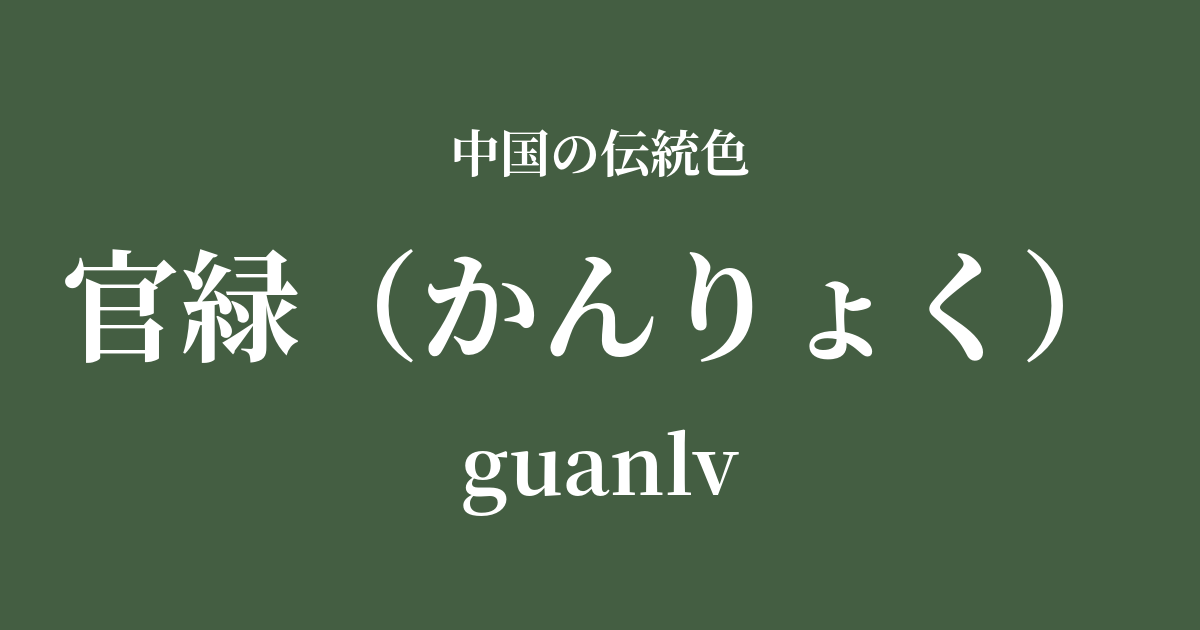
| Color name | official green |
|---|---|
| reading | Completion |
| pinyin | guanlv |
| HEX | #445E42 |
| RGB | 68, 94, 66 |
What is "Guanlu"? Origin and etymology
Kanryoku, as its name suggests, is a deep, calming green color derived from the color of the clothing worn by "officials" in ancient China. "Kan" refers to officials or the government, and "ryoku" refers to the color itself, so it truly carries the meaning of "the green of officials."
This color possesses both the tranquility reminiscent of pine needles and deep forests, and the refined elegance of polished jade. It's not merely a natural green; this color, created through dyeing, reflects the principles of the human world, such as social order and status.
Historical background of the official green
An essential element in discussing the history of official attire is the "pinse yi" (品色衣), a system of official clothing established during the Tang Dynasty. Under this system, the color of the robe (袍), the outer garment worn by officials, was strictly determined according to their rank.
Specifically, high-ranking officials of the third rank and above wore purple, those of the fifth rank and above wore crimson, those of the sixth and seventh ranks wore green, and those of the eighth and ninth ranks wore blue. As a result, green became a color that symbolized specific ranks of officials, taking on social significance beyond mere color.
New scholars who passed the imperial examinations were sometimes bestowed with green robes by the emperor, and official green was a color that symbolized the honor of those who had pursued learning and the beginning of their careers as officials. Green robes continued to be used as official attire from the Song dynasty onward, and the image of it as the "color of government officials" was passed down for generations to come.
Official Green in Chinese Art and Crafts
The color green is closely linked to Chinese clothing culture. In particular, the "green robe" (lùpào), the official attire of the Tang Dynasty, is the most symbolic example of this color. Made of silk, the green robe had a unique luster and deep hue, giving the wearer an air of dignity and authority. Paintings and figurines from that time also depict officials wearing green robes, allowing us to glimpse the atmosphere of that era.
In the world of ceramics, the green glaze seen in Tang sancai ware and the celadon of Longquan kilns, which flourished during the Song dynasty, exhibit a deep green beauty that is reminiscent of official green. These vessels were cherished by the imperial court, nobility, and officials, reflecting their refined aesthetic sensibilities.
Who cried the most while sitting in the room? Jiangshu Shiba Qingyun
Color scheme preview
This is to check the readability of the text when this color is used as the background.
Official Green Color Scheme Proposal
Pilestone (#A14F40)
The deep green of the official green and the reddish-brown of the ochre are almost complementary colors that enhance each other. The warmth and calmness reminiscent of the earth are added, giving a dignified and refined impression.
Moon White (#D9E4E8)
The pale, moon-white color, reminiscent of moonlight, softens the solid impression of the official green, creating a refreshing and intellectual atmosphere. It's a quiet, refined, and pure color scheme.
Fujio (#FFB61E)
Adding a vibrant, bright wisteria yellow as an accent brings a sense of life and splendor to the calm tones of the official green. It creates an impression that is both traditional and modern, full of energy.
Practical Scenes
In interior design, using green accents on walls in studies or reception rooms brings a sense of calm and intellectual depth to the space. It pairs exceptionally well with heavy wooden furniture and brass lighting. Incorporating it through fabrics such as cushions and rugs adds a refined touch of color, giving the space a sophisticated feel.
In fashion, a green coat or jacket gives the wearer an impression of dignity and composure. Luminous materials such as silk and velvet, in particular, enhance the depth of the color. Incorporating green into accessories such as ties, scarves, and bags is also effective in creating a sophisticated adult style.
In web and graphic design, it is suitable as a key color for fields where reliability and expertise are required. When used as a background color and combined with white or gold text, it creates a sophisticated design that balances luxury and readability.