
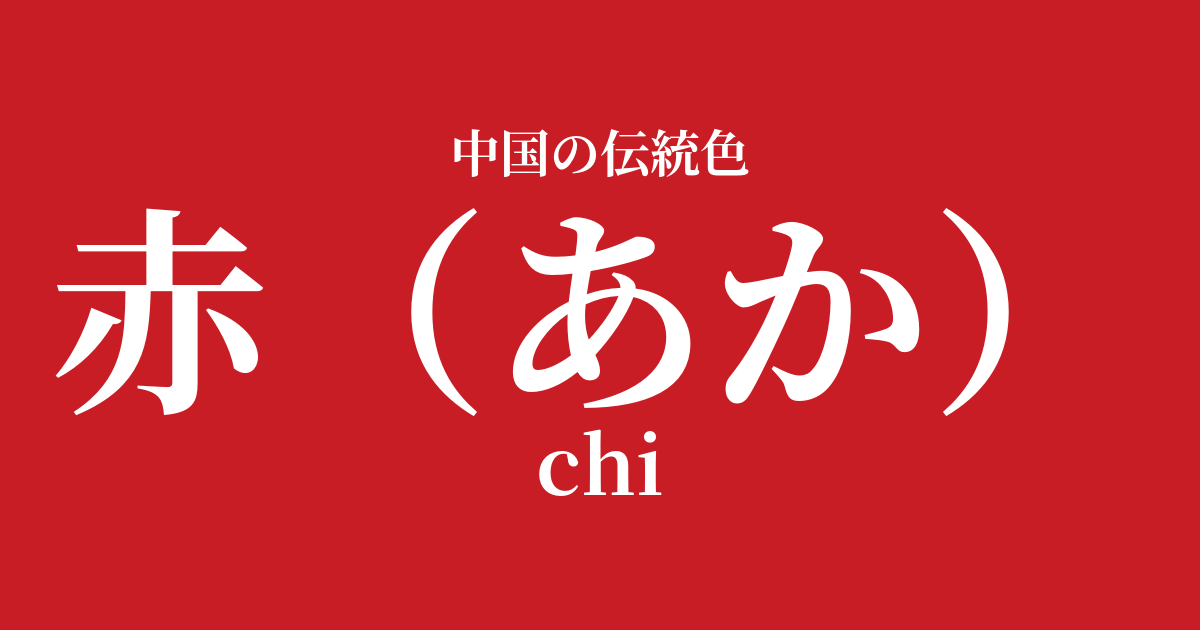
| Color name | 赤 |
|---|---|
| reading | red |
| pinyin | chi |
| HEX | #C81D25 |
| RGB | 200, 29, 37 |
What does "red" mean? Origin and etymology
Red is one of the most fundamental colors, evoking fire, the sun, and blood, the source of life.
In the Five Elements philosophy, an ancient Chinese worldview, red symbolizes the virtue of "fire" and represents the direction "south." Like a blazing flame, it has long been deeply rooted in people's spiritual culture as a symbol of positive energy such as vitality, passion, and energy.
There is a theory that the origin of the kanji character "赤" (aka) itself is based on the image of a person standing on fire or the shape of a blazing flame, suggesting that its origin is closely linked to fire.
Historical background of red
In Chinese history, red has always been a color with special significance. The Zhou Dynasty, in particular, positioned itself as a dynasty of "fire virtue," and therefore considered red to be the most revered color, using it extensively in ceremonies and rituals.
The importance of red continued into the Han Dynasty. From the legend that Liu Bang, the first emperor, gained power by slaying a red snake, red became considered the symbolic color of the Han Dynasty. Red was frequently used in the emperor's clothing and palace decorations, establishing its position as a color signifying authority and legitimacy.
During the Tang Dynasty, under the "pinse yi" system, which indicated the rank of officials by color, red (including scarlet and reddish-purple shades) was a color that only high-ranking officials were permitted to wear, and it became a symbol of social status.
Since the surname "Zhu" of Zhu Yuanzhang, the founder of the Ming Dynasty, means red, red was revered as the color of the dynasty during the Ming period. The fact that the walls and pillars of the Forbidden City in Beijing are painted red strongly reflects the ideology of this era.
To this day, red has been a vibrant color in Chinese culture, associated with good fortune and happiness. During the Spring Festival (Lunar New Year), red lanterns and decorations adorn the streets, and people wear red clothing to celebrate the new year. The "hongbao," a type of envelope given as a gift at weddings and other celebrations, is also an expression of the wish for good fortune embodied in this color.
Red in Chinese Art and Crafts
In Chinese arts and crafts, red was an important color that gave works of art a sense of life and splendor. In particular, the vermilion pigment made from the mineral cinnabar was highly valued for its vivid and powerful color, used in murals in palaces and temples, for coloring Buddhist statues, and as a paint for lacquerware. The ceramic technique known as "akae" (red painting) also uses this vibrant red to create patterns.
In the field of ceramics, producing a beautiful red color was a long-held dream of potters and a testament to their advanced skills. Red glazes such as the purple-red glaze found in Jun ware from the Song dynasty, and the underglaze red and Lang ware red glazes perfected in Jingdezhen during the Ming and Qing dynasties, were cherished by successive emperors for their rarity and beauty.
In fashion culture, red also holds special significance. In particular, the red formal wear worn by brides as wedding attire symbolizes warding off evil spirits and wishing for a happy future. The intricate red embroidery and patterns found on silk fabrics further enhanced the festive atmosphere.
Hidee flower red katsuhi, Harukie water green color blue
Color scheme preview
This is to check the readability of the text when this color is used as the background.
Red color scheme proposal
Yellow (#FFB61E)
Red and yellow have long been combined as the colors of the emperor in China. This color scheme, which can also be seen in the Forbidden City, symbolizes strength, wealth, and the highest good fortune, giving an impression of elegance and splendor.
Black (#1C1C1C)
The striking contrast between vibrant red and sharp black creates a powerful and modern impression. This color scheme, also seen in traditional lacquerware, adds elegance and a dramatic feel to contemporary designs.
Tsukihaku (#EAF4FC)
The vibrant red is beautifully contrasted with the pure, serene moonlight, creating a striking visual contrast. The two colors complement each other, resulting in a clean yet impressive and sophisticated space.
Practical Scenes
In interior design, red is an effective accent color that brings energy and warmth to a space. Painting just one wall red, or incorporating it through cushions, rugs, or artwork, can create a vibrant and lively atmosphere throughout the room. It's particularly suitable for living rooms and dining rooms where people gather.
In the world of fashion, red dresses and coats exude confidence and glamour, captivating onlookers. They are perfect for celebrations and special occasions. In everyday outfits, simply using red as an accent color in accessories such as bags, shoes, or scarves can tighten up the overall look and create a sophisticated impression.
In website and graphic design, red is used as a color that attracts attention and encourages action. Using it for purchase buttons or important headlines can effectively guide the user's gaze. However, overuse can create an aggressive impression, so it's important to consider the overall balance when using red.