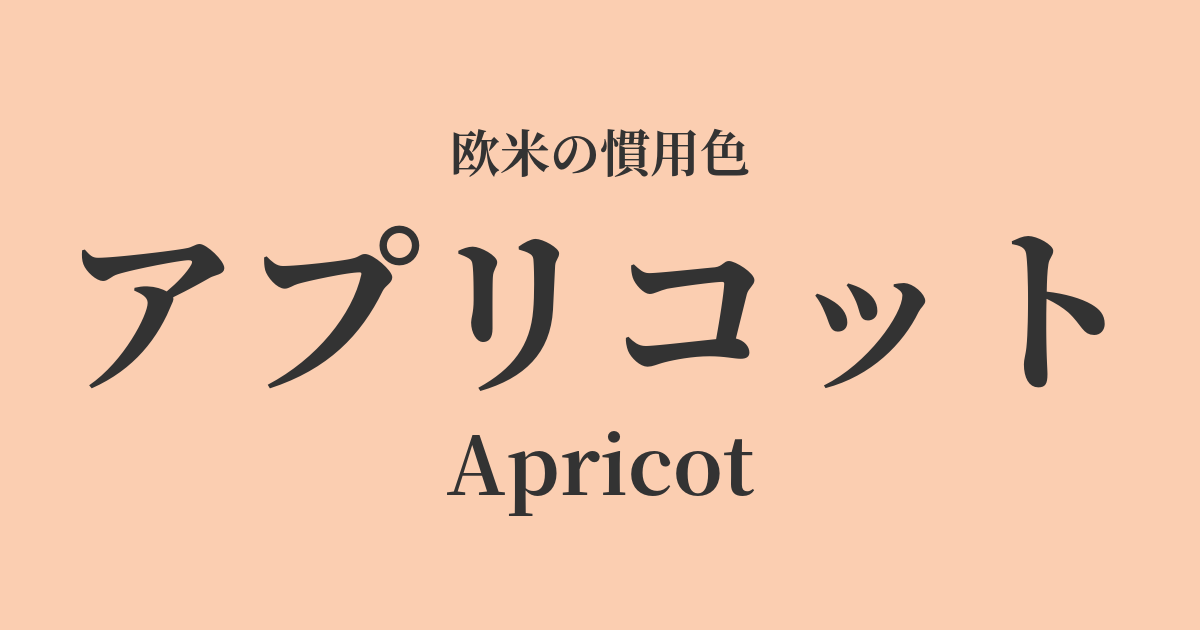
| Original English name | Apricot |
|---|---|
| Japanese notation | apricot |
| HEX | #FBCEB1 |
| RGB | 251, 206, 177 |
What is an apricot? Origin and etymology
Apricot, as the name suggests, is a gentle, warm orange-pink color derived from the color of the ripe flesh of the apricot fruit.
Tracing the etymology of the English word "apricot," we arrive at the Latin word "praecox" (early-ripening). This described the apricot's characteristic of ripening earlier than other fruits such as peaches and plums. It is said that this Latin word evolved through Arabic, Portuguese, Old French, and other languages to become the current English word "apricot."
Because the color apricot originates from a word meaning "precocious," it carries positive connotations such as youthfulness, vitality, and freshness.
Historical background and culture of apricots
Apricots have been cultivated since ancient Roman times, and their sweet taste has made them a symbol of fine dining and abundance. Apricots, as a color, have also long added vibrancy to people's lives.
In 17th-century Dutch still-life paintings, apricots were depicted as a symbol of abundance, and their soft hues simultaneously expressed the brilliance and transience of life.
During the Rococo period of the 18th century, this elegant pastel color was favored by noblewomen, such as Marie Antoinette, and was widely used in dresses and interior decorations. Its delicate and sweet atmosphere symbolized the opulent culture of the time.
In the 20th century, it gained popularity as a color that evoked a warm, homey, and optimistic mood in the organic designs of Art Nouveau and in the mid-century modern interiors of 1950s America.
Apricot in design and art
In the art world, Impressionist painters, in particular, skillfully used warm colors like apricot. Pierre-Auguste Renoir incorporated this hue into his depiction of light to express the soft texture of women's and children's skin.
In the world of fashion, apricot is a timeless and beloved color. Its flattering shade and ability to brighten and enhance complexion make it a favorite, especially for spring and summer dresses, blouses, and scarves. It has also become a staple in cosmetics, appearing in blushes and lipsticks, as a color that gives a natural, healthy-looking complexion.
In interior design, apricot brings warmth and comfort to a space. When used in large areas such as wallpaper, curtains, and sofas, it creates a bright and enveloping atmosphere throughout the room. Even adding it as an accent in small items such as cushions and lampshades can add a friendly touch to the space.
Color scheme preview
This is to check the readability of the text when this color is used as the background.
Apricot color scheme suggestion
Sage Green (#B2AC88)
The warmth of apricot and the calmness of sage green harmonize to create a natural and relaxed atmosphere. Earth tones are ideal for creating a comfortable space.
Dove Grey (#6D6F71)
The sweetness of apricot is balanced by the sophisticated Dove Grey, creating an elegant and modern impression. Not too sweet, this calm and mature color scheme is recommended for interior design and fashion.
Cream (#FFFDD0)
When combined with a soft cream color, the gentleness and happiness inherent in apricot are further enhanced. It gives a bright, clean, and feminine impression, making it suitable for bridal occasions.
Practical Scenes
In interior design, apricot is ideal for spaces where you want to relax, such as living rooms and bedrooms. Using this color as an accent wall is an easy way to warm up the room's atmosphere. It also harmonizes beautifully with natural materials such as wooden furniture, houseplants, and brass lighting, as well as metallic materials.
In fashion, it's recommended to incorporate this color into tops and dresses that flatter the face. Additionally, using it as an accent color in accessories such as bags, shoes, and jewelry adds a soft touch to your outfit. It also pairs exceptionally well with basic colors like white, beige, and navy.
In web and graphic design, this style is suitable for brands that want to convey friendliness and a sense of security. It helps express a warm and gentle worldview in lifestyle blogs, baby product websites, and organic food websites.