
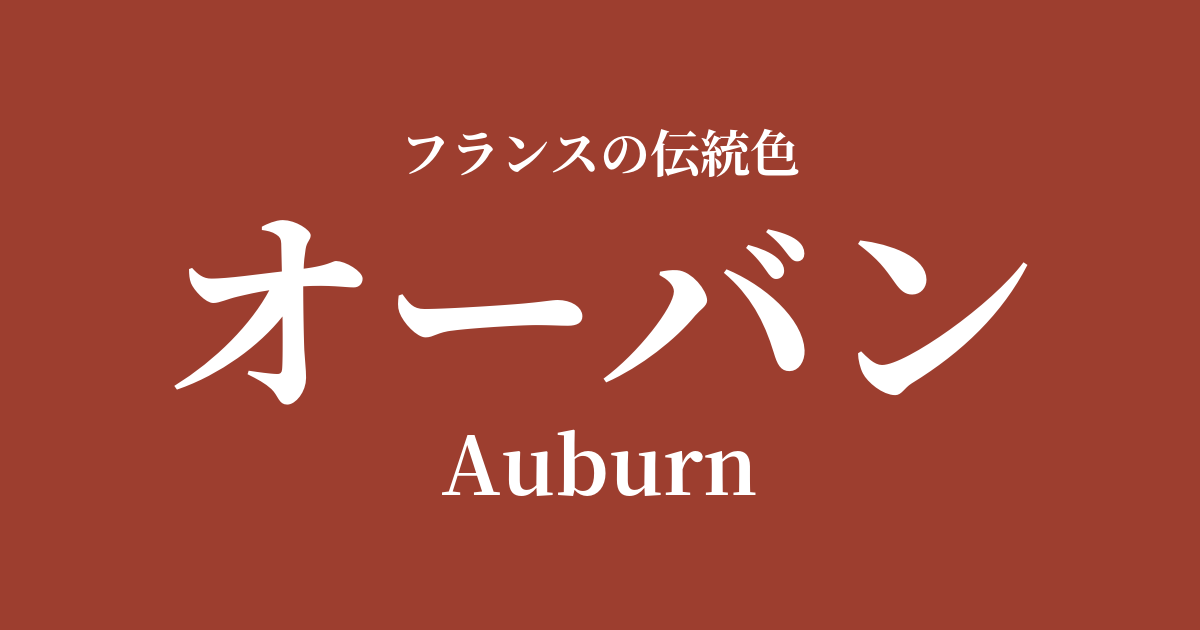
| French | Auburn |
|---|---|
| Katakana | Oban |
| HEX | #9d3e2f |
| RGB | 157, 62, 47 |
What is Oban? Origin and etymology
Auburn refers to a beautiful reddish chestnut or reddish-brown color. This color name is particularly used to describe the rich hair color of a woman when illuminated by light, conveying warmth, depth, and a somewhat intellectual impression.
Tracing its etymology, we surprisingly arrive at the Old French word "auborne," which originates from the Latin word "albus," meaning "white." Initially, it referred to a yellowish-white color similar to blonde or flaxen hair, but over time, influenced by the Latin word "brunus" (brown), the meaning gradually shifted to the current "reddish-brown."
This color evokes images of ripe chestnuts, fallen leaves adorning an autumn forest, and the rich earth's soil, conveying a sense of calm and vitality found in nature.
Oban's historical background
Rather than being a color favored by specific royalty or nobility, Aubin is a color that has quietly grown within the lives and artistic culture of the French people.
In particular, in 19th-century Romantic literature and Symbolist painting, Aubin's hair color was often depicted as an important element in expressing the character's personality and inner world. The image of a heroine who is passionate yet intellectual, mysterious yet sensual, was often associated with this deep hair color.
Furthermore, the French countryside, especially the autumn scenery of wine-producing regions like Burgundy and Bordeaux, is truly a world dominated by Aubin. The sight of the vineyard leaves turning reddish-brown as harvest season approaches is deeply etched in people's hearts as a color that symbolizes France's rich food culture and terroir (the unique character of the land).
Auban in the world of art and fashion
In the world of art, many depictions of women with Aubin hair have been created. In particular, Symbolist painters of the late 19th century, such as Gustave Moreau and Odilon Redon, used this striking hair color to portray the mystical women who appear in myths and dreams. It was used effectively not merely as a realistic representation, but as a color to symbolize inner passion and enigmatic charm.
In the world of fashion, auburn is one of the timeless classic colors that has been loved for generations. It pairs particularly well with warm materials such as tweed, wool, cashmere, and leather, and is an indispensable color in autumn and winter collections. Incorporating it into coats, jackets, bags, and shoes adds depth and sophistication to any outfit. Leading French fashion houses such as Hermès and Chanel skillfully incorporate this color, continuing to offer refined styles.
Oh, wool, wavy down to the nape! Oh, curls! Oh, scent tinged with languor!
Color scheme preview
This is to check the readability of the text when this color is used as the background.
Oban's color scheme proposal
Blue Nuit (#0f2540)
The combination of deep night blue and reddish-brown complements each other, creating a very classic and intellectual impression. This color scheme is ideal for study interiors and business attire where trustworthiness is required.
Ecru (#c2b280)
The natural and soft feel of ecru, an off-white color, further enhances the warmth of the Auban fabric. It is recommended for those who want to create a comfortable, relaxed, natural, and elegant space and fashion.
Vert Empire (#00561B)
The deep green, sometimes called Emperor's Green, and Auban create a rich and beautiful contrast reminiscent of an autumn forest. This sophisticated color scheme exudes a slightly dramatic and artistic atmosphere, perfect for advanced users.
Practical Scenes
In interior design, auburn is an ideal color for bringing warmth and tranquility to a space. Incorporating it into accent walls in the living room, or into fabrics such as sofas, cushions, and rugs, instantly creates a sophisticated and deep atmosphere. It pairs particularly well with dark-colored wooden furniture such as walnut and oak.
In fashion, auburn is a color that conveys intelligence and sophistication. Incorporating it into trench coats, leather jackets, or high-quality knitwear creates a classic yet modern style. For accessories, leather bags, belts, and boots are recommended.
In web and graphic design, using it as an accent color can convey a sense of reliability, tradition, and the warmth of handcrafted work. It is suitable for websites of brands that handle high-end food products or historical workshops.