
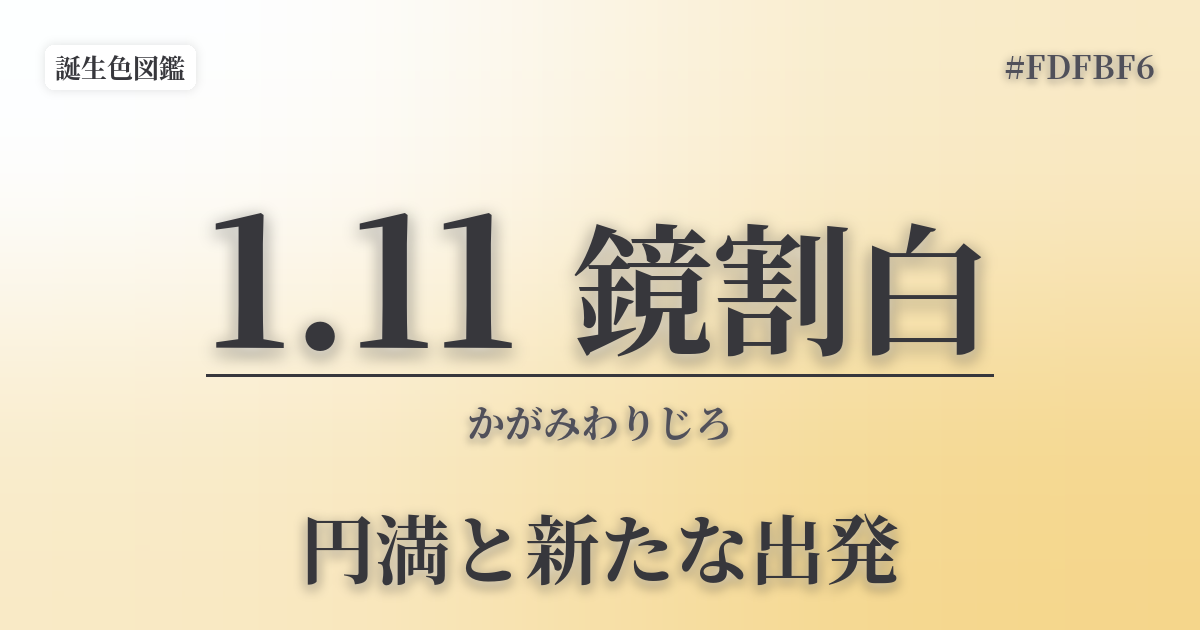
| birthday | January 11 |
|---|---|
| Color name | Kagamiwarijiro (Mirror-splitting white) |
| HEX | #FDFBF6 |
| RGB | 253, 251, 246 |
| Color meanings | Harmonious and a New Beginning |
- What is "Kagamiwari Shiro" (Mirror-Breaking White), the birth color for January 11th?
- The color symbolizes "harmony and a new beginning" and personality.
- Connection to the seasons — Kagami-biraki (breaking of the sake barrel)
- Color scheme preview
- Mirror-shaped white color scheme proposal
- FAQ
- Related traditional colors
What is "Kagamiwari Shiro" (Mirror-Breaking White), the birth color for January 11th?
The birth color for January 11th is "Kagamiwari-jiro" (mirror-breaking white). This color is a warm off-white that our website created, inspired by the traditional Japanese event of "Kagami-biraki" (mirror-breaking ceremony).
The color evokes the pure and soft texture of the kagami mochi offered to the gods. By adding a touch of warmth to "white," a symbol of purity and sanctity, it expresses the peaceful feelings of celebrating the start of a new year and the wish for family harmony. It is a refreshing yet gentle color that brings to mind the clear light of winter and a pristine white snowscape.
The color symbolizes "harmony and a new beginning" and personality.
People who prefer this color tend to have a pure and sincere heart. They have a serious side, setting high ideals and striving to discern the true nature of things. As white symbolizes, they prefer a simple and honest way of life and approach everything with integrity.
Furthermore, as indicated by the color's symbolism of "harmony and a new beginning," this type of person values harmony with those around them and excels at building harmonious relationships. They also possess a positive attitude, not dwelling on the past and ready to make a fresh start. Their pure character will earn them the trust of many.
Connection to the seasons — Kagami-biraki (breaking of the sake barrel)
January 11th is the day of "Kagami-biraki," when the kagami-mochi (rice cakes offered to the gods during the New Year) are taken down and eaten. This is a traditional Japanese custom in which people eat the rice cakes, which are believed to have been imbued with the power of the New Year's god, in order to receive some of that power and pray for good health and protection from illness throughout the year.
Due to customs in samurai society, the word "cut" was avoided, and the auspicious word "open" came to be used instead. Rice cakes are typically broken by hand or with a wooden mallet and eaten in dishes such as ozoni (rice cake soup) or oshiruko (sweet red bean soup). The sight of families gathering and sharing warm rice cakes has become a warm and harmonious tradition of the New Year.
Color scheme preview
This is to check the readability of the text when this color is used as the background.
Mirror-shaped white color scheme proposal
Red (#D7003A)
The purity of the white of the sake barrel is combined with red, a traditional Japanese color for celebrations. The contrast between red and white enhances the cheerful mood of the New Year and is a combination that powerfully encourages a new beginning.
Bamboo green (#78A38F)
By combining a pure, mirror-white white with a vibrant young bamboo green, this color scheme evokes the feeling of spring budding amidst the stillness of winter. It's a calm, hopeful, natural, and sophisticated color combination.
Lapis Lazuli (#1E50A2)
This combination features a snow-white, mirror-like white and a deep lapis lazuli blue reminiscent of a clear winter night sky. It evokes a sense of tranquility and elegance, creating an intelligent and calming atmosphere. It's also recommended for times when you want to soothe your mind and enhance your concentration.