
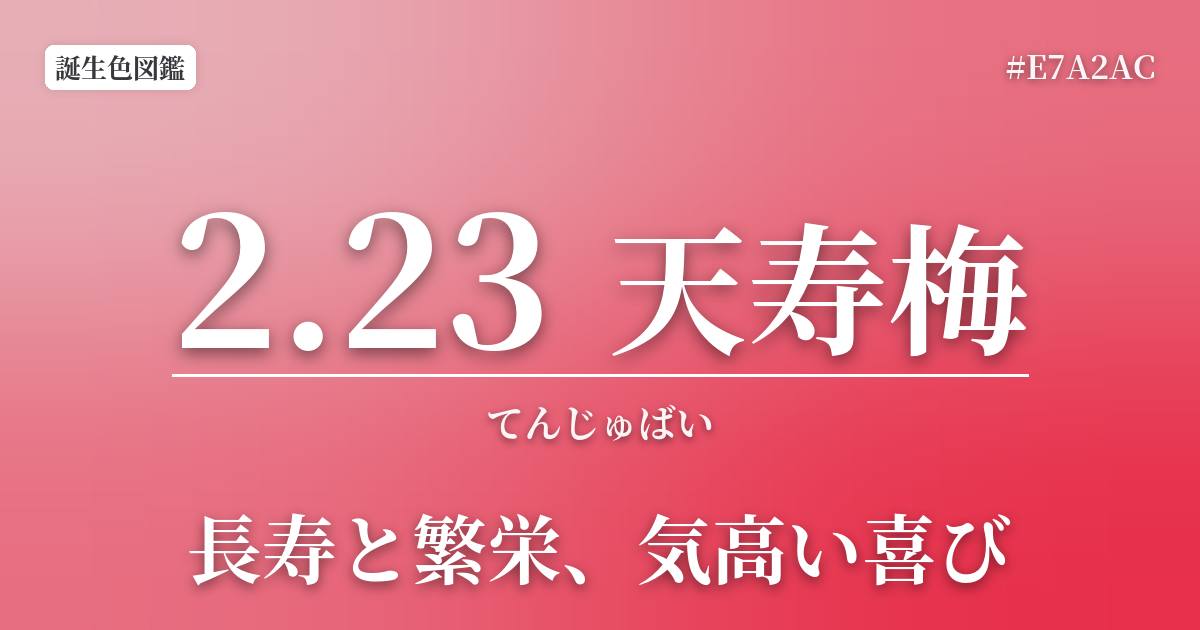
| birthday | February 23 |
|---|---|
| Color name | Tenjubai (a type of plum tree) |
| HEX | #E7A2AC |
| RGB | 231, 162, 172 |
| Color meanings | Longevity and prosperity, noble joy |
What is the birth color "Tenjubai" for February 23rd?
The birth color for February 23rd is "Tenjubai" (a type of plum blossom). This birth color was created by this website based on inspiration from seasons and events, and embodies wishes for longevity and prosperity.
The Tenjubai plum blossom is a gentle pink with a hint of gray. It evokes a sense of nobility and tenderness, like a plum blossom that has endured the harsh winter and heralded the arrival of spring. As the name "Tenju" (meaning "heavenly longevity") suggests, it has a calm and mature quality, and its warm hue soothes the heart of those who see it.
It possesses both radiance and elegance, making it perfect for a special day enveloped in a celebratory mood. It evokes images of a plum blossom garden in soft sunlight, and a scene filled with happiness, where people's feelings of blessing come together.
The color symbolizes "longevity and prosperity, noble joy" and personality.
In color psychology, pink symbolizes gentleness, love, and happiness. People who prefer calm, muted shades of pink, like those of the Japanese apricot (Tenjubai), tend to have a gentle and compassionate heart. They value inner richness and dignity more than outward flamboyance.
Furthermore, as the color's symbolism of "longevity and prosperity" suggests, you will find joy in nurturing things carefully and building stable relationships. You are rarely emotional and are always able to make calm and thoughtful judgments. You possess a warm and inclusive nature that embraces those around you, and you are a trusted presence for many.
Connection to the seasons — Emperor's birthday and celebrations
February 23rd is the Emperor's Birthday, a national holiday in Japan. Around this time, the harsh winter weather begins to ease in Japan, and signs of spring can be felt. Plum blossoms, in particular, are in full bloom in many regions and have long been cherished by people as the "first of all flowers."
The plum blossom, which blooms proudly despite the cold, is considered a symbol of vitality, hope, and elegance. The sight of plum blossoms in full bloom on the celebratory day of the Emperor's birthday, heralding the arrival of spring, symbolizes Japan's beautiful sense of the seasons. "Tenjubai" can be said to be a color that combines this celebratory mood with the gentle and noble beauty of nature in early spring.
Color scheme preview
This is to check the readability of the text when this color is used as the background.
Color scheme proposal for Tenjubai
Old Lace (#FDF5E6)
By pairing it with Old Lace, a classic and warm white, the elegance and gentleness of the Tenjubai flower are further enhanced. It's a cheerful and somewhat sacred color scheme, perfect for a celebratory occasion.
Celadon Green (#ACE1AF)
This combination evokes the natural beauty of plum blossoms and young leaves. The warmth of the Tenju plum blossom is complemented by the refreshing celadon green, creating a pleasant harmony that evokes the arrival of spring.
Dove Gray (#6D6F6D)
Adding a muted Dove Grey tea tempers the sweetness of the Tenjubai plum, creating a sophisticated and urban impression. This combination is perfect when you want to create an intelligent and elegant atmosphere.