
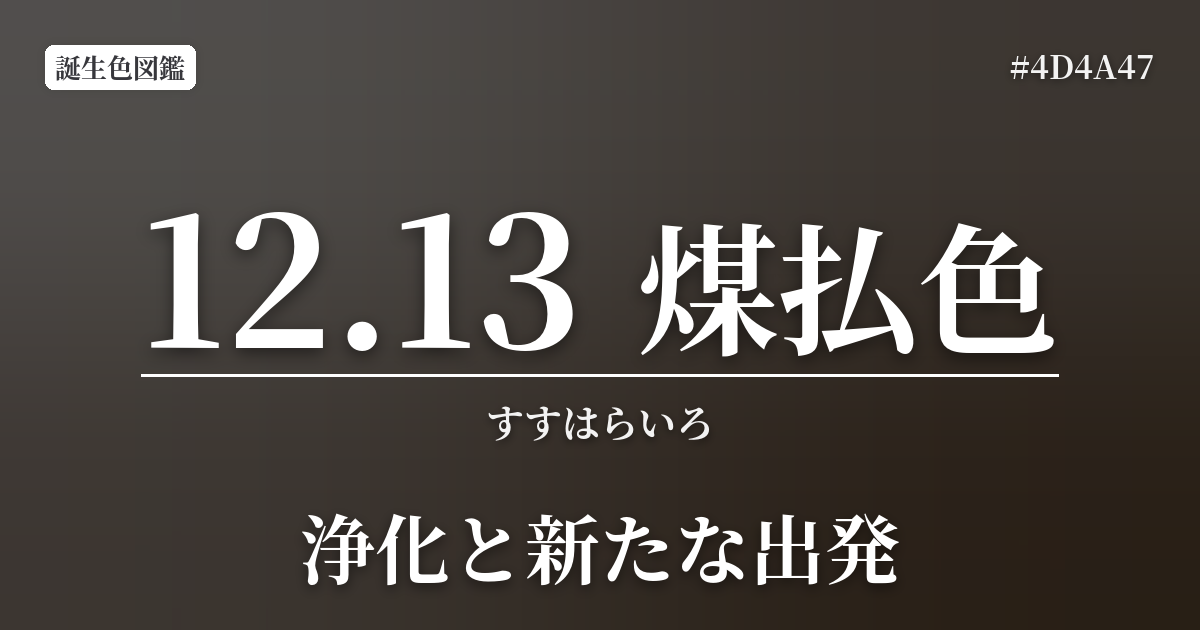
| birthday | December 13 |
|---|---|
| Color name | Soot-cleaning color |
| HEX | #4D4A47 |
| RGB | 77, 74, 71 |
| Color meanings | Purification and a New Beginning |
- What is the birth color for December 13th, "Soot-sweeping color"?
- The color's meaning is "purification and a new beginning," and it relates to personality.
- Connection to the seasons — New Year's preparations and cleaning
- Color scheme preview
- Proposed color scheme for soot-sweeping.
- FAQ
- Related traditional colors
What is the birth color for December 13th, "Soot-sweeping color"?
The birth color for December 13th is "Susuharai-iro" (soot sweeping color). This color is inspired by the traditional year-end ritual of "Susuharai," and represents the act of sweeping away a year's worth of dust and soot. It is a deep, calm gray that is very close to black.
It's not just a dark color; it's characterized by a subtle brownish nuance. This evokes the soot from the hearths and stoves found in traditional Japanese houses, conveying a sense of warmth and history in people's lives. It's a color that holds within its silence a solemn resolve to cleanse the old and welcome the new year.
The color's meaning is "purification and a new beginning," and it relates to personality.
Those who prefer this color may be thoughtful and introspective, seeking to discern the true nature of things. They possess a calm intellect, valuing inner richness and spiritual fulfillment more than superficial glamour.
They possess a calm and steady side, and have a strong will to see things through to the end once they've made a decision. While respecting the old ways, they readily let go of unnecessary ideas and habits, and constantly strive to become a new version of themselves. Because of their grounded attitude, they are often trusted and seen as a reliable presence by those around them.
Connection to the seasons — New Year's preparations and cleaning
December 13th is considered the day for "the beginning of New Year's preparations," and from this day onwards, people begin preparing to welcome the New Year's god. In the past, this day included "pine welcoming," where people went to the mountains to gather pine branches to be used for kadomatsu (New Year's decorations).
Among the New Year's preparations, "soot sweeping" is particularly symbolic. This is the root of modern-day spring cleaning, but it was not merely cleaning; it was a sacred ritual to purify the house and welcome the gods. By sweeping away the soot and dust of the past year, it symbolizes warding off evil and welcoming the new year in a pure space. The color of soot sweeping symbolizes this traditional Japanese custom and the solemn spirit of embracing a new beginning after purification.
Color scheme preview
This is to check the readability of the text when this color is used as the background.
Proposed color scheme for soot-sweeping.
Gofun (#FFFFF0)
This combination evokes the clean space after sweeping away soot, or the freshly fallen snow. The deep soot color symbolizes the past, while the pure white pigment represents the future, creating a sense of hope befitting a new beginning.
Vermilion (#FF3300)
By combining a sooty black color with vermilion, reminiscent of shrine gates and celebrations, a bright and cheerful energy is born within a sense of solemnity. It evokes a traditional Japanese aesthetic and gives a powerful sense of strength to welcome the new year.
Chitose Midori (#316745)
This color combination features the evergreen tree, Chitosemi-green, which retains its leaves even in harsh winters. The tranquility of the sooty green is enhanced by a sense of vitality and unchanging peace. With its calm, mature atmosphere, this color scheme is perfect for a study or similar setting.