
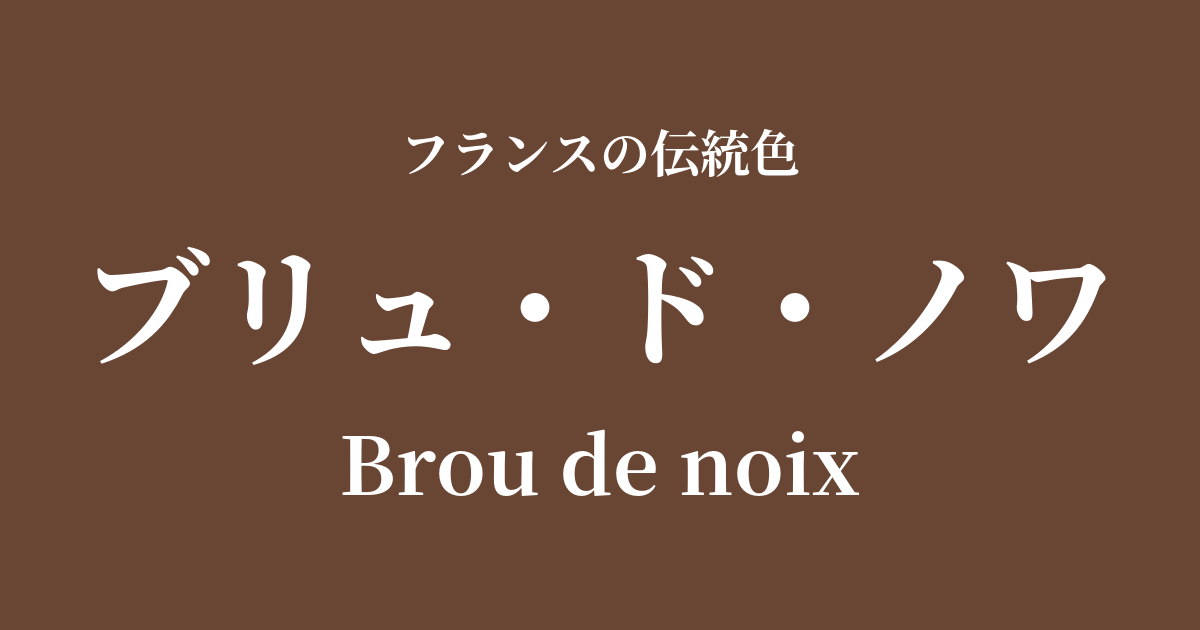
| French | Bamp de noix |
|---|---|
| Katakana | Bru de Noix |
| HEX | #694533 |
| RGB | 105, 69, 51 |
What is Bru de Noix? Origin and Etymology
"Brou de noix" literally translates from French as "walnut shell" or "walnut skin." As the name suggests, this color comes from a natural dye made by boiling the outer shells of unripe, green walnuts.
This dye is extremely rich in tannins, and due to its properties, it has long been deeply rooted in European life and culture as a wood stain, fabric dye, and ink for writing and drawing. It is characterized by a beautiful, warm, and deep brown color, typical of colors derived from nature.
Historical background of Bru de Noix
The history of Bru de Noy is long, dating back to medieval Europe. At that time, manuscripts of the Bible and official documents were made in monasteries and other institutions, and Bru de Noy played a very important role as the ink used for this purpose. The letters written in its deep brown on parchment have not lost their presence even after many years.
During the Renaissance, masters who left their mark on art history, such as Leonardo da Vinci and Rembrandt, are known to have used this colored ink in their sketches and preliminary drawings. They took advantage of the rich expressive power of the shading that could be created by diluting it with water, and explored the complex effects of light and shadow on paper.
Furthermore, from the 17th to the 18th centuries, skilled French furniture makers highly valued bru de nois as a staining agent for beautifully finishing wood. It was particularly used to give walnut furniture an even deeper and more dignified luster, becoming an unsung hero supporting the tradition of high-end French furniture making.
Bru de Noir in the world of art and fashion
In the world of art, Bru de Noy truly shone in his drawings, particularly from the Renaissance to the Baroque period. Beyond simply drawing with pen and brush, he employed a technique called "wash," where he diluted the ink with water to create soft hues, allowing him to depict a sense of depth and atmosphere on a single sheet of paper. For this reason, many painters used this ink for their studies before moving on to oil paintings.
In textile culture, brut de noix was also an important natural dye. Before the invention of chemical dyes, people extracted colors from nature, and this muted brown color obtained from walnut shells is said to have been used to dye wool, silk, and cotton, adorning the clothing and tapestries of people from all walks of life, from commoners to nobility.
Even today, its antique and nostalgic feel continues to fascinate many people. It is still cherished and used as ink for calligraphy enthusiasts, watercolor paints, and wood stains.
Color scheme preview
This is to check the readability of the text when this color is used as the background.
Bru de Noix's color scheme proposal
Blanc de Lis (#F4EFE4)
The warm Brut de Noix is paired with a natural, linen-like white to create a natural and calming space. It gives an organic and comfortable impression.
Rouge de Bordeaux (#611E28)
The combination of deep brown and the rich red of aged wine creates a dignified and classic atmosphere. This color scheme is ideal for elegant spaces such as studies and living rooms.
Vert Veronnaise (#57846C)
The earthy brown and the calming green of plant leaves create an earthy color combination reminiscent of nature. This color scheme evokes a sense of peace and intelligence.
Practical Scenes
In the field of interior design, incorporating Brut de Noir as a color for flooring or wooden furniture brings warmth and a sense of depth to a space. When used as wallpaper or fabric, using it partially, such as as an accent wall on just one wall of a room, or in cushions or curtains, will tighten the overall space and create a sophisticated and calm atmosphere.
In fashion, this color is a key element in autumn and winter outfits, particularly in coats, jackets, leather bags, and shoes. It pairs exceptionally well with warm materials like wool, tweed, and corduroy, creating an intelligent and sophisticated impression. Combining it with beige or off-white creates a soft contrast, resulting in an elegant style.
In web and graphic design, using this color for backgrounds, footers, and headings can bring a sense of stability and trustworthiness to the entire site. It is particularly well-suited for expressing the worldview of brands dealing with traditional crafts, organic products, or historical themes.