
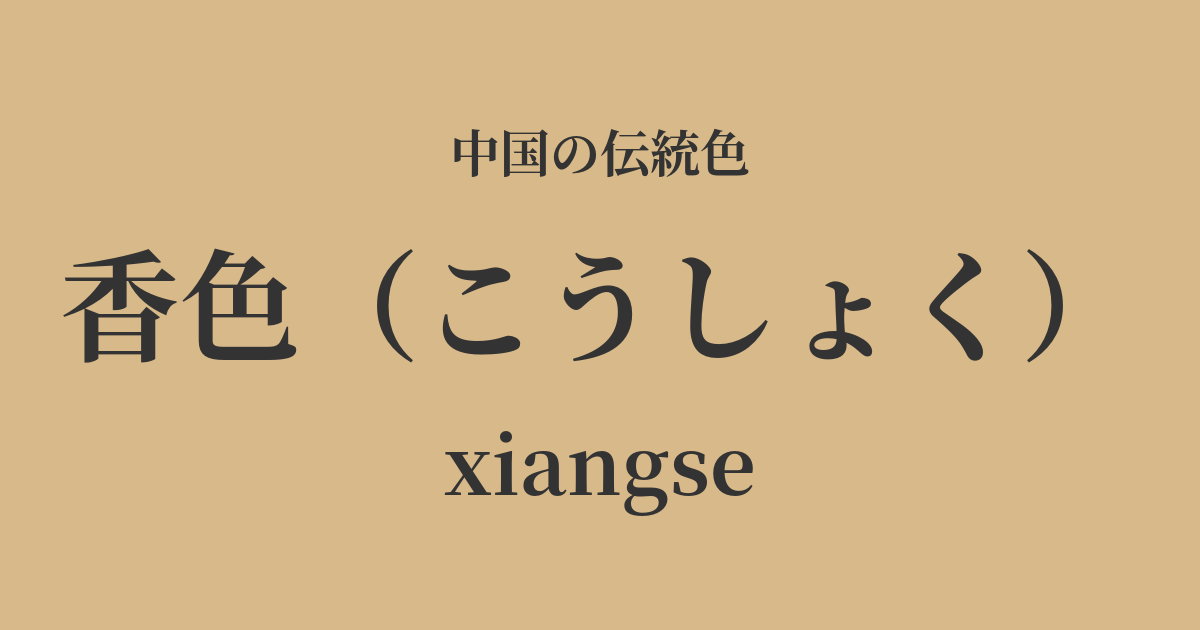
| Color name | scented color |
|---|---|
| reading | Koshoku |
| pinyin | xiangse |
| HEX | #D8B98A |
| RGB | 216, 185, 138 |
What is "Kōshoku"? Origin and etymology
Koshoku, as its name suggests, is a pale, elegant yellowish-brown color derived from "fragrance." This color was named after the dyes made by boiling down precious fragrant woods such as cloves, agarwood, and sandalwood.
This reveals the rich sensibility of the ancient Chinese people who sought to express the invisible, noble fragrance through color. The hues, possessing both calmness and warmth, evoke a refined and understated beauty.
Historical background of incense color
The history of incense and color is ancient, and it was especially cherished by the nobility and literati during the Tang and Song dynasties, periods of cultural maturity. As the culture of burning incense spread among the court and upper classes, incense and color, which evoked those scents, also came to be seen as symbols of status and refinement.
Furthermore, the color of incense has deep ties to Buddhism. Incense is an indispensable offering before Buddha, and due to its sacred image, it was sometimes used as the color of the robes worn by monks. This shows that it was also perceived as a highly spiritual color, detached from the secular world.
In contrast to the extravagant culture of the Tang Dynasty, the Song Dynasty saw a shift towards a more introspective and simple aesthetic, reminiscent of the concept of wabi-sabi. During this period, incense culture became even more refined among literati, and gentle, natural color tones, like those of incense, were favored. It is said that their studies and tea rooms were unified by these subdued colors, creating spaces for deep contemplation.
Incense Colors in Chinese Art and Crafts
In the history of clothing culture, fragrant colors added a refined touch to Hanfu (traditional Chinese clothing) and silk fabrics. They were particularly favored by literati and aristocrats, used in garments such as robes and tunics, and functioned as colors that expressed a person's intelligence and dignity. The natural luster of silk combined with the soft hues of fragrant colors resulted in elegant and sophisticated attire.
In the world of ceramics, the warm, ivory-like hues found in white porcelain fired at the Ding kilns during the Song dynasty are reminiscent of the "incense color." The Song dynasty's aesthetic, which prioritized the subtle nuances of glaze and the beauty of the vessel's form over elaborate decoration, seems to resonate with the understated elegance of the incense color.
In Chinese painting, especially in landscape and bird-and-flower paintings, fragrance colors play an important role. They were used to depict natural and tranquil scenes, such as the colors of building walls and ground, or the colors of withered leaves and dry soil. In the meticulous painting technique known as Gongbi painting, they were also used as the skin tone of figures or the background color of clothing to create an elegant atmosphere.
Color scheme preview
This is to check the readability of the text when this color is used as the background.
Color scheme proposal for incense
Zanseki (#9C533D)
This combination of earth tones evokes the colors of soil and wood. It creates a natural, warm, and very calming impression. It is suitable for creating a quiet and tasteful space, such as a traditional study or tea room.
Moon White (#D9E4E8)
This combination features a pale yellowish-brown and a bluish-white reminiscent of moonlight. The colors complement each other, creating a clean, elegant, and sophisticated atmosphere. Recommended for fashion and modern interiors.
Hot oil (#C03F59)
By adding a vibrant crimson accent to a calm, incense-colored base, the color scheme becomes much more vibrant and striking. Incorporating it into accessories adds a touch of passionate charm to an otherwise elegant look.
Practical Scenes
In interior design, fragrant colors bring warmth and tranquility to a space. When used on large areas such as wallpaper, curtains, and rugs, they create a relaxing and peaceful atmosphere. They also pair exceptionally well with wooden furniture, making them useful for creating a high-quality and comfortable space, whether in a Japanese-style or Western-style room.
In the world of fashion, fragrant colors are incredibly versatile and easy to use, creating an elegant impression. Incorporating them into coats, jackets, and knitwear creates a sophisticated and gentle atmosphere. Because they blend well with the skin, they suit many people regardless of age or gender, and their charm is particularly evident in autumnコーディネートs.
In web and graphic design, using this color as a background color is pleasing to the eye and enhances the content. It is suitable for websites dealing with themes of luxury, tradition, or organic aesthetics. Using it as the main color while adding darker accents tightens the overall design and creates a sophisticated impression.