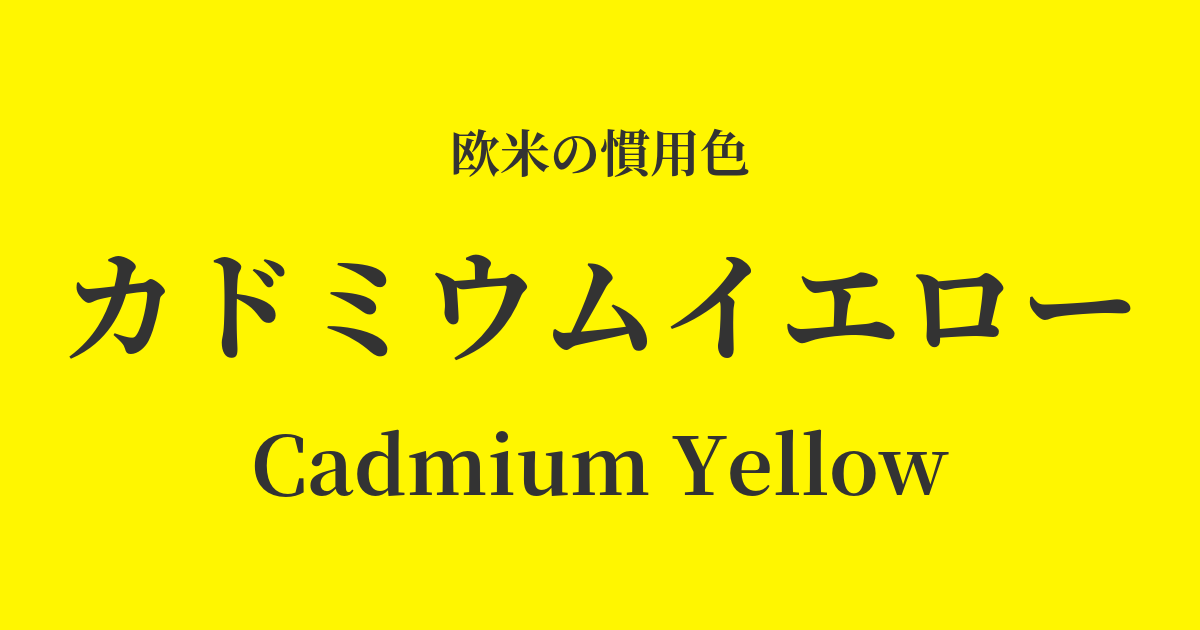
| Original English name | Cadmium Yellow |
|---|---|
| Japanese notation | Cadmium Yellow |
| HEX | #FFF600 |
| RGB | 255, 246, 0 |
What is Cadmium Yellow? Origin and Etymology
Cadmium yellow, as the name suggests, is a color name derived from the chemical element "cadmium." It was discovered in 1817 by the German chemist Friedrich Stromeyer from zinc ore.
The name originates from the ancient name of calamine, the ore in which cadmium was found, and is derived from the Greek word "kadmeia ge," meaning "land of Cadmeia." This is said to be based on the legend in Greek mythology that Cadmus, the founder of Thebes, discovered zinc in that place.
This pigment, primarily composed of cadmium sulfide, is characterized by its exceptional vibrancy and excellent opacity. Its radiant hues have made it popular in English-speaking countries, symbolizing positive images such as "light," "joy," and "energy."
The historical background and culture of cadmium yellow
Cadmium yellow is one of the "modern colors" brought about by scientific advancements in the 19th century. Until then, many of the dominant yellow pigments contained arsenic, making them highly toxic, or were unstable and prone to discoloration in light. Painters were looking for a safer and more permanent yellow.
Cadmium yellow, which appeared on the market as a pigment in the 1820s, quickly captured the hearts of artists due to its vivid color and stability. In particular, this color was a revolutionary art material for Impressionist painters who sought to depict the changes in light and color.
Claude Monet used this color extensively to express the shimmer of light, and Vincent van Gogh used it to depict the fiery sun and sunflowers of southern France. The vibrant yellow of Van Gogh's masterpiece, "Sunflowers," would not have been possible without cadmium yellow.
In the 20th century, its high visibility led to its application in industrial products. The iconic yellow of American school buses and construction machinery is a remnant of its history, chosen to ensure safety. However, in recent years, concerns about cadmium toxicity have led to the development of safer alternative pigments, and its use is increasingly restricted.
Cadmium yellow in design and art
In the world of art, cadmium yellow holds a special place as a color that expresses light and emotion. The most famous example is Vincent van Gogh's "Sunflowers" series. He used this color to depict the brilliance and passion of life itself on canvas. The vividness of the lamplight depicted in "Café Terrace at Night" is also due to this color.
Furthermore, Impressionist painters, including Claude Monet, used cadmium yellow to depict sunlight pouring down on landscapes and reflections on water surfaces. Fauvist painters like Henri Matisse also utilized this vibrant yellow in their bold use of color.
In contemporary design, its energetic nature makes it effective in situations where you want to attract people's attention. Examples include call-to-action buttons and advertising banners on websites, and food packaging. In the fashion world, it is particularly popular in spring and summer collections as an accent color that brings vibrancy and an optimistic feel to an outfit.
There is no blue without yellow and without orange.
Color scheme preview
This is to check the readability of the text when this color is used as the background.
Cadmium yellow color scheme proposal
Ultramarine (#120A8F)
This is a color combination close to the complementary colors that Van Gogh loved. It enhances the vibrancy of each color, creating a dramatic, artistic, and powerful contrast.
Charcoal Gray (#36454F)
The vibrant cadmium yellow is toned down by a calming charcoal gray. This creates a modern and sophisticated impression, making it ideal for creating a stylish and urban space.
Ivory (#FFFFF0)
The brightness of cadmium yellow is gently complemented by soft ivory. This warm and approachable color scheme creates a comfortable and natural atmosphere.
Practical Scenes
Cadmium yellow has the power to infuse positive energy into spaces and designs.
In interior design, it's recommended to incorporate accent pieces such as cushions, art panels, or a single chair. This will give the entire room a brighter and more lively feel. Combining them with dark colors like navy or charcoal gray will create a modern and sophisticated space.
In fashion, it's a color that takes center stage in an outfit. It's great to boldly incorporate it into dresses and coats, but using it as an accent color in accessories like bags, shoes, and scarves is an easy way to add playfulness and glamour to your everyday look.
In web and graphic design, its high visibility makes it effective when used for buttons, icons, and headings that you want to draw attention to. However, overuse can strain the eyes, so using it only as an accent is key to sophisticated design.