
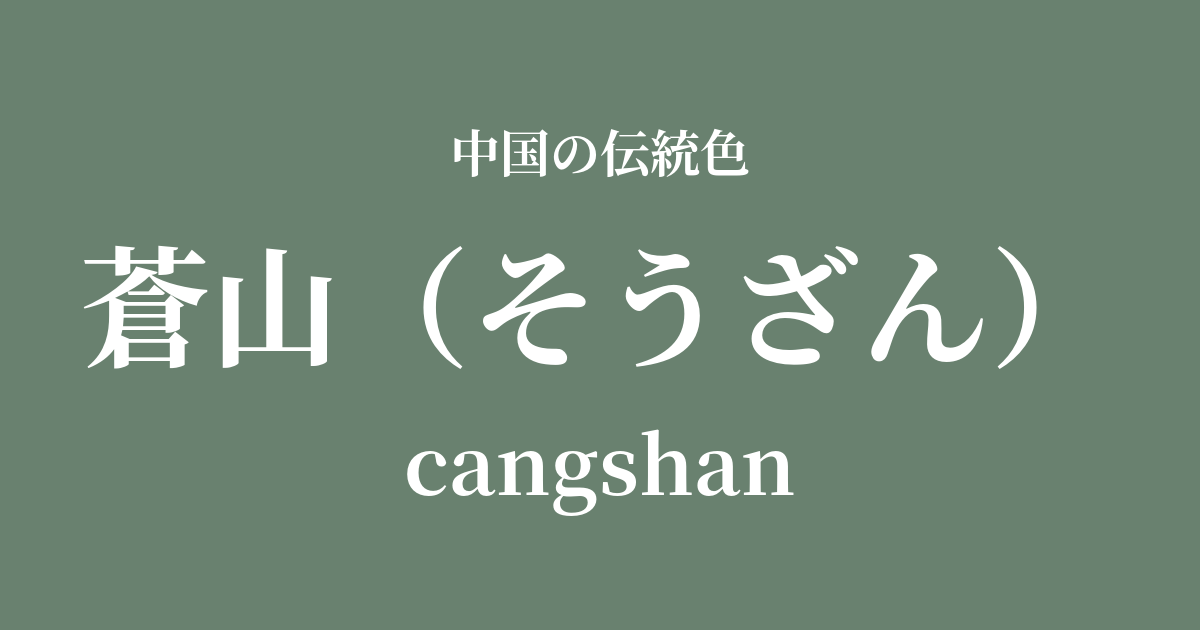
| Color name | Aoyama |
|---|---|
| reading | Sozan |
| pinyin | cangshan |
| HEX | #69816F |
| RGB | 105, 129, 111 |
What is Aoyama? Origin and etymology
As its name suggests, Sozan is a deep, calming green color that evokes images of "lush, green mountains."
This color is said to be named after the famous mountain range "Cangshan" in Dali, Yunnan Province, China. This mountain range, with its peaks reaching over 4,000 meters in elevation, is covered in lush vegetation throughout the seasons, and when viewed from afar, it appears as a deep green, just as its name suggests. When it is sometimes shrouded in mist or clouds, it looks exactly like a scene from a sumi-e (ink painting).
The kanji character "苍 (蒼)" refers to blue, green, or grayish colors, expressing the lush appearance of dense vegetation or the unique hue of distant mountains shrouded in mist. The color of Aoyama is not simply green, but a profound hue that evokes the grandeur of nature, tranquility, and the passage of eternal time.
Historical background of Aoyama
While the color name "Cangshan" doesn't frequently appear in specific historical documents, the spiritual significance associated with this color has long been rooted in Chinese culture.
In particular, the green of the mountains held special meaning for literati who cherished nature and found spiritual enlightenment within it. During the Tang and Song dynasties, when landscape painting flourished, many painters attempted to depict the majesty and ethereal beauty of the mountains using varying shades of ink and minimal color. The color of Cang Shan can be said to symbolize this worldview of landscape painting.
Furthermore, in the philosophy of Yin and Yang and the Five Elements, blue (including green) is associated with the east and is considered a color that symbolizes the breath of life in spring. The deep green of Aoyama Mountain embodies the powerful life force that sprouts after enduring a harsh winter, and has been seen as a symbol of regeneration and permanence. It is said that this deep green was also favored in the gardens and furnishings of the imperial court as a color that expressed a longing for nature.
Cang Shan in Chinese Art and Crafts
The color of Cang Shan is deeply connected to Chinese art, especially landscape painting. In ink painting, all things are expressed through the shades of ink, but based on the concept of "applying color according to its nature," a calm green like this color was effectively used to depict mountain slopes and trees. It gives the painting a quiet depth and a sense of realism.
In the world of ceramics, the deep, clear green glaze found in the celadon of the Longquan kilns, which reached its peak during the Song Dynasty, is reminiscent of the color of Cangshan. Its quiet and elegant hue captivated many people, from emperors to literati, and was considered the epitome of beauty.
In terms of clothing culture, the deep green robes worn by bureaucrats and literary figures reflect the spirituality of Aoyama. Their aesthetic sense, which avoided ostentation and valued harmony with nature and inner richness, was entrusted to this subdued color.
Aoyama Yoshizai, many times Yuhi Beni.
Color scheme preview
This is to check the readability of the text when this color is used as the background.
Aoyama's color scheme proposal
Moon white (#EAF4F4)
The deep green of the soaring mountain is combined with a pale, moon-white reminiscent of moonlight, creating a clear and mysterious impression, like a tranquil mountain landscape at night. It is a sophisticated color scheme that exudes dignified elegance.
赭石 (#A75347)
The combination of the lush green mountains and the reddish-brown stones reminiscent of red soil and rocky surfaces truly evokes a landscape of nature itself. It conveys a sense of warmth and strength, and gives a stable and calm impression.
Fujio (#FFB61E)
By adding a vibrant wisteria yellow as an accent to the deep green of the mountains, you can express the light filtering through the dark forest and the changing colors of the leaves. The result is a vibrant, striking color scheme full of life.
Practical Scenes
In interior design, Aosayama brings a sense of calm and tranquility to a space. Incorporating it as an accent wall in a study or bedroom can enhance concentration and soothe the mind. It also pairs exceptionally well with solid wood furniture, houseplants, and linen materials.
In fashion, it creates an intelligent and sophisticated atmosphere. Especially when incorporated into coats, knitwear, and suits during the autumn and winter seasons, it adds depth and elegance to the outfit. Choosing high-quality materials such as silk and cashmere further enhances the beauty of the color.
In web and graphic design, using this color as a background can convey a sense of luxury and trustworthiness. It is suitable for websites dealing with natural products or traditional goods, and combining it with white or gold-toned text creates a highly legible and elegant design.