
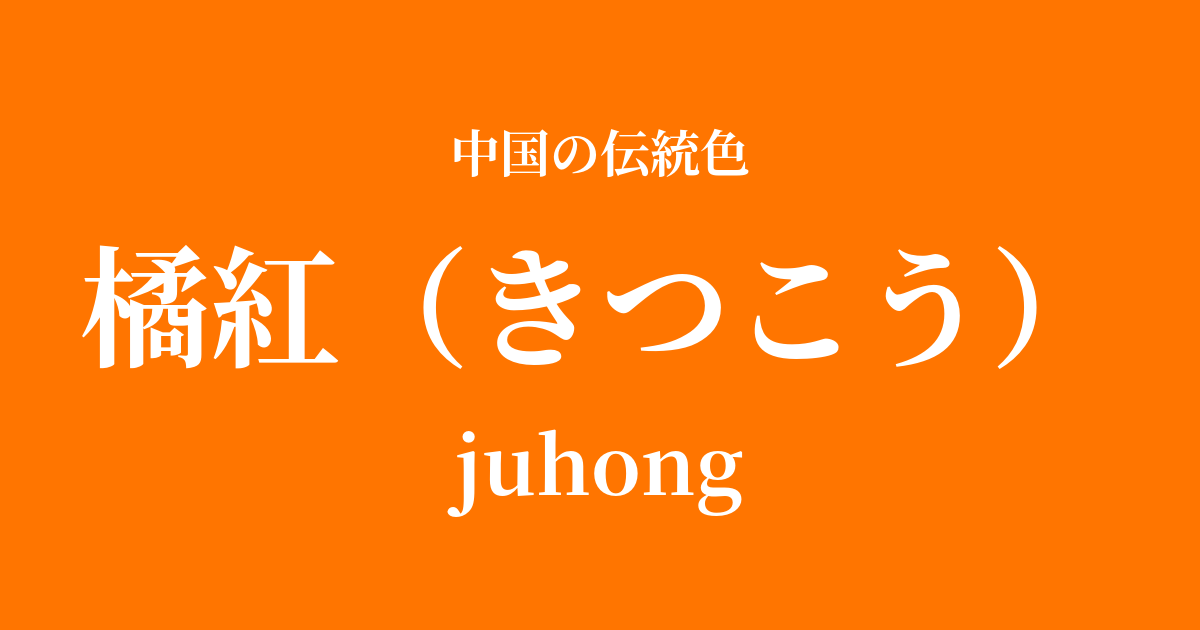
| Color name | Tachibana Beni |
|---|---|
| reading | Kitsuko |
| pinyin | juhong |
| HEX | #FF7500 |
| RGB | 255, 117, 0 |
What is Tachibana-beni? Origin and etymology
Kitsukou, as the name suggests, refers to the vibrant orange color of ripe tachibana (mandarin orange) fruit. Cultivated in China since ancient times, the tachibana has been cherished by people for its abundant yield and sweet fragrance.
What's particularly noteworthy is its pronunciation. In Chinese, the sound of "橘 (jú)" is very similar to "吉 (jí)," so it has been considered an auspicious fruit that evokes the idea of "大吉大利" (great good fortune and smooth progress). Therefore, Tachibana red is more than just a color name; it is deeply rooted in culture as an auspicious color that brings happiness, prosperity, and abundance.
Historical background of Tachibana Beni
The cultivation of the tachibana orange has a long history, and it frequently appears in poetry and literature as early as the Tang Dynasty. Poets celebrated the golden tachibana fruit, shining in the autumn sunlight, as a symbol of abundance. This vibrant tachibana red color became etched in people's hearts as the color of the season, overflowing with the joy of harvest and vitality.
From the Song dynasty onward, orange-red became widely loved not only in the imperial court but also among the common people. Especially during festivals such as the Spring Festival (Lunar New Year), customs arose of decorating with orange trees and exchanging their fruit, and the color became an indispensable and vibrant accent for celebratory occasions. During the Ming and Qing dynasties, this color was also used in painting porcelain, and it became established as a color that enriched people's lives.
Orange Red in Chinese Art and Crafts
In Chinese art, orange has long been depicted as an important color in auspicious motifs. For example, paintings depicting persimmons and oranges together convey the wish for "everything to go well." In flower-and-bird paintings and still-life paintings, this vibrant orange color adds a sense of life and warmth to the image.
In the world of ceramics, orange-red was effectively used as an accent in polychrome porcelain such as "Wucai" and "Fencai" produced during the Ming and Qing dynasties. The orange-red painted on white porcelain stood out vividly, adding a magnificent impression to the vessel.
Furthermore, in the realm of fashion culture, Tachibana-beni (orange red) was particularly favored for women's clothing and accessories. When lustrous silk fabrics were dyed with this color, they emitted a beautiful, fiery glow when they caught the light, making it a suitable color to express the wearer's joy and excitement at celebratory occasions.
Gangnan Yutan Tachibana, 經 winter and 綠林.
Color scheme preview
This is to check the readability of the text when this color is used as the background.
A color scheme proposal for orange-red.
Peacock Indigo (#008C9E)
The vibrant orange-red and deep peacock blue are almost complementary colors that enhance each other's beauty. They create an exotic and modern impression, making a strong impact on the design.
Ehuang (#FFF143)
Combining the ripe, fruit-like red of tangerines with the soft, chick-like yellow of goose feathers creates a warm and vibrant impression. It's recommended for creating a friendly and cheerful atmosphere.
赭石 (#985835)
The vibrant orange-red is firmly supported by the calm, earthy ochre, creating a stable and harmonious color scheme. It's perfect for expressing the bounty of autumn's harvest or a warm, retro atmosphere.
Practical Scenes
In interior design, incorporating tachibana red as an accent color brings warmth and energy to a space. When used in cushion covers, art panels, or small pieces of furniture, it brightens the entire room and creates a positive atmosphere. It pairs particularly well with natural wood and earth tones.
In fashion, the vibrant and eye-catching orange-red is a color that can take center stage in an outfit. Simply incorporating it into a dress or scarf will give the entire look a lively impression. It is also effective to use it as an accent color in accessories such as bags and shoes to create a sophisticated style.
In the fields of web design and graphic design, Tachibana Beni is ideal for call-to-action buttons and banners that you want to attract the user's attention. It can be used in a wide range of ways, from expressing friendliness with warm color schemes to creating visual contrast when combined with cool-toned designs.