
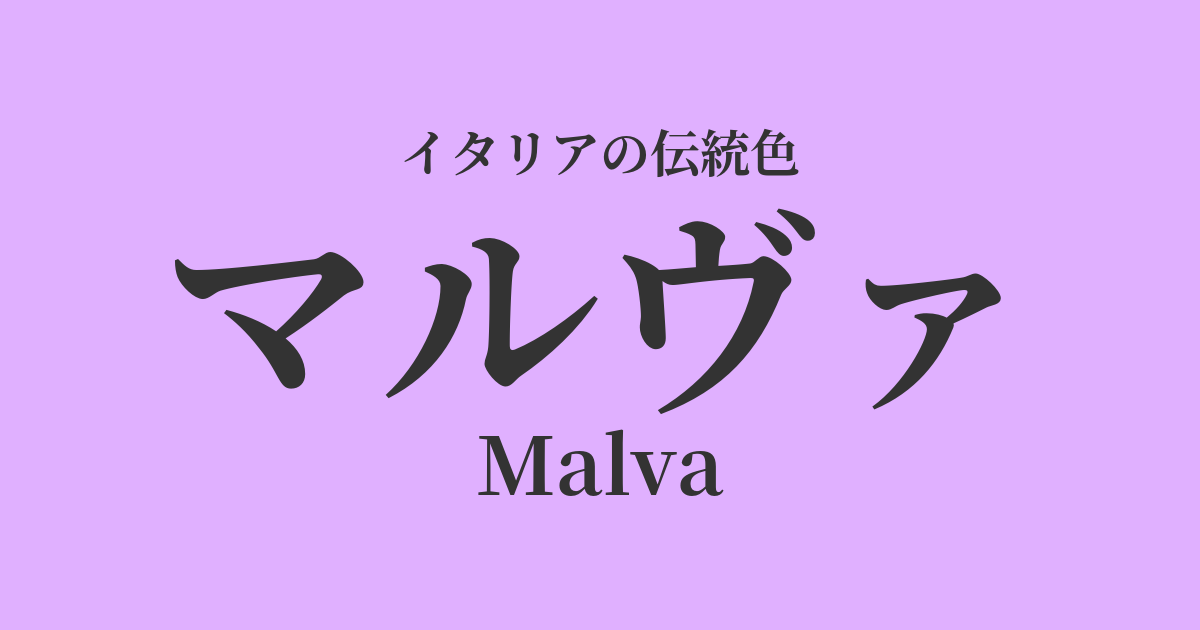
| Italian original name | Malva |
|---|---|
| Japanese notation | Malva |
| HEX | #E0B0FF |
| RGB | 224, 176, 255 |
What is Malva? Origin and etymology
Malva is an Italian word referring to the mallow plant. As the name suggests, it derives from the pale, gentle reddish-purple color of the mallow flower petals that bloom in early summer.
Malva is native to all of Europe, and in Italy, it has long been a familiar flower commonly seen in gardens and fields. Beyond its delicate appearance, it was also used as a medicinal herb, making it a plant deeply rooted in people's lives. The color Malva, derived from the flower's approachable hue, has been cherished as a color symbolizing the tranquility and understated beauty found in everyday life.
The historical background of Malva
The history of Malva is as old as the history of the mallow plant from which it originates, dating back to ancient Roman times. Pliny the Elder described the mallow as a panacea in his book "Natural History," indicating that it was highly valued as a medicinal plant even back then. While there are not many records of it being actively used as a dye, the color of its flowers was widely recognized among people.
During the Renaissance, purple was treated as a noble color, but deep, vibrant shades like Tyrian purple were extremely expensive. On the other hand, lighter shades of purple, such as Malva, were created by mixing more readily available pigments and were sometimes used in religious paintings to represent humility, sanctity, or transience in the clothing of saints and angels.
With the invention of synthetic dyes in the 19th century, it became possible to consistently produce delicate intermediate colors like Malva, which gained popularity in the world of fashion and textiles. Particularly during the Art Nouveau era, its elegant and dreamy hues were favored and incorporated into many designs.
Malva in Italian Culture and Art
In Italian art, pale purples like Malva can be seen particularly in Renaissance frescoes. In the works of Fra Angelico and Filippo Lippi, this delicate purple is effectively used to depict the shadows on the garments of the Virgin Mary and angels, or to portray the dawn sky, giving the entire painting a gentle and serene atmosphere.
Malva remains an important color in contemporary Italian fashion. Especially in spring/summer collections, this color is used in silk blouses, linen dresses, and leather accessories, creating a sophisticated elegance and romantic mood.
Furthermore, Venetian glass, a traditional Venetian craft, also features works with elegant colors reminiscent of Malva. The delicate color gradations created by the transmission of light have a mysterious power to soothe the hearts of those who see them.
Color scheme preview
This is to check the readability of the text when this color is used as the background.
Malva's color scheme proposal
Grigio Perla (#E0DED7)
The gentleness of Malva and the refined atmosphere of Grigio Perla harmonize to create an elegant and calm impression. This color scheme is ideal for modern, minimalist spaces and elegant fashion styles.
Giallo Napoli (#FADA5E)
Two colors that are close to complementary colors enhance each other, creating a bright and vibrant impression. The sweetness of Malva combined with the cheerfulness of Giallo Napoli creates a color scheme that evokes the arrival of spring.
Verde Marina (#3A797C)
The deep Verde Marina adds a touch of sophistication to the soft impression of Malva. This combination, reminiscent of wildflowers and the sea, creates an intellectual and calming yet somewhat mystical atmosphere.
Practical Scenes
In interior design, Malva brings tranquility and elegance to a space. Incorporating it into bedroom wallpaper or linens can have a relaxing effect and promote restful sleep. In the living room, using it as an accent in cushions, curtains, or artwork can add a sophisticated touch. It pairs exceptionally well with neutral colors such as white, gray, and silver.
In the world of fashion, Malva is particularly used as a color to enhance femininity. Dresses and blouses made of soft materials in Malva give a romantic and graceful impression. Also, incorporating it as an accent color in accessories such as bags, shoes, and scarves brightens up the entire outfit and adds a sophisticated touch.
In web and graphic design, it is suitable for sites with themes such as beauty, wellness, and bridal. If using it as the main color gives a slightly too sweet impression, using it as an accent color for background gradients, buttons, or icons will result in a sophisticated and approachable design.