
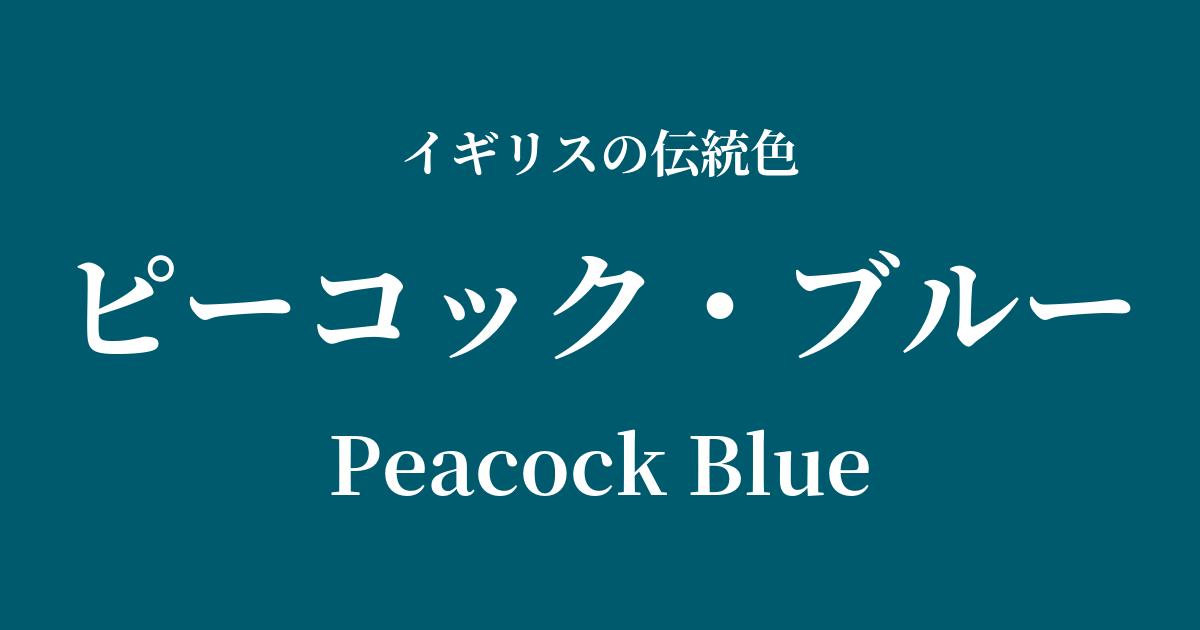
| Original English name | Pea Cock Blue |
|---|---|
| Japanese notation | Peacock Blue |
| HEX | #005A6E |
| RGB | 0, 90, 110 |
What is Peacock Blue? Origin and Etymology
Peacock blue, as the name suggests, derives from the breathtakingly beautiful feather color of the male peacock. In particular, the deep, lustrous blue-green color seen from the neck to the chest, which changes its appearance depending on the light, is the source of this color.
Peacocks have long been considered symbols of beauty, nobility, and immortality. Their mystical colors captivated the hearts of those who saw them, and it is said that they became established as a color name, especially in 19th-century England. By naming it "peacock" rather than simply "blue-green," the color was given rich nuances of exoticism, elegance, and the radiance of life.
The historical background of peacock blue
Peacock blue gained particular prominence in Britain during the Victorian era of the late 19th century. This period saw the rapid development of new synthetic dyes due to the Industrial Revolution, leading to a dramatic increase in people's interest in color.
The invention of aniline dyes and other technologies made it possible to achieve vibrant and deep colors that were previously difficult to achieve with natural dyes, and peacock blue became a popular example of this.
Furthermore, as the British Empire expanded its influence globally, an admiration for the cultures and nature of the East, particularly India, a phenomenon known as "exoticism," became popular. Peacocks, native to India, captivated the Victorians with their mystical beauty, and their colors became symbols of wealth and sophistication, actively incorporated into fashion and interior design.
Peacock Blue in British Culture
Peacock blue had a significant influence on Victorian art and design. William Morris, a leading figure in the Arts and Crafts movement, is particularly famous for his use of peacock blue. He designed numerous wallpapers and textiles featuring peacocks, effectively utilizing the color in his work. His designs symbolized an idea of incorporating the beauty of nature into everyday life, and this color perfectly embodied that philosophy.
Furthermore, peacocks were an important motif in the Aesthetic Movement of the late 19th century. Artists championed "art for art's sake" and pursued sensual beauty. James McNeill Whistler, a painter active in London, created "The Peacock Room," a masterpiece that symbolizes the aesthetic sensibilities of this era, with the entire space adorned in peacock blue and gold.
Color scheme preview
This is to check the readability of the text when this color is used as the background.
Peacock blue color scheme proposal
Old Gold (#CFB53B)
The deep blue-green of peacock blue, combined with the shimmer of old gold, evokes the opulent atmosphere of the Victorian era. This color scheme gives a dignified, elegant, and sophisticated impression.
Classic Cream (#FFFDD0)
The vibrant peacock blue is gently complemented by the soft hues of classic cream, creating an elegant and tranquil space. It gives a classic yet bright and clean impression.
Burgundy (#800020)
This combination of deep blue-green and deep reddish-purple is a combination of two colors with a sense of depth and richness. They complement each other, creating a dramatic and mysterious atmosphere. It gives a unique and sophisticated impression.
Practical Scenes
In interior design, peacock blue brings depth and a dramatic atmosphere to a space. Incorporating it into accent walls in the living room, or into velvet sofas and cushions, instantly creates a luxurious space. It pairs exceptionally well with gold and brass lighting and accessories, creating a classic yet modern impression.
In the world of fashion, peacock blue is considered a color that symbolizes intelligence and elegance. Dresses and blouses made from lustrous materials such as silk and satin bring out the color's vibrancy to the fullest. Furthermore, incorporating it into accessories such as coats, jackets, and scarves can add a sophisticated accent to an outfit.
In web and graphic design, it's suitable for brand websites that want to convey trustworthiness and expertise. Using it boldly as a background color or as an accent color for buttons and headings provides users with an intelligent and memorable experience.