
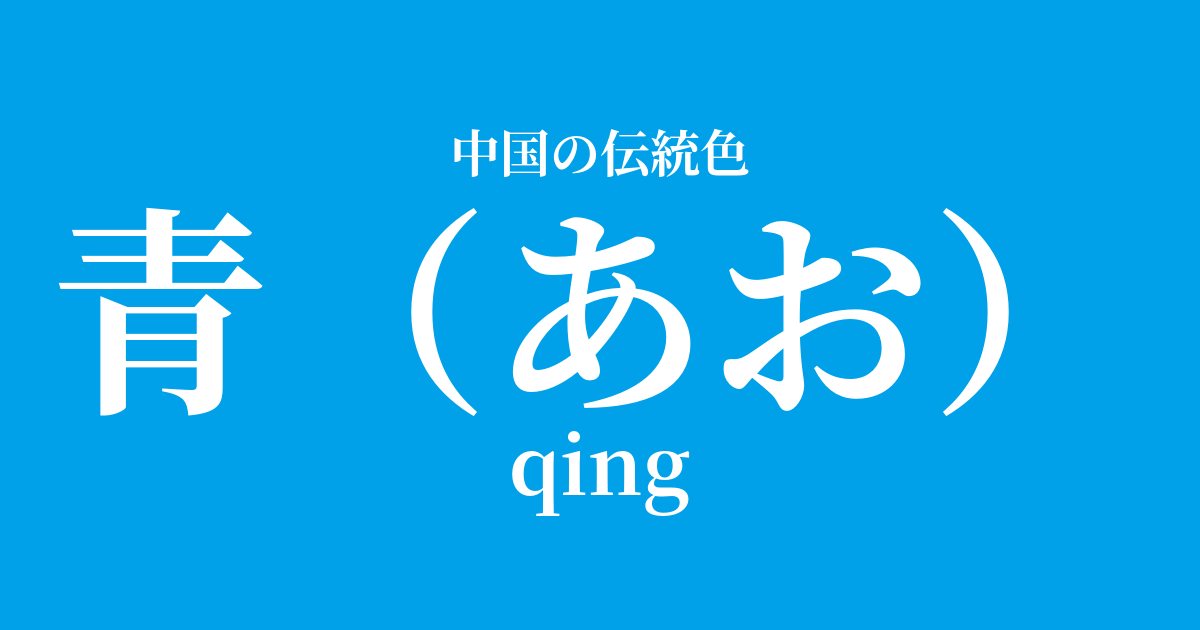
| Color name | 青 |
|---|---|
| reading | blue |
| pinyin | qing |
| HEX | #00A1E9 |
| RGB | 0, 161, 233 |
What does "blue" mean? Origin and etymology
One theory suggests that the kanji character for "blue" (青) is a combination of "生" (sei), which represents the sprouting of plants, and "丹" (tan), which represents wells or minerals. It is said that the origin of the word lies in the lush green plants that grow around wells and the blue pigment extracted from minerals.
In ancient China, the word "blue" referred to a very broad range of colors, including not only the blue we recognize today, but also green, indigo, and sometimes even colors close to black. This was because it was seen as a concept that symbolized the very energy of nature, such as the vitality and youthfulness of plants.
In the Five Elements philosophy of Chinese nature, blue has the attribute of "wood" and symbolizes the direction "east" and the season "spring." As the color of the dawn sky and the color of spring when new life sprouts, it has been considered an important color that signifies beginnings, growth, and development.
This vibrant blue (#00A1E9) evokes the image of a clear sky or deep, still water. It embodies the fundamental beauty found in nature, bringing a sense of peace and boundless possibilities to people.
The historical background of blue
During the Zhou Dynasty (circa 1046 BC – 256 BC), blue was considered a sacred color symbolizing the heavens and was used in the ceremonial robes worn by the emperor during religious rites. In those times, when social status and rank were strictly determined by the color of one's clothing, blue was one of the noblest colors.
During the Tang Dynasty (618–907), a richly international culture flourished, and the expression of color also diversified. In this era, various color names derived from "blue" were created. For example, "sky blue" (天青), representing the color of the sky, and "deep blue" (靛青), representing a deep indigo, were used to distinguish colors with a more refined sensibility, enriching people's lives.
The Song Dynasty (960–1279) was a period when Chinese aesthetics reached a pinnacle. In particular, the art of celadon porcelain was perfected. Ru ware celadon, which the emperor praised as "the blue of the sky after the rain has passed and the clouds have parted," had an immeasurable influence on later art with its delicate and mystical blue color.
Blue in Chinese Art and Crafts
In landscape painting, a representative style of Chinese art, blue was an indispensable color for representing vast skies, waters, and distant, hazy mountains. In a style known as "blue-green landscape painting," blue, along with green, takes center stage, and mineral pigments are used to depict magnificent natural landscapes reminiscent of an ideal utopia.
In the world of ceramics, blue shone as a color symbolizing its era. The vibrant blue glaze seen in Tang sancai ware and the "blue and white porcelain" (blue and white porcelain) that swept the world during the Yuan and Ming dynasties are prime examples. The blue patterns painted with cobalt pigment on the white porcelain surface captivated many with the beauty of their vivid contrast, and these works of art became symbols of cultural exchange between East and West via the Silk Road.
In clothing culture, blue has been widely cherished since ancient times. Among commoners, blue cotton clothing dyed with indigo, a plant-based dye, became popular as everyday wear. Meanwhile, in the royal court, blue silk fabrics dyed with more expensive pigments were worn for ceremonies and special occasions as a symbol of noble status.
Blue, tori no indigo, and blue in blue.
Color scheme preview
This is to check the readability of the text when this color is used as the background.
Blue color scheme proposal
Moon white (#D9D6C3)
The combination of the sky's blue and the soft white of moonlight creates a quiet and peaceful impression. It evokes the harmonious interplay of colors found in nature, making it suitable for sophisticated and elegant spatial design and fashion coordination.
Vermilion (#EB6141)
The vibrant blue and fiery vermilion create a powerful color combination that complements each other beautifully. This pairing, also seen in the decoration of Chinese palace architecture, gives a splendid and lively impression, making it ideal for designs that capture people's attention.
Black (#383838)
The combination of clear blue and deep, rich ink black creates a modern and intellectual impression. It's effective in conveying trustworthiness and innovation in website and product design, creating a sharp and sophisticated atmosphere.
Practical Scenes
In interior design, this vibrant blue is an effective accent color for any space. Incorporating it into a wall, sofa, or art panel brings a sense of freshness and depth to the entire room. It pairs well with white, gray, and natural wood tones, creating a calm and modern atmosphere.
In fashion, blue symbolizes intelligence and cleanliness. Incorporating it into shirts or jackets creates a positive impression in business settings. Wearing it boldly in dresses or skirts creates a confident and elegant look. Adding it as an accent color in bags or scarves is also recommended.
In the fields of web design and graphic design, blue is widely used as a color that conveys reliability and technical expertise. Using it as a corporate color or the main color of a website gives viewers a clean and stable image, facilitating smoother communication.