
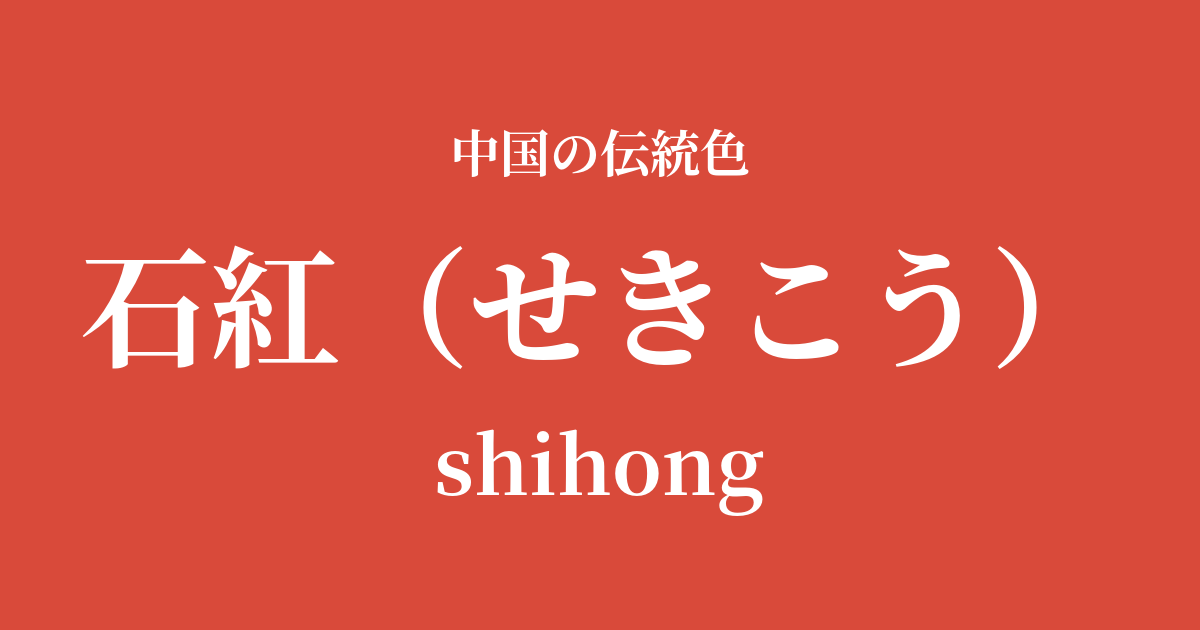
| Color name | Sekihong |
|---|---|
| reading | Sekiko |
| pinyin | shihong |
| HEX | #D94A3A |
| RGB | 217, 74, 58 |
What is "stone red"? Origin and etymology
Sekikou, as the name suggests, means a red color derived from stone.
The origin of this color lies primarily in natural mineral pigments such as cinnabar and ochre. Cinnabar is a mineral composed of mercury sulfide and has long been known as "tan-sa," and has been highly valued as a precious pigment that produces a vivid and deep red color.
The name "Sekibeni" (石紅) accurately describes the powerful yet calming red hue found in natural minerals. This name embodies the unique texture and history of a color born from the earth, setting it apart from artificial dyes.
Historical background of stone red
The history of red stone dates back to the dawn of Chinese civilization. Pottery colored with red stone has been discovered at Neolithic sites, suggesting that people have long held special significance for this color.
In particular, cinnabar was revered as a color possessing mystical powers because it was used as an ingredient in "Xiandan," an elixir of immortality in Taoism. It is said that Qin Shi Huang, the first emperor of China, sought out this cinnabar.
As time went on, vermilion became a symbol of authority and wealth, and an indispensable color in the construction of palaces and temples. The majestic vermilion that adorned the walls and pillars of the Forbidden City is a color that belongs to the lineage of vermilion, and it also had the meaning of warding off evil. In this way, vermilion was not merely a color, but was deeply intertwined with thought, belief, and power, and has colored Chinese history.
Stone red in Chinese art and crafts
In Chinese arts and crafts, rosin stands out as having a particularly strong presence.
In the world of ceramics, red porcelain using cinnabar glaze, such as the "yōhen" (fire-change) red glaze seen in Jun ware from the Song dynasty and the "xianhong" (vivid red) produced from the Xuande era of the Ming dynasty, was highly valued as the finest masterpiece. Its firing process was difficult to predict, making it extremely rare and valuable.
In painting, it was effectively used as an accent in the clothing of figures and in flower and bird paintings, giving the image a sense of life and vibrancy. Furthermore, the color of the "seal paste" used to stamp seals at the end of calligraphic and painted works was also this slate red. The vivid red impression was an important element in unifying and completing the entire work.
Color scheme preview
This is to check the readability of the text when this color is used as the background.
Stone Red Color Scheme Proposal
Tsukihaku (#EAEBE6)
The quiet, pure moonlight elegantly enhances the vibrancy of the stone red. The result is a traditional yet modern and sophisticated atmosphere, creating a calm and tranquil space.
Matsuishi green (#317F6C)
The combination of red and green, which are close to complementary colors, enhances each other's prominence, creating a powerful and striking contrast. This is a dignified color scheme often seen in Chinese temple architecture.
Fujio (#FFB61E)
The passionate red of the stone red, combined with the radiant yellow of the wisteria yellow, creates a festive and vibrant impression. This energetic color scheme is perfect for expressing abundance and joy.
Practical Scenes
Scarlet can be incorporated into modern life in various ways.
In interior design, incorporating this color through small items such as cushions, rugs, and art panels will bring warmth and elegance to the space. Using this color as an accent wall will create a dramatic and sophisticated atmosphere.
In fashion, simply incorporating this color into a dress, scarf, or lipstick can instantly elevate an outfit and create a striking style. It pairs particularly well with basic colors such as black, beige, and white.
In web and graphic design, using these elements on buttons and headings that you want to attract attention can draw the user's eye and convey a strong message.