
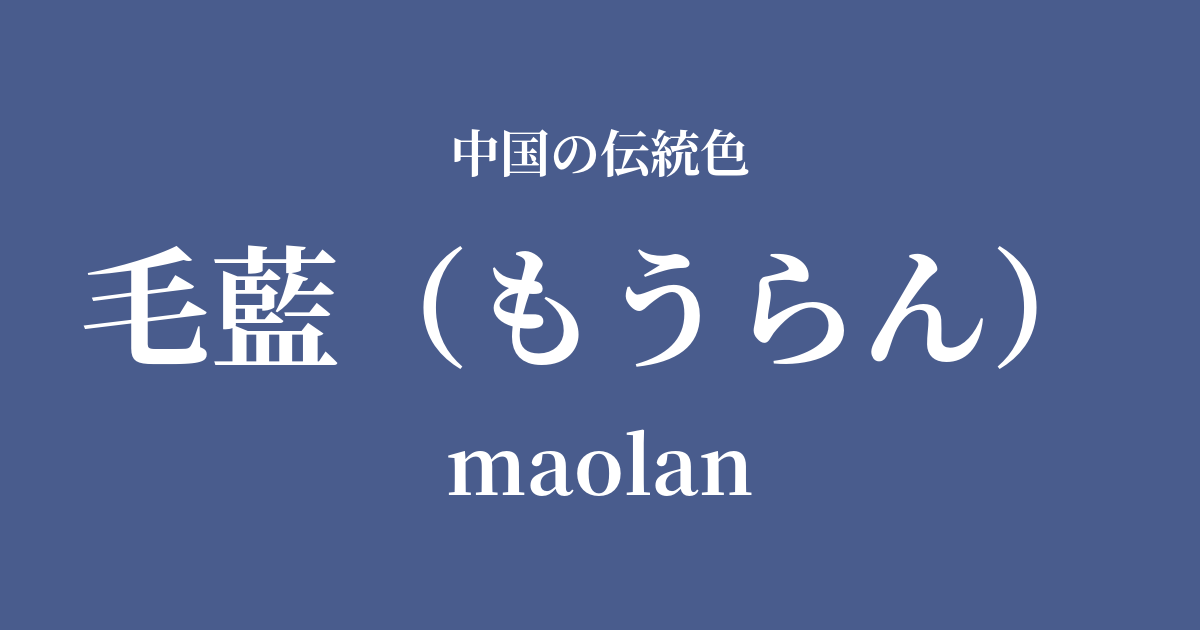
| Color name | hairy blue |
|---|---|
| reading | Moran |
| pinyin | maolan |
| HEX | #495C8D |
| RGB | 73, 92, 141 |
What is *Maolan*? Origin and etymology
Mōran is a traditional indigo color dyed using indigo plants grown in the vast lands of China. Its name originates from the rustic texture of "dobu," a type of hand-woven cotton cloth dyed with indigo.
The character for "hair" (毛) carries connotations of "rough" and "unprocessed," and in contrast to the refined colors of silk fabrics used in the royal court, it symbolizes the unadorned beauty that accompanies people in their daily lives. This slightly grayish, muted blue color gains character with use and became deeply rooted in the lives of ordinary people.
Historical background of the black-haired blue
The history of indigo dyeing is very old in China, dating back thousands of years, but it was during the Ming and Qing dynasties that "hair indigo" became particularly widespread in the lives of ordinary people. During this period, cotton cultivation became widespread, and inexpensive, durable cotton cloth became widely available.
Cloth dyed with indigo, or "indigo cloth," became a primary material for clothing worn by farmers, artisans, and ordinary people due to its durability and practicality as it was resistant to stains. It was more than just a color for work clothes; it became a color that symbolized people's lives themselves, shaping a part of the quintessential Chinese landscape.
Maolan in Chinese Art and Crafts
Indigo dye has deep ties to Chinese clothing culture in particular. Many Hanfu garments, which were the everyday clothing of ordinary people, were dyed with this indigo dye. In particular, "Lan Yin Hua Cloth," which features beautiful patterns dyed onto fabric, is appealing for the simple blue and white contrast of indigo dye. It was widely used for bedding covers, clothing, and headscarves, and is still cherished as a folk craft today.
Furthermore, apart from the glamorous world depicted by court painters, genre paintings depicting the lives of ordinary people often feature figures wearing dark blue clothing. These works quietly tell us how commonplace this color was in the society of the time and how integrated it was into people's lives.
Color scheme preview
This is to check the readability of the text when this color is used as the background.
Color scheme proposal for black and white
Kyou Huang (#F7B977)
By combining it with warm apricot yellow, the calm impression of the indigo dye is given brightness and vitality. It is a friendly color scheme that evokes a sense of homey warmth amidst its simplicity.
Pilestone (#9C5333)
The reddish-brown color of ochre, reminiscent of the earth, pairs exceptionally well with indigo. It gives a natural and stable impression, and as an earth-tone color scheme, it creates a calm and peaceful space.
Moon White (#D9E4E8)
This combination evokes the contrast between indigo-dyed fabric and the white background where the dye has been removed. It has a clean and refreshing feel, and while it is sophisticated and modern, it also gives off a somewhat nostalgic impression.
Practical Scenes
In the world of fashion, indigo dye can be used in a wide range of ways, much like modern denim. Its simple and understated charm is particularly highlighted when incorporated into shirts, dresses, and pants made from natural materials such as cotton and linen. It's the perfect color for creating an unpretentious, natural style.
In interior design, it brings a sense of calm and sophistication to a space. It's recommended to incorporate it on one wall, or in fabrics such as curtains, rugs, and cushions. It also pairs well with warm wooden furniture, creating a comfortable and relaxing atmosphere.
In web design and graphics, this is effective when you want to convey trustworthiness and integrity. By using a light color like moonlight as the background color, you can create a website that is highly readable and gives a calm impression.