
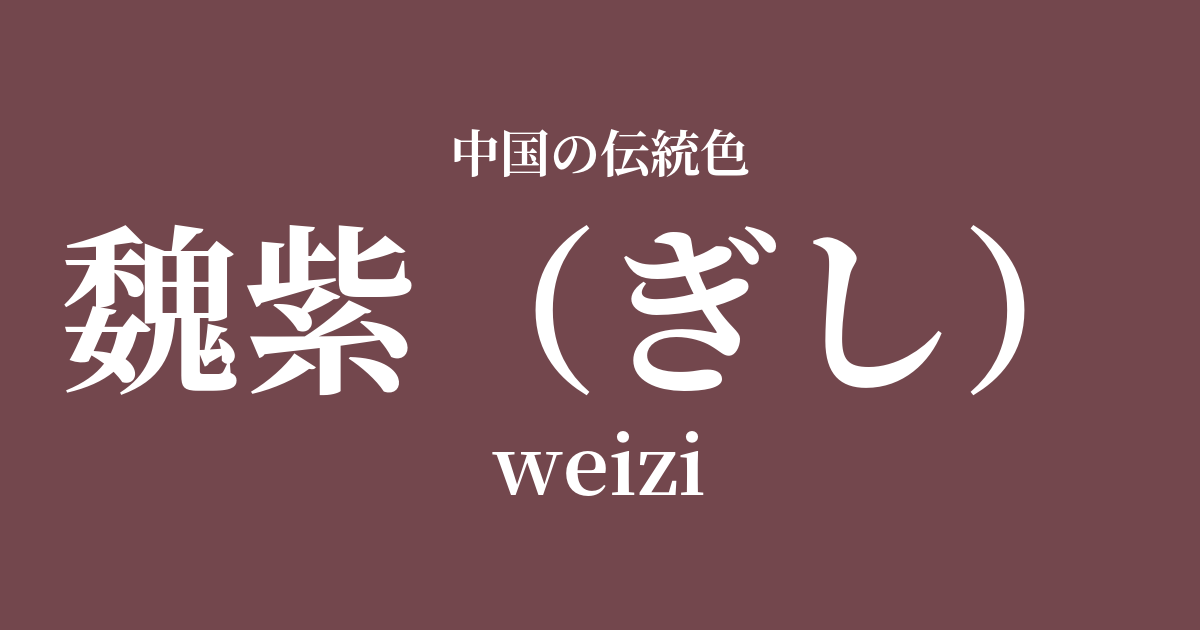
| Color name | Wei Zi |
|---|---|
| reading | Gishi |
| pinyin | weizi |
| HEX | #73474D |
| RGB | 115, 71, 77 |
What is Wei Zi? Origin and etymology
Gishi refers to a deep purple color with a reddish tint. Its name originates from the famous flower "Gishi," which was praised as the "Queen of Peonies" during the Northern Song dynasty in China.
This peony is said to have bloomed in the garden of Wei Renpu, a man in Luoyang who was known at the time as a famous spot for peonies. Its petals overlapped in many layers, and its elegant purple appearance captivated all who saw it. Because it was a purple peony that bloomed at the home of the Wei family, it was named "Wei Zi" (Wei Purple).
In his book "Luoyang Peony Chronicle," Ouyang Xiu, a scholar of the Northern Song dynasty, listed the yellow "Yao Huang" and the purple "Wei Zi" as the finest varieties of peonies, writing, "Yao Huang is the king of flowers, and Wei Zi is the queen of flowers." This single sentence solidified the reputation of Wei Zi, and it transcended being merely a flower color, becoming a color name that symbolized nobility and beauty, passed down through generations.
Historical background of Wei Zi
Wei Zi (purple peony) was particularly prized during the Northern Song dynasty (960-1127). In Luoyang, which was the second-largest capital after Kaifeng at the time, peony cultivation was thriving, and nobles and literati eagerly sought out beautiful flowers, holding exhibitions to enjoy them.
Among them, "Wei Zi" was an extremely rare and difficult-to-obtain variety. Its value was said to be priceless, and owning even one plant was considered the ultimate status symbol.
In ancient China, purple was a "forbidden color" whose use was permitted only to emperors and those of high rank, and it was a symbol of nobility. The deep and calming purple of Wei purple, combined with these traditional values, became a color that people longed for. During the Song dynasty, when court culture flourished, Wei purple was one of the colors that represented the pinnacle of aesthetic sensibility.
Wei Zi in Chinese Art and Crafts
The elegant hues of Wei Zi have inspired many artists. In particular, peonies are a favorite subject in "Gongbi painting," which is characterized by its realistic and meticulous depiction, and Wei Zi, in particular, has been preserved in numerous masterpieces for its dignified appearance.
Furthermore, in the realm of fashion culture, deep purple colors like Wei Zi were highly valued as the color of clothing worn by royalty and nobility. Wei Zi, expressed in beautifully lustrous silk fabrics, subtly changed its appearance depending on the light, likely highlighting the wearer's status and dignity.
Even in the world of ceramics, purple glaze was technically difficult to reproduce, making it highly valuable and rare. Porcelain with its deep purple hue, reminiscent of Wei dynasty porcelain, was produced as a tribute to the imperial court, and its beauty was highly sought after.
As soon as Yao Huang Wei Zi Kai, Fu Zhen human creation Hao Chun
Color scheme preview
This is to check the readability of the text when this color is used as the background.
Wei Zi's color scheme proposal
Yao Huang (#FAD64F)
This is the most traditional color combination, combining Wei Zi, known as the "Queen of Peonies," with Yao Huang, called the "King of Peonies." They complement each other's elegance, creating a very dignified and gorgeous impression.
Moon White (#D9E9E5)
The pale, bluish-white, reminiscent of quiet moonlight, accentuates the depth and tranquility of the Wei purple. This creates an elegant, sophisticated, and intellectual color scheme.
Matsuka (#BCEE68)
By adding vibrant green hues reminiscent of peony leaves and stems, the richness of the Wei purple is given a lively brightness. It gives a traditional yet modern and fresh impression.
Practical Scenes
When incorporating it into your interior design, using it as an accent wall, cushion, or rug will create a sophisticated depth in the space. Combining it with light white or pale beige will create a refined space that is both calm and elegant.
In fashion, it's perfect for dresses for special occasions or obi sashes for traditional Japanese clothing. Lustrous materials like silk and velvet further enhance the depth of the Wei Zi color. Using it as an accent color in accessories like scarves and bags is also a sophisticated and recommended option.
In web design and graphic design, it is effective as an accent color for luxury brand websites and content dealing with historical themes. It can create a design that conveys trustworthiness, tradition, and intelligence.