
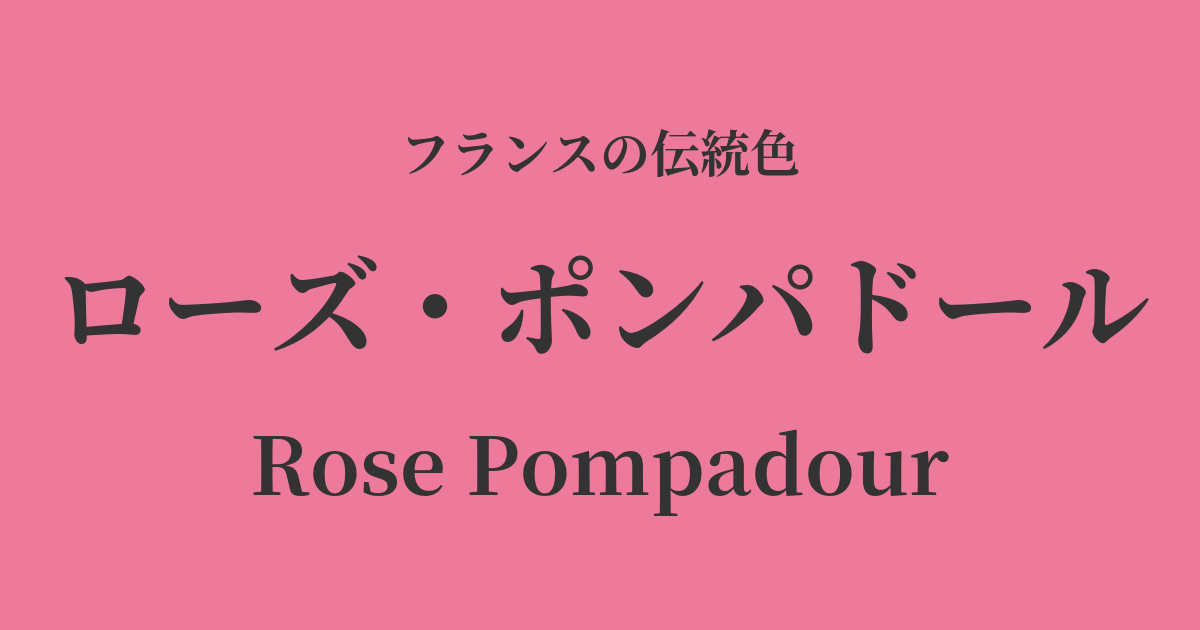
| French | Rose Pompadour |
|---|---|
| Katakana | Rose Pompadour |
| HEX | #ED7A9B |
| RGB | 237, 122, 155 |
What is Rose Pompadour? Origin and Etymology
Rose Pompadour, as its name suggests, is a color derived from Madame de Pompadour (Jeanne-Antoinette Poisson), who wielded immense influence at the French court in the 18th century. Not only was she a favorite of King Louis XV, but her exceptional intelligence and artistic talent made her a leading figure in the culture and arts of her time.
This elegant pink color was specially formulated in 1757 by the National Sèvres Porcelain Manufactory, which she ardently patronized. This shade, which Madame de Pompadour loved so much, came to be known as "Pompadour's Rose" after her and became established as a color that symbolizes the Rococo era.
The historical background of Rose Pompadour
The mid-18th century in France, when Rose Pompadour was born, was a time when the elegant and refined culture known as "Rococo" flourished under the reign of Louis XV. The court was located in the Palace of Versailles, and the nobility pursued a light and sweet beauty amidst their lavish lifestyle.
Madame de Pompadour was at the very heart of this movement, a trendsetter in fashion, interior design, and arts and crafts. Her aesthetic sense was considered absolute, and the pink color she favored quickly became extremely popular among the ladies of the court. This color was more than just a trendy color; it embodied the elegant and refined lifestyle that the aristocratic society of the time aspired to.
Rose Pompadour in the world of art and fashion
Rose Pompadour had a significant influence on the palettes of many painters who represented Rococo art. François Boucher, a painter who was patronized by Madame de Pompadour, frequently used this sweet pink color in his portraits of her and in his works based on mythology, creating a dreamy and elegant world.
In the world of fashion and textiles, this color was also favored for lustrous silk and damask dresses, ribbons, and tapestries decorating interiors. From Sèvres porcelain tableware and decorative items to furniture and wallpaper, Rose Pompadour adorned all aspects of Rococo decorative art, conveying the aesthetic sensibilities of that era to this day.
Color scheme preview
This is to check the readability of the text when this color is used as the background.
Rose Pompadour color scheme proposal
Gris de Lignan (#D2C9B8)
This combination recreates the sophisticated atmosphere of the Rococo era. The sweetness of Rose Pompadour is balanced by the calm gray of the linen, creating an elegant and classic impression.
Veil Opal (#A2D4AC)
This color scheme is adorable and delightful, just like a macaron. The vibrant rose and refreshing mint green harmonize beautifully, creating a light, cheerful, and feminine impression perfect for spring.
Blue Roi (#0059A8)
This bold and magnificent combination evokes the dignity of the French royal family. The vibrant royal blue further enhances the presence of the Rose Pompadour, creating a dramatic and luxurious impression.
Practical Scenes
In the field of interior design, Rose Pompadour brings vibrancy and elegance to a space. When used over large areas such as wallpaper, curtains, and sofas, it creates a luxurious Rococo atmosphere, but when incorporated as an accent color in cushions, lampshades, and small accessories, it adds a refined sweetness to a modern space.
In fashion, it's an ideal color for dresses and blouses as it maximizes femininity. Furthermore, simply adding it to accessories like bags, shoes, or scarves instantly elevates the entire outfit, creating a sophisticated look. It also enjoys enduring popularity in the cosmetics world as a blush and lip color.
In web and graphic design, this color is effective in conveying the brand image of high-end confectionery shops, bridal services, and beauty-related businesses. When combined with white or light gray, it creates a clean and elegant design.