
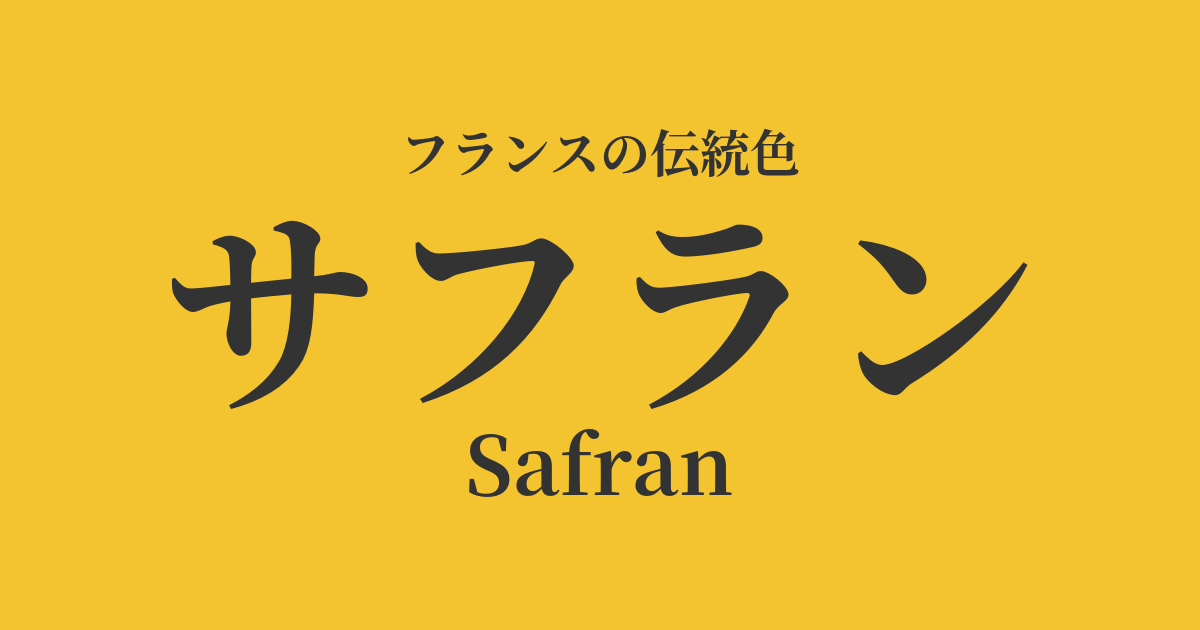
| French | Mbfran |
|---|---|
| Katakana | saffron |
| HEX | #F4C430 |
| RGB | 244, 196, 48 |
What is saffron? Origin and etymology
Saffron is a spice derived from the pistils of the saffron plant, a member of the iris family, and is known for its vibrant, warm golden color. Its name can be traced back to the Arabic word "za'farān," meaning "yellow," which evolved into the Old French word "safran" and then into the modern form.
Saffron spice is so rare that hundreds of saffron stigmas must be hand-picked before dawn to obtain just one gram, earning it the nickname "red gold." For this reason, the color of saffron has also long been considered a symbol of wealth, nobility, and sanctity.
Historical background of saffron
Saffron has been prized as a dye and medicine since ancient Greek and Roman times, but it is believed to have been introduced to France in earnest during the Middle Ages through the Moors. In medieval Europe in particular, saffron-dyed fabrics were the finest luxuries, worn only by a select few privileged classes, such as royalty, nobility, and high-ranking clergy.
Its brilliant yellow color symbolizes the sun and fertility, and in religious paintings, it was sometimes used to represent sanctity when depicting the clothing of holy figures such as Christ and the Virgin Mary.
Furthermore, in the Provence region of southern France and the Gatinet region south of Paris, which once flourished as the country's largest saffron-growing area, this color is deeply rooted in the local culture and cuisine. It is an essential spice in the world-famous seafood soup "bouillabaisse," and its color evokes the dazzling sunshine and abundant nature of southern France.
Saffron in the world of art and fashion
Saffron's rarity and vibrant color had a significant impact on the art world. In the lavish illuminated manuscripts (miniatures) produced in medieval Europe, it was used as an important pigment alongside gold leaf, illuminating the pages of Bibles and prayer books with a divine glow.
In modern painting, Vincent van Gogh's series of works painted in Arles in southern France are symbolic. The radiant yellow seen in "Sunflowers" and "The Yellow House" brilliantly expresses the intense sunlight and vibrant life of Provence, conveying the energy of saffron.
In the world of fashion, saffron is a color that gives an exotic and sophisticated impression, and is particularly favored in haute couture and resort collections. In the early 20th century, designer Paul Poiret effectively used this vibrant color in designs that incorporated Orientalism, breathing new life into the fashion world.
Yellow, oh, what a wonderful yellow, how beautiful!
Color scheme preview
This is to check the readability of the text when this color is used as the background.
Saffron color scheme suggestion
Blue Nuit (#0F2C4F)
When combined with a deep blue nuit reminiscent of the night sky, the vibrancy of saffron stands out, creating a dramatic and sophisticated impression like a starry night. It's a dignified color scheme where each color enhances the others.
Terre de Sienne (#E97451)
The color scheme, reminiscent of the red soil of Provence in southern France, with Terre de Sienne, creates a warm, rustic, and natural harmony of earth tones. It's perfect for creating a friendly and relaxed atmosphere.
Violin (#A10684)
By combining violin (purple), a color considered noble, with saffron, which is close to its complementary color, the two colors appear even more vibrant. This color scheme has an exotic and slightly mysterious charm.
Practical Scenes
In the field of interior design, incorporating saffron into accent walls, cushions, or artwork can bring warmth and vibrancy to the entire space. It pairs particularly well with dark brown wooden furniture and charcoal gray modern interiors, functioning as a sophisticated accent.
In fashion, simply adding a saffron-colored accessory such as a scarf, bag, or shoes can brighten up an entire outfit and give it a lively feel. A saffron-colored dress or skirt will create a confident style at parties or resorts, and is sure to attract attention.
In web and graphic design, using this technique for buttons and important headings can effectively guide the user's gaze. It's suitable for brand websites where you want to create a sense of luxury or exclusivity, and also for food-related designs, as it has an appetizing effect.