
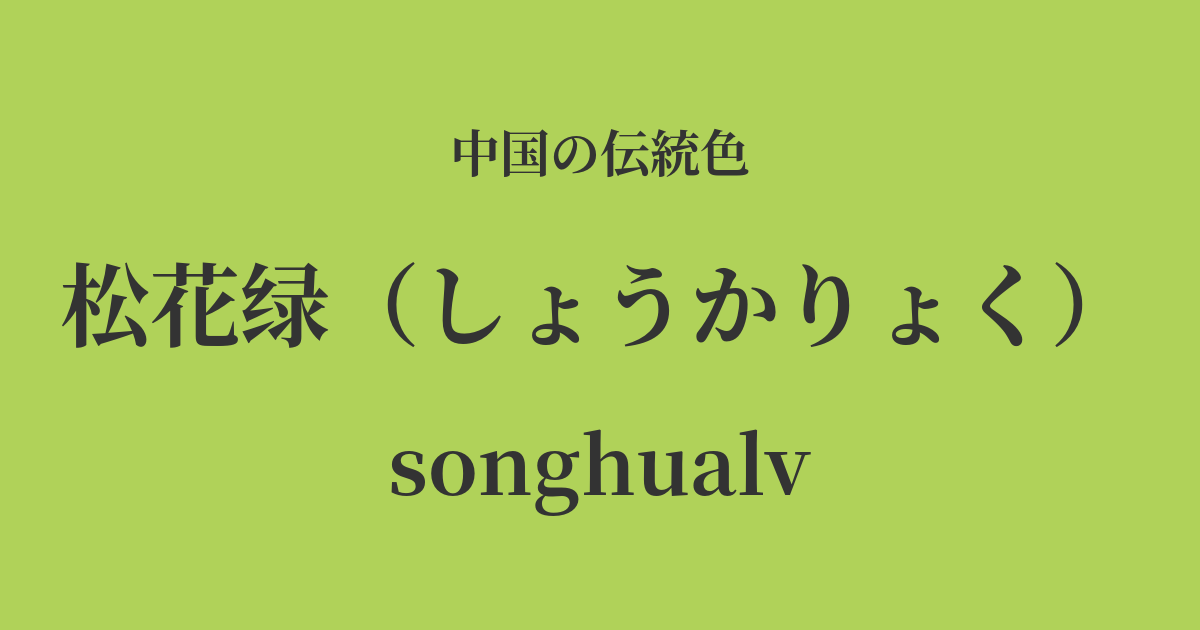
| Color name | Pine flower green |
|---|---|
| reading | Shoukaryoku |
| pinyin | songhualv |
| HEX | #B0D259 |
| RGB | 176, 210, 89 |
What is Songhua Green? Origin and Etymology
Shōkaryoku, as its name suggests, is a bright, vivid yellowish-green color derived from the "color of pine blossoms." "Shōka" refers to the pollen scattered from the male flowers of the pine tree, which has been used since ancient times as an ingredient in traditional Chinese medicine and confectionery. The characteristic of this color is that of the pale yellow pine pollen that dances in the air with the arrival of spring, blended with the green of young leaves.
This color evokes the breath of new life that sprouts after overcoming the harshness of winter. Therefore, Songhua green is not merely a color, but a symbol of youth, hope, and vitality itself, deeply rooted in the sensibilities of the Chinese people.
Historical background of Songhua Green
Songhua green (a type of ochre) gained particular attention during the Qing Dynasty. During the reigns of emperors such as Kangxi, Yongzheng, and Qianlong, court culture reached its peak of decadence. With the introduction of new pigments and techniques from the West during this period, brighter and more diverse colors became popular compared to traditional colors.
Songhua green was one of the colors that was loved during that fashion trend, and it was particularly popular as the color of clothing worn by women in the imperial court. This color, which gives an impression of youthfulness and nobility, was considered suitable for enhancing the beauty of empresses and consorts. It was also used as a glaze for porcelain, and it became established as a color that reflected the refined aesthetic sense of the imperial court.
Songhua Green in Chinese Art and Crafts
Songhua green holds an important place in the clothing culture of the Qing Dynasty. In particular, it pairs exceptionally well with lustrous silk fabrics, and its use in court attire such as embroidered robes (pao) and gua (gua) brought out a striking sense of splendor and elegance. It was a color often seen in the clothing of young consorts and princesses, and adorned the attire for spring festivals and ceremonies.
Furthermore, in the world of fine arts and crafts, it can be seen in the painting of porcelain such as enamelware and fencai (royalty porcelain) from the Qing Dynasty. In the depictions of flowers, birds, and landscapes on the surface of the vessels, pine blossom green was used to represent the color of young leaves and plants, bringing a vibrant sense of life to the entire work. This vivid green also has the effect of further enhancing the beauty of the white porcelain.
Pine flower-filled hair, moss-colored coat.
Color scheme preview
This is to check the readability of the text when this color is used as the background.
Pine flower green color scheme proposal
Beni Kaido (#F2A0A1)
This vibrant color scheme is reminiscent of spring flowers and young leaves, bursting with life. The refreshing pine green and the lovely crabapple red complement each other, creating a bright and elegant impression.
Ehuang (#FFF143)
The combination with yellow, another color symbolizing spring, creates a fresh and harmonious impression. It evokes a positive and bright atmosphere reminiscent of a spring field bathed in sunlight.
Moon White (#D9E9E5)
By combining it with the pale, bluish-white of Tsukishiro, the vibrancy of Matsuhana-moku stands out, creating a sophisticated and elegant impression. It creates a clean, modern, and calm space.
Practical Scenes
In interior design, pine green brings brightness and vitality to a space. When used as an accent color in cushions, curtains, or small pieces of furniture, it envelops the entire room in a fresh atmosphere. It pairs particularly well with natural wood and white-based spaces, and blends naturally into Scandinavian and Japanese modern interiors.
In the world of fashion, this color is perfect for spring and summer outfits. Blouses and skirts in pine-green brighten the complexion and give a youthful, refreshing impression. Furthermore, incorporating it through accessories such as bags, scarves, and jewelry can subtly add a touch of seasonality to your look.
In web and graphic design, this color is effective when dealing with themes such as nature, health, and ecology. It gives users a positive and reassuring impression and enhances the appeal of the content.