
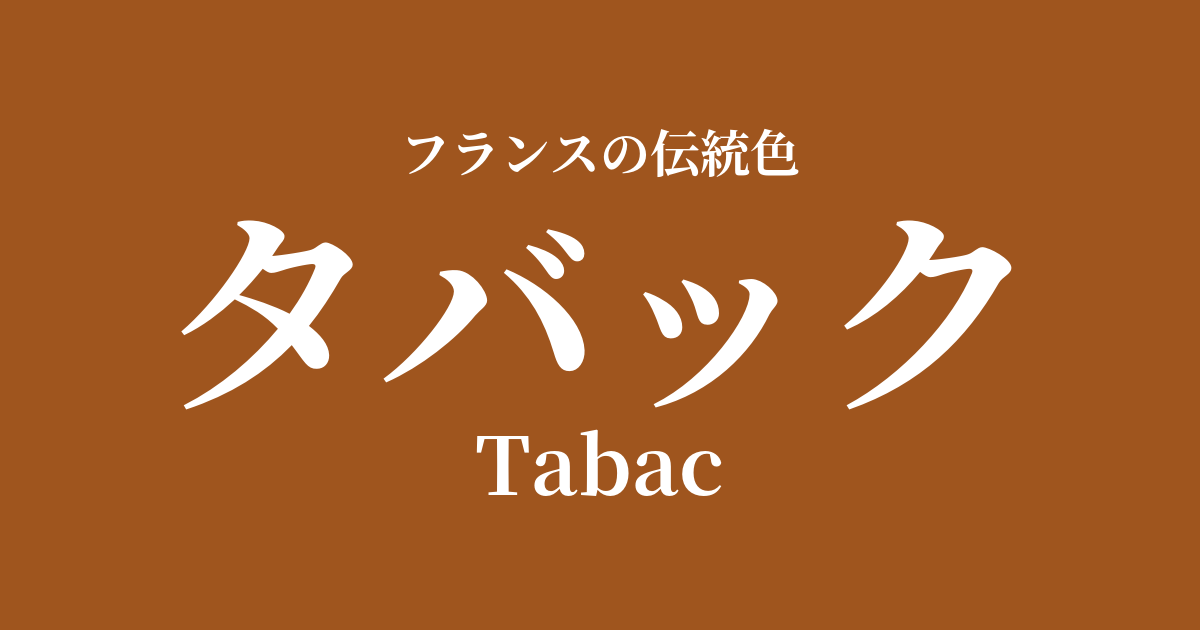
| French | Tabac |
|---|---|
| Katakana | Tabac |
| HEX | #9f551e |
| RGB | 159, 85, 30 |
What is Tabac? Origin and Etymology
"Tabac" is a French word that refers to tobacco itself. As the name suggests, it has a deep, rich, and warm brown color derived from the color of dried and fermented tobacco leaves.
This color is not simply brown, but rather a complex hue characterized by subtle reddish and yellowish undertones. Depending on how the light hits it, it can even exhibit an amber-like sheen. Its hue has long been cherished as a symbol of mature intelligence, evoking feelings of calmness, stability, and a sense of nostalgia.
Tabac's historical background
The color of tobacco first appeared in French color culture after tobacco was introduced to Europe from the New World in the 16th century. Initially valued as a medicinal herb, snuff became extremely popular among the nobility at court in the 17th century, especially during the reigns of Louis XIII and Louis XIV.
With this trend, "tabak," the color of tobacco leaves, began to gain attention in the fashion world. This color was used in various items such as men's coats and vests, and women's dresses and ribbons, and came to be seen as a color that symbolizes sophisticated urban taste.
From the 19th to the 20th century, this color was particularly beloved in the field of interior design. It was used in heavy wooden furniture, leather chairs, and wallpaper in studies, becoming an indispensable color for creating spaces filled with calmness and intelligence.
Tabac in the world of art and fashion
Tabac, with its understated colors, has been loved across generations in the art and fashion worlds.
In 17th-century Dutch and Flemish still-life paintings, pipes and tobacco leaves are often depicted as symbols of wealth and the transience of life. The colors of the tobacco in these paintings give the works deep shadows and a sense of weight.
In the world of fashion, tabak has established itself as a staple color, especially for the autumn/winter season. It's a color that brings out the warmth and texture of materials to the fullest, such as trench coats, leather jackets, corduroy pants, and wool sweaters. It's classic yet timeless, adding depth and sophistication to any outfit.
Color scheme preview
This is to check the readability of the text when this color is used as the background.
Tabac's color scheme proposal
Blanc de Lis (#f4e9d7)
Paired with the natural-colored linen of Blanc de Li, the Tabac's substantial feel is softened, creating a natural, warm, and gentle impression. It's recommended for relaxed, high-quality spaces and fashion.
Blue Roi (#002d6f)
The deep, noble Blue Roi and Tabac are a classic combination that complements each other beautifully. It conveys an intelligent, trustworthy, and dignified impression. Perfect for menswear and formal designs.
Vert Veronnaise (#5a6955)
When paired with a slightly smoky green, like Veronese green, it creates a calm harmony of earth tones. It evokes a natural, gentle, botanical atmosphere or a country-style look.
Practical Scenes
Tabac is a versatile color that showcases its appeal in a variety of situations.
In interior design, using this color for wallpaper in a study, leather sofas, or antique wooden furniture creates a calm and intellectually stimulating space. Incorporating it into fabrics such as curtains and rugs brings warmth and a sense of stability to the entire room.
In fashion, it's perfect for statement pieces like coats, jackets, and leather boots. It pulls the whole outfit together, giving it a classic and sophisticated look. Using it as an accent color in accessories like bags and belts also creates an elegant touch.
In web design, it is an effective key color for sites that want to convey reliability, tradition, and an organic image. Using it as a background color or button color can give users a sense of security and sophistication.