
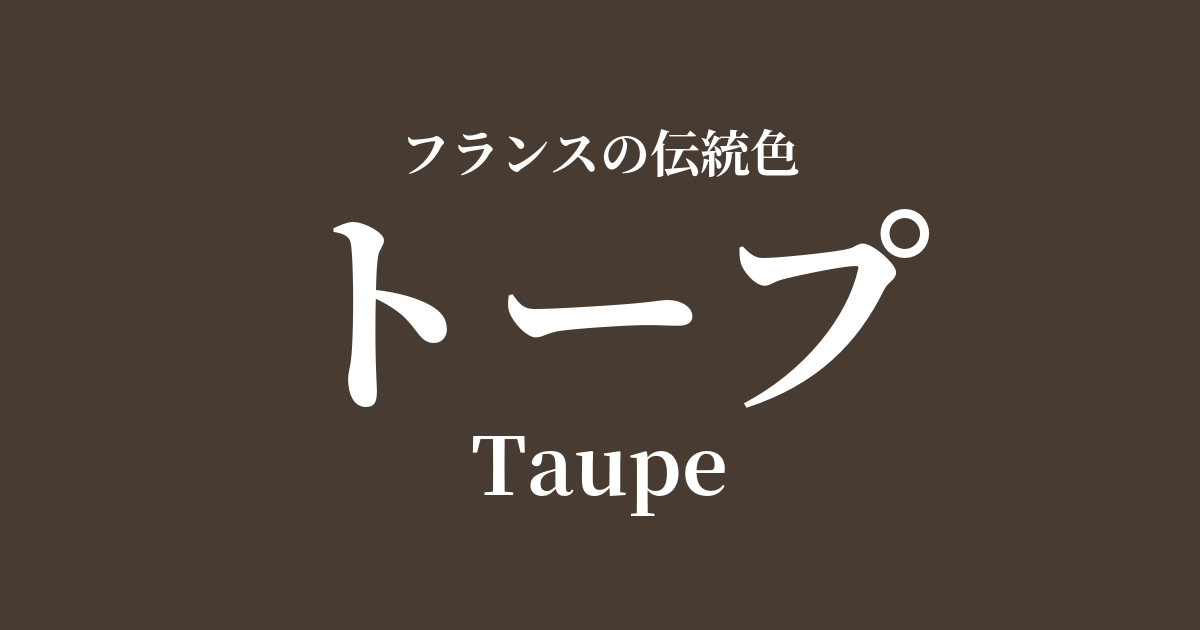
| French | Taupe |
|---|---|
| Katakana | Taupe |
| HEX | #483C32 |
| RGB | 72, 60, 50 |
What is Taupe? Origin and Etymology
"Taupe" is a French word meaning "mole." As the name suggests, it refers to a slightly grayish-brown or brownish-gray color, like the fur of a mole. Because it originates from the color of an animal found in nature, it gives a very calm and peaceful impression.
It is said that this word began to be widely used as a color name in English-speaking countries and elsewhere from the early 20th century. Rather than clear primary colors, the ambiguous and nuanced shades, which are like a mixture of multiple colors, resonate with the refined sensibilities of adults and have been loved across generations.
Historical background of taupe
The color name "taupe" only became commonly used relatively recently in history, from the late 19th to the 20th century. While similar shades certainly existed before that time, they were rarely clearly defined as "taupe" from the perspective of dyes and pigments.
This color only began to gain attention in French culture, particularly in the world of fashion, in the 20th century. Just as Coco Chanel introduced neutral colors such as black, white, and beige to the world of fashion, as values shifted from extravagant ornamentation to simpler, more practical styles, intelligent and understated intermediate colors like taupe came to be appreciated.
In contrast to the opulent colors of royalty, taupe established its place as a sophisticated everyday color that accompanied people's lives as civil society matured in the modern era.
Taupe in the world of art and fashion
In the world of art, intermediate colors like taupe are essential for expressing the subtle nuances of light and shadow. Realist and Barbizon School painters of the 19th century, in particular, sought to depict nature as it truly is, and frequently used these complex shades to represent the colors of the earth, trees, and cloudy skies.
In the fields of fashion and textiles, taupe holds a special place as a color symbolizing "chic" and "elegance." In particular, when combined with high-quality natural materials such as wool, cashmere, and linen, it has the effect of bringing out the inherent texture and feel of those materials to the fullest. It is a color that is not overpowering, yet it exudes a definite presence, adding depth and sophistication to the entire outfit.
Color scheme preview
This is to check the readability of the text when this color is used as the background.
Taupe color scheme suggestion
Ecru (#F5F5DC)
By combining it with ecru, an off-white color, it creates a warm, natural, and sophisticated space. The texture of the material is highlighted, giving a calm and comfortable impression.
Blue Nuit (#0F2540)
The deep midnight blue complements the calm taupe hue, creating an intelligent and modern impression. This color scheme is recommended for those who prefer a sophisticated and stylish urban look.
Rose Pompadour (#ED87A3)
By combining it with the elegant pink that Madame de Pompadour loved, the harshness of taupe is softened, creating a sophisticated yet feminine impression that isn't overly sweet. It achieves a balance of elegance and glamour.
Practical Scenes
Taupe is a versatile color that can be used in a variety of situations.
In interior design, using it on large areas such as wallpaper, sofas, and curtains brings a sense of calm and luxury to the entire room. It is an excellent base color that complements other colors and harmonizes beautifully with wooden furniture and the green of houseplants.
In fashion, its appeal lies in its versatility, easily incorporated into a wide range of items, from coats, jackets, and pants to bags and shoes. A one-tone outfit, where the entire look is coordinated in taupe-toned gradients, creates a highly sophisticated impression and expresses timeless elegance.
In the field of web design, using it as a background color can enhance the readability of content and is expected to give users a sense of trust and security.