
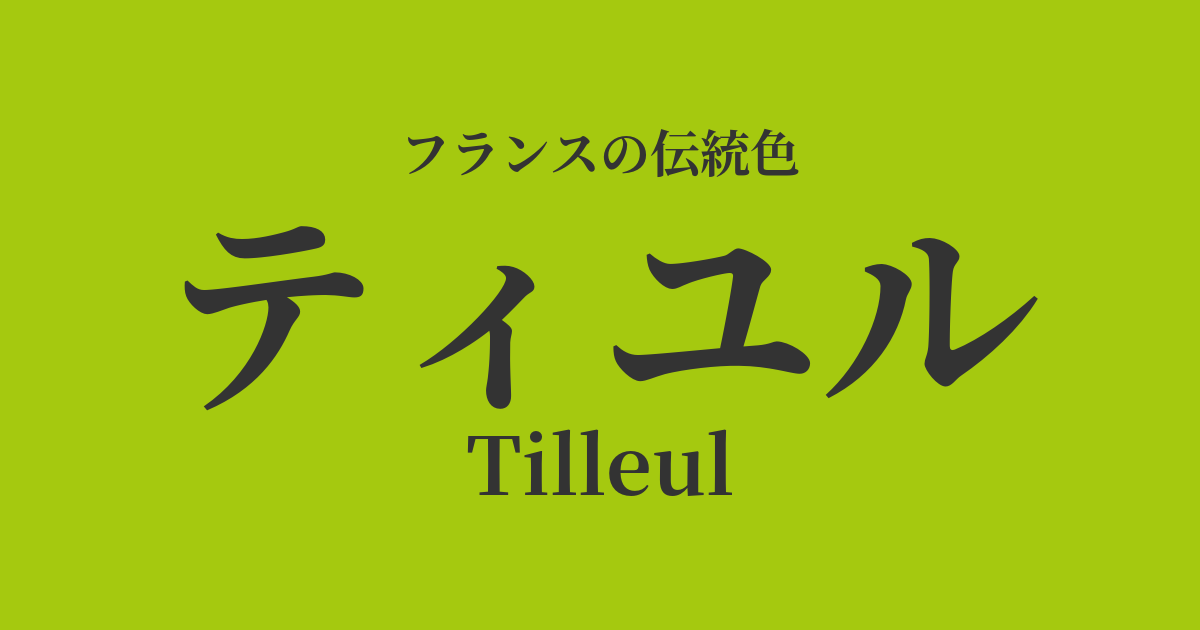
| French | Tilleul |
|---|---|
| Katakana | Tyul |
| HEX | #a5c90f |
| RGB | 165, 201, 15 |
What is Tyul? Origin and Etymology
Tilleul is a French word meaning "linden tree." This color is derived from the vibrant, fresh yellow-green of the young leaves and pale yellow flowers of the linden tree, which shine in the early summer sunlight.
In France, linden tea (tisane), made from dried linden blossoms and leaves, has long been a popular beverage known for its relaxing effects. Almost always found on café menus, tisane symbolizes a peaceful daily life and tranquility for the French. The color name "Tiulle" embodies this sense of calm and gratitude for nature's bounty.
The historical background of Tilleul
The linden tree has long been considered a sacred tree in Europe. It is said that in ancient Gaul, it was planted in sacred places where Druid priests performed rituals.
In French history, the linden tree played a symbolic role during the French Revolution of 1789. As the "tree of liberty" (Arbre de la liberté), symbolizing the revolutionary ideal of "liberty," linden trees were planted in squares and village centers throughout France. It is said that people gathered under these trees and pledged liberty and equality. Therefore, the color of Tiul is not merely a natural color, but also carries historical significance, representing civic liberty and hope.
Furthermore, during the Art Nouveau period from the late 19th to the early 20th century, motifs from nature, such as plants and insects, were widely incorporated into art and design. Organic and soft colors, like those of Tilleul, inspired artists of this era and were favored for use in posters, glass art, and architectural decoration.
Tilleul in the world of art and fashion
The bright yellowish-green color, reminiscent of Tilles, was beautifully expressed by Art Nouveau artists, who particularly loved nature. Glass artists like Émile Gallé and René Lalique incorporated the organic forms and colors of plants into their works, creating numerous glass pieces with delicate hues reminiscent of Tilles. This elegant yellowish-green can also be found in the vines and leaves of plants that adorn the women in Alphonse Mucha's posters.
In the world of fashion, pale green was used in pastel-colored dresses, much like those favored by Marie Antoinette during the 18th-century Rococo era. However, Tillell's more naturalistic shades gained attention in fashion from the late 19th century onward, along with the idea of returning to nature. The development of chemical dyes created a range of vibrant and diverse colors that had never existed before, and youthful colors like Tillell's began to adorn people's attire.
The colors of Tilleul are also used in traditional French textiles, particularly in printed fabrics from the Provence region, along with motifs such as olives and flowers, expressing the sun-drenched lifestyle of southern France.
The moment the linden tea, mixed with pieces of madeleine, touched my palate, I shivered. I felt something extraordinary happening within me.
Color scheme preview
This is to check the readability of the text when this color is used as the background.
Tiyul's color scheme proposal
Blanc de Ran (#F4F1E6)
When combined with Blanc de Lans, the white of linen, it creates a very natural and organic atmosphere. It gives off a calm and sophisticated impression that allows you to truly relax.
Rose Pompadour (#ED87A3)
This vibrant color scheme evokes the flowers blooming in a spring garden. The youthfulness of Tilleul and the splendor of rose complement each other, creating a feminine, cheerful, and uplifting impression.
Blue Nuit (#0F2540)
When paired with the deep blue of the night sky, the brightness of the Tilleul stands out, creating a beautiful contrast. It gives a sophisticated impression that is modern and intellectual, yet somehow evokes a sense of natural tranquility.
Practical Scenes
In interior design, Tiyul is a color that brings brightness and tranquility to a space. Simply incorporating it into one wall in the living room or bedroom, or into fabrics such as cushions and curtains, will envelop the entire room in a refreshing atmosphere. It pairs particularly well with white, beige, and light wood-grain furniture, and is a perfect fit for Scandinavian and natural modern spaces.
In fashion, using this color in spring and summer blouses, skirts, and dresses brightens the complexion and gives a youthful, fresh impression. Pairing it with dark colors like navy or charcoal gray creates an elegant style suitable for the office. It's also recommended to use it as an accent color in accessories such as scarves and bags.
Websites and graphic designs are ideal for conveying the brand image of organic products, healthcare, and lifestyle brands. They help create a sense of security and familiarity for users, building a clean and pleasant impression.