
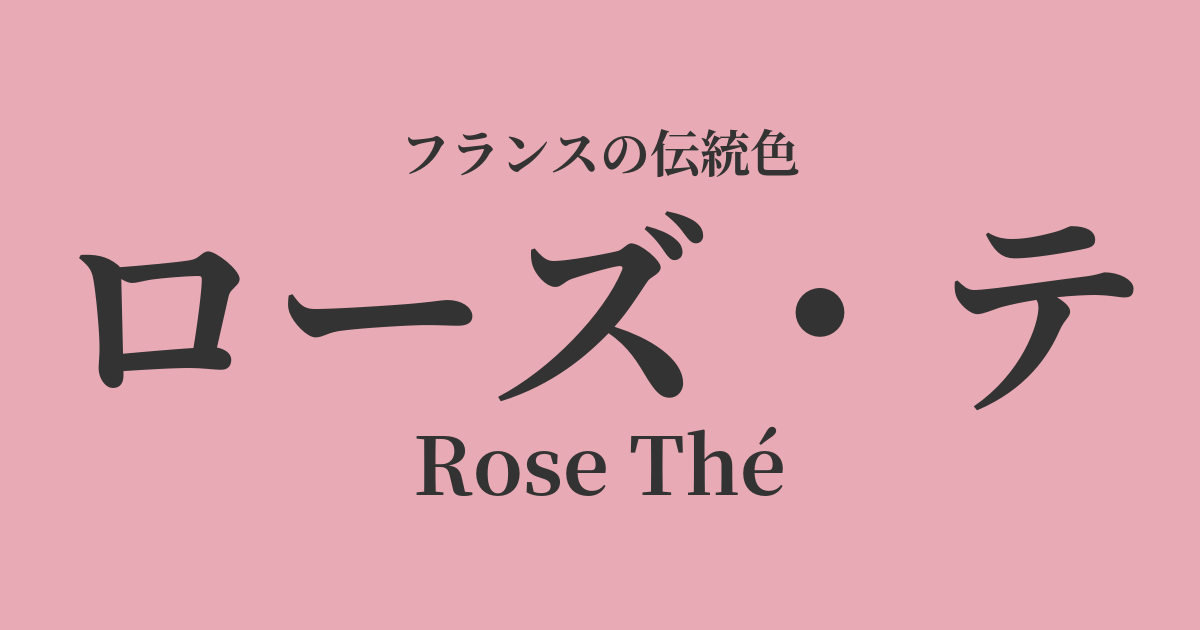
| French | Rose Thé |
|---|---|
| Katakana | Rose Te |
| HEX | #E8AAB4 |
| RGB | 232, 170, 180 |
What is Rose Te? Origin and Etymology
"Rose Thé" is a French term meaning "Tea Rose," or a rose that smells like tea.
This elegant color name originates from a rose cultivar brought from China to Europe in the 19th century. Because of its delicate, sweet fragrance reminiscent of freshly brewed tea, it was named "Tea Rose."
The Rose Tea shade captures the delicate, slightly yellowish-beige hues of the tea rose's petals. It's a nuanced color, as if gently dyed with fine tea, possessing a sweetness that is both calm and refined. More than just a simple pink, it's a color name rich in storytelling, born from the intersection of sophisticated 19th-century horticultural and tea cultures.
The historical background of Rose Te
Rose Thé was particularly beloved in France during the late 19th century, from the Second Empire to the "Belle Époque" (Beautiful Era). During this period, the Industrial Revolution led to the rise of the bourgeoisie, and a vibrant urban culture flourished, centered in Paris.
As people's lives became more prosperous, gardening spread as a sophisticated hobby, and rose breeding, in particular, was pursued with great enthusiasm. Among these, the delicate colors and fragrances of the newly introduced tea roses strongly captured the hearts of people at the time.
Unlike the vibrant "Rose Pompadour" that was beloved during Marie Antoinette's time, this color was more subdued and profound. It was a color that symbolized the elegance of mature women and was favored in the fashion and interior design of the era. This graceful pink adorned every aspect of life, from luxurious evening gowns and hats to wallpaper and curtains.
Rose Te in the world of art and fashion
The popularity of rose-themed dresses cast its shadow over the art of the time, particularly Impressionist painting. Painters like Pierre-Auguste Renoir and Édouard Manet depicted people conversing in parks and sophisticated women gathering in theaters. The soft pink hues of their dresses evoke the delicate nuances of rose-themed dresses.
In the world of fashion, this period coincides with the time when Charles Frederick Worth, considered the founder of haute couture, was active. The opulent dresses he designed also utilized rose tea dyed on high-quality fabrics such as silk and satin, enhancing the beauty of the ladies of the time.
Furthermore, in the Art Nouveau style that was popular from the late 19th to the early 20th century, the organic designs featuring plants and insects had a strong affinity with the elegant color palette of Rose Thé, and its colors can be found in posters, glass art, jewelry, and other items.
Color scheme preview
This is to check the readability of the text when this color is used as the background.
Rose Te's color scheme proposal
Gris de Lignant (#DCD4CC)
The sweet and feminine impression of rose tea is gently toned down by the flaxen gray, creating a sophisticated and mature atmosphere. It's a calm and elegant color scheme with a French chic feel.
Vert Veronnaise (#599A82)
This classic and beautiful combination evokes the image of rose petals and leaves. The deep green complements the gentleness of the rose tea, making each color stand out and creating a vibrant, lifelike impression.
Blanc d'Argent (#E6E6E6)
The clean, bright silvery-white hue highlights the delicate hues of rose tea, creating a romantic and light atmosphere. It gives a clean, elegant, and dreamy impression.
Practical Scenes
In interior design, rose tea brings warmth and elegance to a space. Using it on large areas such as wallpaper, curtains, and sofas can create a French chic or shabby chic style. Even incorporating it into smaller items like cushions and rugs will instantly give the entire room a romantic feel. It also pairs exceptionally well with materials like gold, brass, and marble.
In the world of fashion, this color is perfect for dresses, blouses, and skirts as it enhances femininity. Its delicate charm is especially maximized when combined with soft materials such as silk, lace, and chiffon. It also looks lovely as an accent color in accessories like bags, shoes, and scarves.
In web and graphic design, it's a great fit for themes related to beauty, weddings, and lifestyle. When used as a main color, it creates a friendly and gentle impression, while when used as an accent color, it adds an elegant and sophisticated touch to the design.