
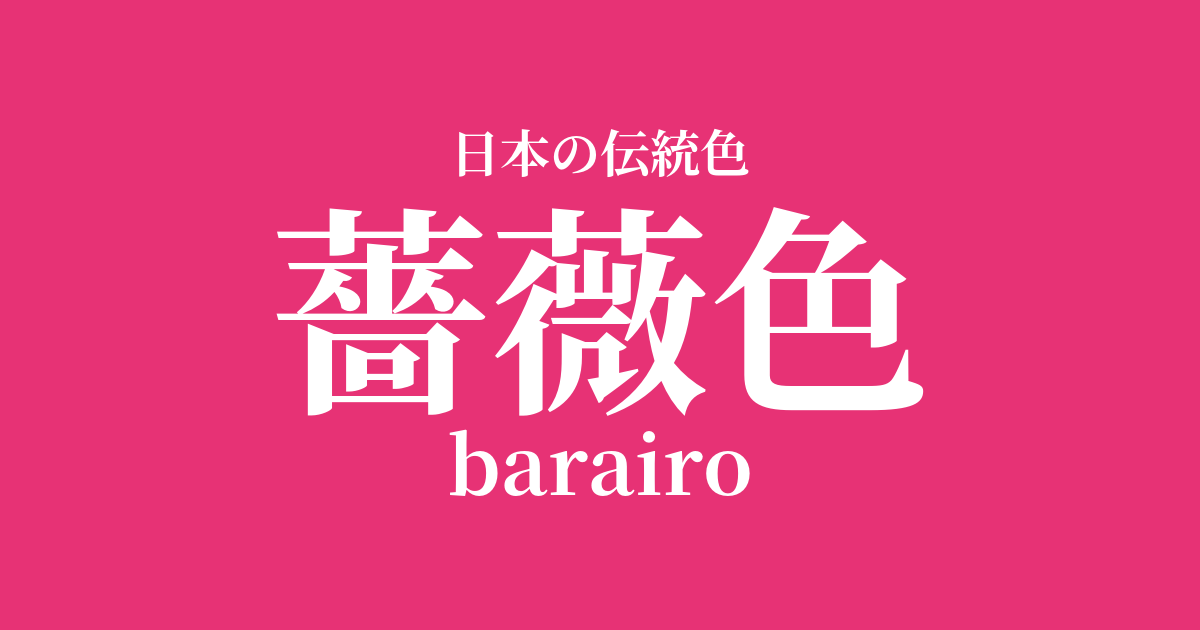
| Japanese color name | rose color |
|---|---|
| reading | barairo |
| HEX | #E73275 |
| RGB | 231, 50, 117 |
What does "rose-colored" mean? Origin and etymology.
"Rose color," as the name suggests, refers to a vibrant reddish-purple color reminiscent of a rose. This color name is relatively new, as it became common in Japan after the Meiji era, when Western culture began to flow in. It largely became established as a translation of the English term "rose color," and was embraced by people as a vibrant color that had not existed in Japan before.
In ancient times, wild roses known as "umara" or "ibara" existed in Japan, but they were mainly used for medicinal purposes or as hedges, and it is said that the color of their flowers never became established as a specific color name.
A rosy historical background
The color name "rose-colored" first appeared in Japanese literature during the Meiji era. This was due to the introduction of new varieties of ornamental roses from the West, which attracted attention for their beauty. Furthermore, the development of chemical dyes from the mid-Meiji period onward made it possible to produce such brightly colored fabrics cheaply, which also boosted the popularity of rose-colored fabrics.
During the Taisho era, it was incorporated into the fashion of "modern girls" who wore Western clothing, and it became popular as a stylish color symbolizing an admiration for Western culture.
Related literature, waka poetry, and seasonal words
In pre-modern Japanese poetry and literature, the flamboyant "roses" we imagine today were rarely depicted. While they appear in the Manyoshu anthology under the name "umara," this is thought to primarily refer to the wild rose, which blooms with white flowers. In modern literature, roses frequently appear as a symbol of Western romanticism, and poets such as Akiko Yosano used them as a metaphor for passionate emotions.
In the world of haiku, "rose" (bara, soubi) is considered a seasonal word for summer, and often refers specifically to the magnificent flowers of cultivated varieties.
The crimson rosebuds, two feet tall, have soft thorns as the spring rain falls.
Color scheme preview
This is to check the readability of the text when this color is used as the background.
Rose-colored color scheme proposal
Nightingale (#918D40)
A natural color scheme reminiscent of rose leaves and stems. The vibrant rose color is enhanced by a muted green, like a nightingale's green, creating an elegant and classic impression. Although they are close to complementary colors, they have a calming effect and enhance the beauty of each other.
White training (#FCFAF2)
This combination maximizes the vibrancy of the rose color, creating an impression of cleanliness and nobility. The soft off-white of the white base gently softens the intensity of the rose color, creating an elegant and feminine atmosphere. It is also suitable for formal designs.
Lapis Lazuli (#1E50A2)
A modern color scheme that combines vibrancy and sophistication. The warm rose tones and cool lapis lazuli tones create a vivid contrast, giving a refined, urban impression. The depth of each color is brought out, resulting in an impressive and bold design.
Practical Scenes
In the world of kimono, this color is used in patterns for furisode and houmongi kimonos, as well as in accessories such as obiage and obijime. It is especially common in kimono worn by young women, giving a vibrant and celebratory impression. It is also an essential color for retro-modernコーディネート (outfits) themed around Taisho Romanticism.
In interior design, incorporating rose pink as an accent color in cushion covers, curtains, or artwork can add vibrancy and vitality to a space. When added to a simple room based on white, gray, or beige, the rose color stands out, creating an elegant atmosphere.
In web and graphic design, it is effectively used as a key color on websites for products and services aimed at women. When used in buttons and banners, it offers high visibility and attracts user attention. It is also an effective color for conveying a sense of luxury or exclusivity.